Lemon Rice Recipe (Indian Citrus Rice)
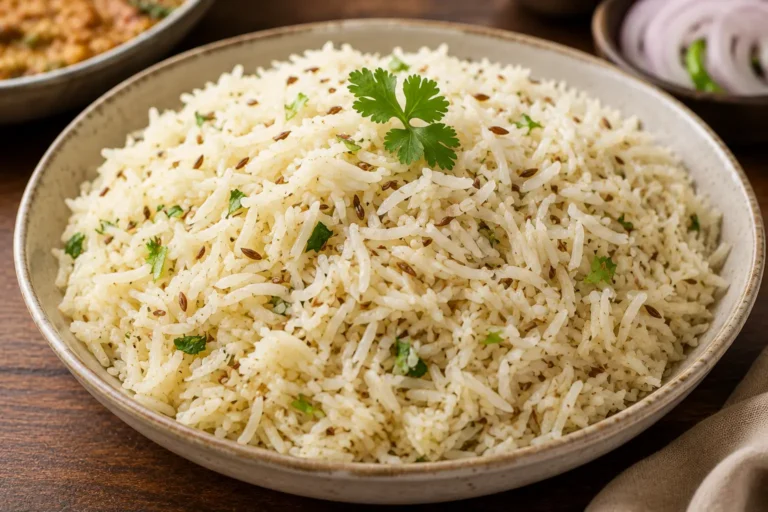
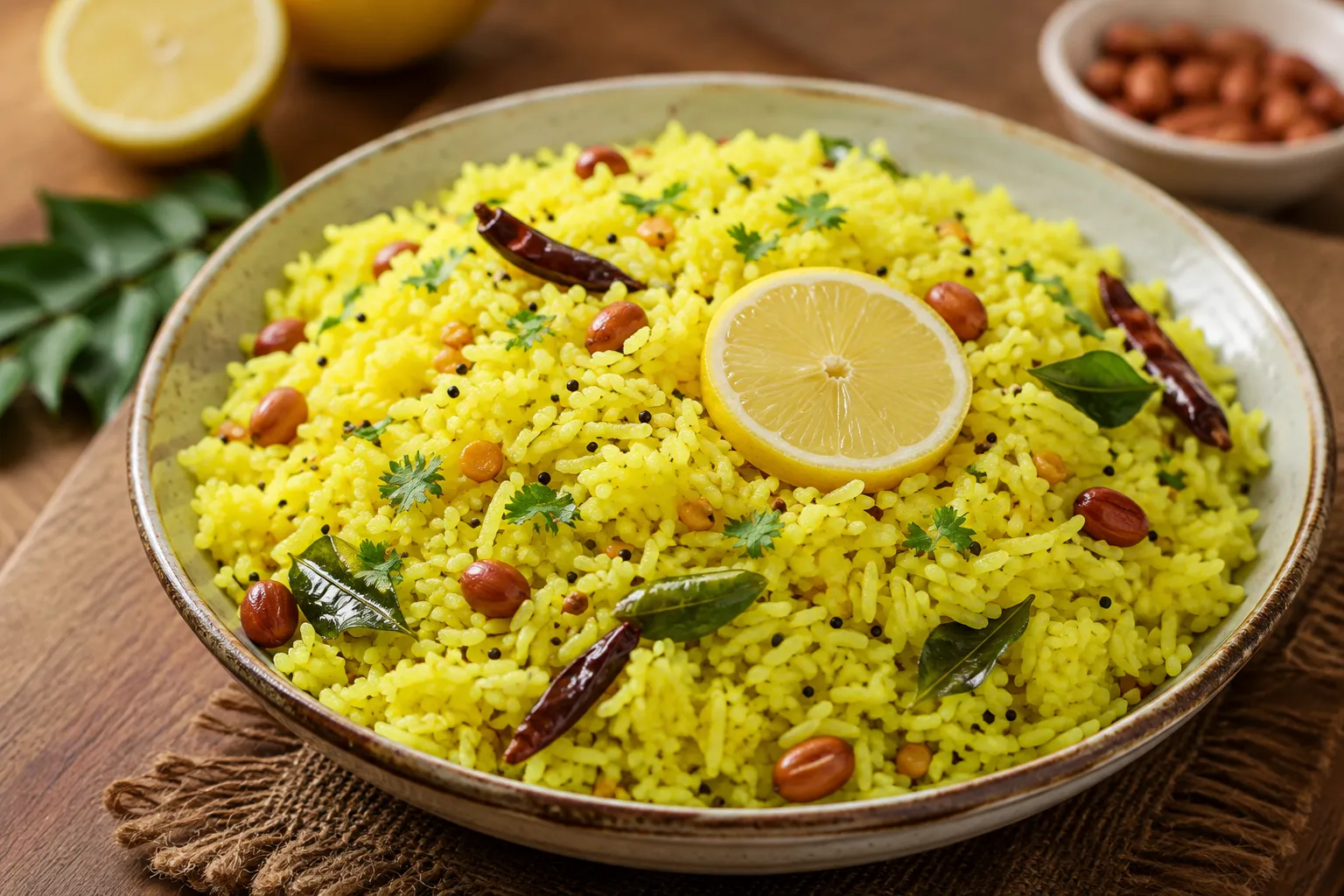
Lemon rice is a bright, savory dish where cooked rice is tossed in a tempered mixture of mustard seeds, curry leaves, green chilies, crunchy lentils, and fresh lemon juice. It is often served as a quick lunch, packed for travel, or prepared for festive gatherings.
The success of this dish depends on using cooled, separate grains of rice so the texture does not turn mushy, and adding the fresh lemon juice only after removing the pan from the heat to preserve its vibrant, tangy flavor.
Why This Recipe Works
- Blooming the mustard seeds, lentils, and curry leaves in hot oil creates a fragrant base that coats every grain of rice evenly.
- Using pre-cooked and thoroughly cooled rice ensures the grains remain distinct and firm during the tossing process.
- Adding the fresh lemon juice off the heat prevents the citrus flavor from breaking down or turning bitter.
Ingredient Notes
- Cooked Rice: Medium-grain white rice like Sona Masuri is typically used. Day-old refrigerated rice is ideal because the dry, cold grains separate easily. If cooking fresh rice, spread it flat on a wide tray to cool completely.
- Lemon Juice: Always use freshly squeezed lemon juice. Bottled juice lacks the bright, clean citrus aroma and can introduce an artificial metallic flavor.
- Peanuts: Raw, skin-on peanuts provide a distinct crunchy texture. They are fried directly in the tempering oil until crisp.
- Chana Dal and Split Urad Dal: These split lentils add a nutty crunch. Sauté them on medium-low heat until they turn a light golden color, taking care not to burn them.
- Curry Leaves: Fresh curry leaves provide a signature warm, herbal aroma. Tear them slightly before adding them to the hot oil to help release their flavor.
If You’re Cooking Outside India
- Curry Leaves: Look for fresh curry leaves in the produce section of South Asian grocers. They can be stored in the freezer in an airtight bag for several months if fresh ones are not regularly available.
- Chana Dal and Split Urad Dal: These are split Bengal gram and split black gram, commonly found in the lentils section of Indian grocery stores. If unavailable, you can omit them, though the dish will lose its classic crunch.
How to Make Lemon Rice
Prepare the Rice
Ensure your cooked rice is completely cold and the grains are separated. Grains that are warm or clumped will break and turn gummy when mixed.
Fry the Nuts and Lentils
Sauté the raw peanuts, chana dal, and urad dal in hot oil until they are golden-brown and crisp throughout.
Temper the Aromatics
Add the mustard seeds, green chilies, ginger, curry leaves, and asafoetida. Let the seeds crackle and the leaves turn crisp before adding the turmeric.
Combine and Finish
Gently fold the cooled rice and salt into the spiced oil on low heat until warmed. Turn off the heat and stir in the fresh lemon juice.
Cooking Tips
- If you must use freshly cooked rice, spread it onto a baking sheet, drizzle a teaspoon of neutral oil over it, and let it cool completely to stop the cooking process.
- Adjust the green chilies to control the heat. Slitting them lengthwise makes them easy to see and discard while eating.
- Do not skimp on the cooking oil, as it is needed to distribute the turmeric color and spice flavors evenly across the rice.
Common Mistakes to Avoid
- Adding the lemon juice while the pan is still on the hot burner: Turn off the stove and slide the pan away from the heat source before stirring in the lemon juice to avoid bitterness.
- Using warm, freshly steamed rice: This makes the dish clumpy. Cook the rice in advance and chill it in the refrigerator for at least two hours before assembling.
Variations
- Cashew Lemon Rice: Substitute or supplement the peanuts with raw cashew halves, frying them in the oil until they are light golden-brown.
- Grated Coconut Lemon Rice: Stir in two tablespoons of freshly grated coconut along with the lemon juice at the end for a subtle sweet contrast.
Serving Suggestions
- Serve warm or at room temperature alongside a crispy potato fry or roasted papadums.
- Pair with a side of plain yogurt or a simple cucumber raita to balance the tangy citrus profile.
- Pack it for lunchboxes or picnics, as the flavor deepens and the dish holds up well at room temperature.
Storage & Make-Ahead
Make ahead: The rice can be cooked up to two days in advance and stored in the refrigerator. The tempering can also be prepared ahead, but it is best to combine everything shortly before serving so the peanuts and lentils remain crunchy.
Refrigerate: Store leftover lemon rice in an airtight container in the refrigerator for up to 3 days.
Freeze: Freezing is not recommended because the rice grains can become dry and crumbly, and the fried peanuts will lose their crisp texture.
Reheat: Reheat gently in a microwave-safe bowl covered with a damp paper towel, or in a pan on low heat with a tablespoon of water to restore moisture.
Frequently Asked Questions
Can I use Basmati rice instead of Sona Masuri?
Yes, Basmati rice works well. Ensure it is cooked with slightly less water so the grains remain firm and separate, and let it cool completely before mixing.
Why did my lemon rice turn bitter?
This usually happens if the lemon juice is added while the rice is still cooking on active heat, or if the seeds were accidentally squeezed into the dish.
How do I keep the peanuts and lentils crunchy?
Ensure they are fried on medium-low heat so they crisp all the way through, and avoid adding any liquid or water to the tempering stage.
More Indian Recipes to Try
Browse the IndiPlated recipe index
Lemon Rice
Ingredients
Equipment
Method
- Place 4 cups of cooled, cooked white rice in a large bowl. Gently separate any clumps with a fork or clean fingers, taking care not to break the grains. Set aside.
- Heat 2 tablespoons of oil in a pan or kadai over medium heat. Add 3 tablespoons of raw peanuts and fry for 2 minutes, stirring constantly, until they begin to change color. Add 1 teaspoon of chana dal and 1 teaspoon of split urad dal. Sauté on medium-low heat for 1 to 2 minutes until the lentils turn golden-brown and fragrant.
- Add 1 teaspoon of mustard seeds to the pan. When they begin to crackle and pop, add 2 slit green chilies, 1 teaspoon of minced ginger, 10-12 fresh curry leaves, and 1/4 teaspoon of asafoetida. Stir-fry for 30 seconds on medium heat until the curry leaves turn crisp.
- Reduce the heat to low. Add 1/2 teaspoon of turmeric powder to the oil and stir quickly for 5 to 10 seconds to cook the spice without burning it.
- Add the cooled rice and 1 teaspoon of salt to the pan. Gently fold the rice into the tempered oil from the bottom up until every grain is evenly coated with the yellow turmeric oil. Sauté on low heat for 2 to 3 minutes until the rice is heated through.
- Turn off the heat and remove the pan from the warm burner. Pour in 3 tablespoons of fresh lemon juice and mix gently. Taste and adjust the salt or lemon juice if desired. Serve warm or at room temperature.
Notes
Adjust the number of green chilies depending on your preferred heat level.