Aloo Paratha Recipe (Indian Spiced Potato Stuffed Flatbread)
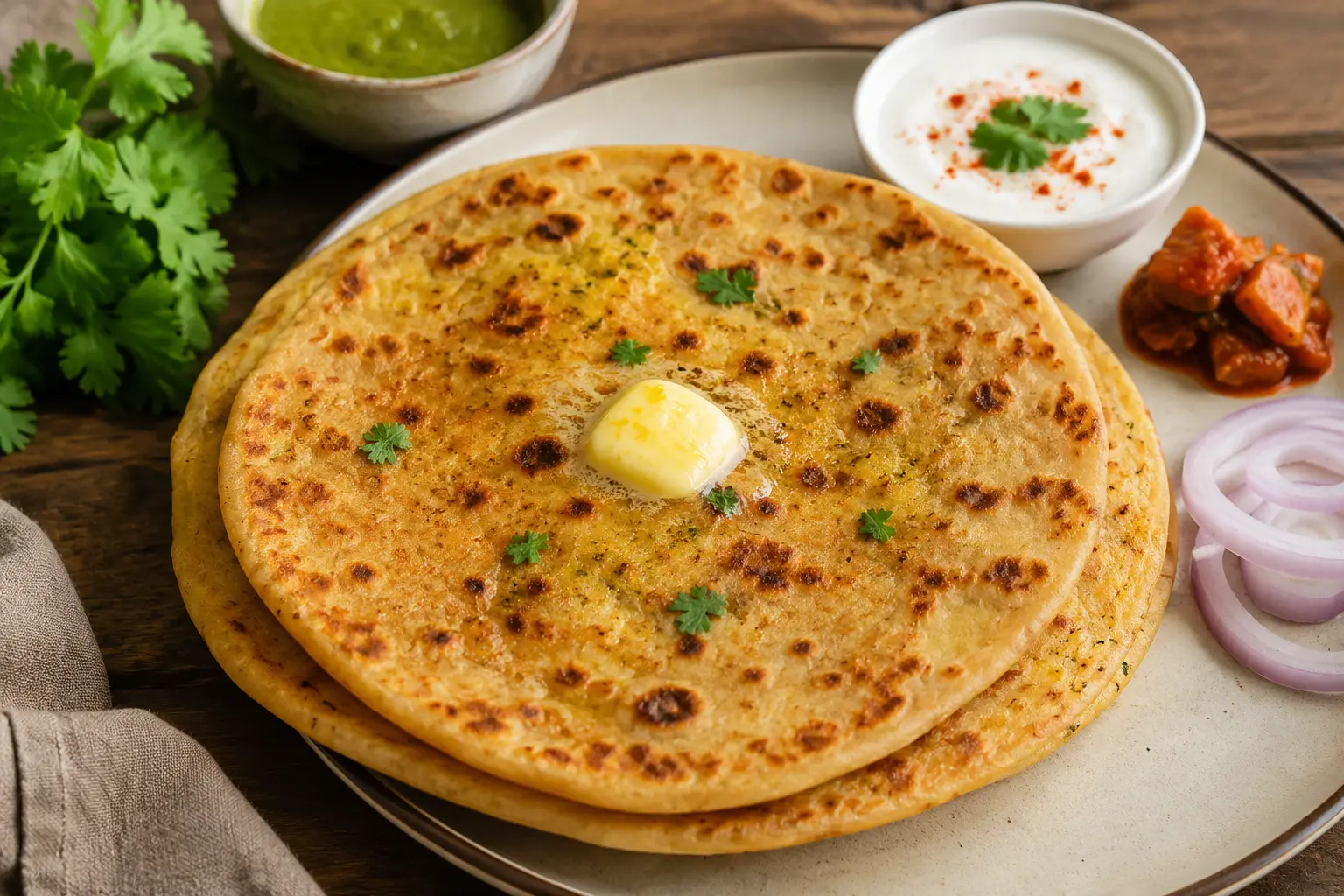
Aloo paratha is a popular North Indian flatbread made by encasing a spiced, mashed potato filling inside a whole-wheat dough, rolling it flat, and cooking it on a hot griddle with ghee or oil until golden-brown spots appear. It is commonly served hot for breakfast or a hearty meal alongside plain yogurt, pickles, or butter.
The key to a successful aloo paratha lies in a soft, pliable dough and a completely cooled, dry potato filling that will not burst through the edges as you roll it out.
Why This Recipe Works
- Boiling the potatoes whole and letting them cool completely helps evaporate excess surface moisture, preventing a sticky or dense filling.
- Adding a small amount of oil to the dough keeps the flatbread soft even after it cools.
- Resting the kneaded dough allows the gluten to relax, making it much easier to roll out evenly without tearing.
Ingredient Notes
- Atta flour: This is a finely milled whole-wheat flour specifically used for Indian flatbreads. Standard American whole-wheat flour is coarser and will yield a denser paratha; if using it, mix it with an equal amount of all-purpose flour for better texture.
- Potatoes: Starchy potatoes like Russet or Yukon Gold work best because they mash smoothly without becoming watery.
- Amchur (dry mango powder): Provides a sharp tang to balance the potato filling. If unavailable, a small squeeze of fresh lemon juice can be added to the filling mixture.
If You’re Cooking Outside India
- Atta flour: Found in South Asian grocery stores or the international aisle of many large supermarkets. Look for brands like Sujata or Pillsbury Chakki Fresh Atta.
- Amchur: Found in Indian grocery stores or online. It is a light beige powder made from sun-dried unripe mangoes.
- Tawa: A heavy, flat or slightly concave griddle used for cooking flatbreads. A heavy cast-iron skillet makes a reliable substitute.
How to Make Aloo Paratha
Making the Dough
Combine atta flour, a pinch of salt, and water gradually to form a soft, smooth dough. Knead well, coat with a little oil, and let it rest covered.
Preparing the Filling
Boil potatoes until tender, peel, and mash thoroughly. Mix with spices, herbs, and seasonings until uniform and completely cool.
Stuffing and Rolling
Divide dough and filling into equal portions. Enclose a portion of filling inside a flattened dough ball, seal tightly, and roll out gently into a flat circle.
Cooking
Cook the rolled paratha on a hot tawa, flipping once, then brush with ghee or oil and press gently until golden spots form on both sides.
Cooking Tips
- Ensure the mashed potato filling is at room temperature before stuffing; warm filling releases steam and softens the dough prematurely, causing tears.
- Roll from the center outward using light pressure to distribute the filling evenly without pushing it out of the edges.
Common Mistakes to Avoid
- The filling breaks through the dough while rolling: Either the dough is too stiff compared to the filling, or the filling contains lumps of potato. Ensure both dough and mashed potatoes have a smooth, pliable consistency.
- The paratha turns out hard and dry: The griddle may not have been hot enough, or too little ghee/oil was used during cooking. Cook over medium-high heat and do not skimp on the fat once on the tawa.
Variations
- Pyaz Aloo Paratha: Add finely minced red onions and green chilies to the potato filling just before stuffing for extra crunch and sharp flavor.
Serving Suggestions
- Serve hot with a dollop of fresh butter or white butter.
- Pair with plain yogurt, mango pickle, and lemon wedge.
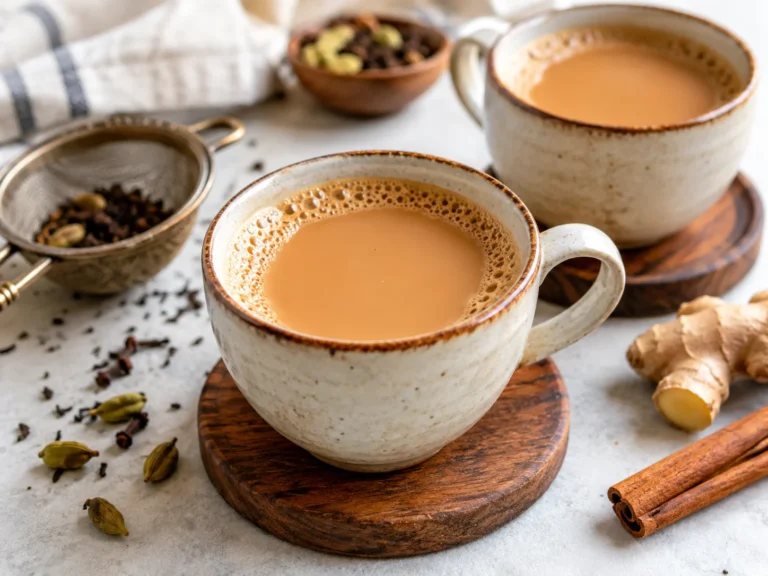
- Accompany with a hot cup of spiced Indian masala chai.
Storage & Make-Ahead
Make ahead: The dough can be kneaded up to a few hours in advance and kept covered in the refrigerator. Bring to room temperature before using.
Refrigerate: Cooked parathas can be stored in an airtight container in the refrigerator for up to 2 days.
Freeze: Uncooked stuffed parathas can be layered with parchment paper and frozen for up to a month. Cook directly from frozen on a hot tawa, adding a little extra cooking time.
Reheat: Reheat refrigerated cooked parathas on a hot skillet over medium heat for 30 seconds on each side until warm and pliable.
Frequently Asked Questions
Why does my paratha tear when I roll it out?
Tearing usually happens if the filling is too wet, if there are hard potato lumps piercing the dough, or if the dough was kneaded inconsistently. Make sure your potatoes are well-mashed and cooled, and roll with gentle, even pressure.
Can I use all-purpose flour instead of atta?
Atta is recommended for the traditional texture and flavor. Regular all-purpose flour will make a softer wrap similar to a tortilla, but it will lack the characteristic chew of a paratha.
More Indian Recipes to Try
Browse the IndiPlated recipe index
Aloo Paratha
Ingredients
Equipment
Method
- In a large mixing bowl, combine the atta flour and salt. Add water gradually and knead for 5 to 7 minutes until you have a soft, smooth dough. Rub the teaspoon of oil over the surface, cover with a damp cloth or lid, and let it rest for 20 minutes.
- In a medium bowl, mash the boiled and peeled potatoes thoroughly until completely free of large lumps. Add the grated ginger, green chilies, ground cumin, amchur, salt, and fresh coriander leaves. Mix well until combined, then divide into 4 equal portions.
- Divide the rested dough into 4 equal portions and roll each into a smooth ball. Keep them covered so they do not dry out.
- Take one dough ball and flatten it slightly with your palms. Roll it out on a lightly floured surface into a circle about 10 cm (4 inches) wide. Place one portion of the potato filling in the center. Bring the edges of the dough up and pinch them together at the top to seal the filling completely.
- Flatten the stuffed ball gently with your palm. Dust with more flour as needed, and use a rolling pin to roll it out outward from the center into a circle about 18 to 20 cm (7 to 8 inches) wide, using gentle pressure to avoid tearing.
- Heat a tawa or heavy skillet over medium-high heat. Place the rolled paratha onto the hot, dry surface. Cook for about 1 minute until small bubbles appear on the surface. Flip the paratha over.
- Spread about 1 teaspoon of ghee over the surface. Flip again and press gently around the edges with a spatula, spreading another teaspoon of ghee on this side. Cook until golden-brown spots appear on both sides. Repeat for the remaining portions.
Notes