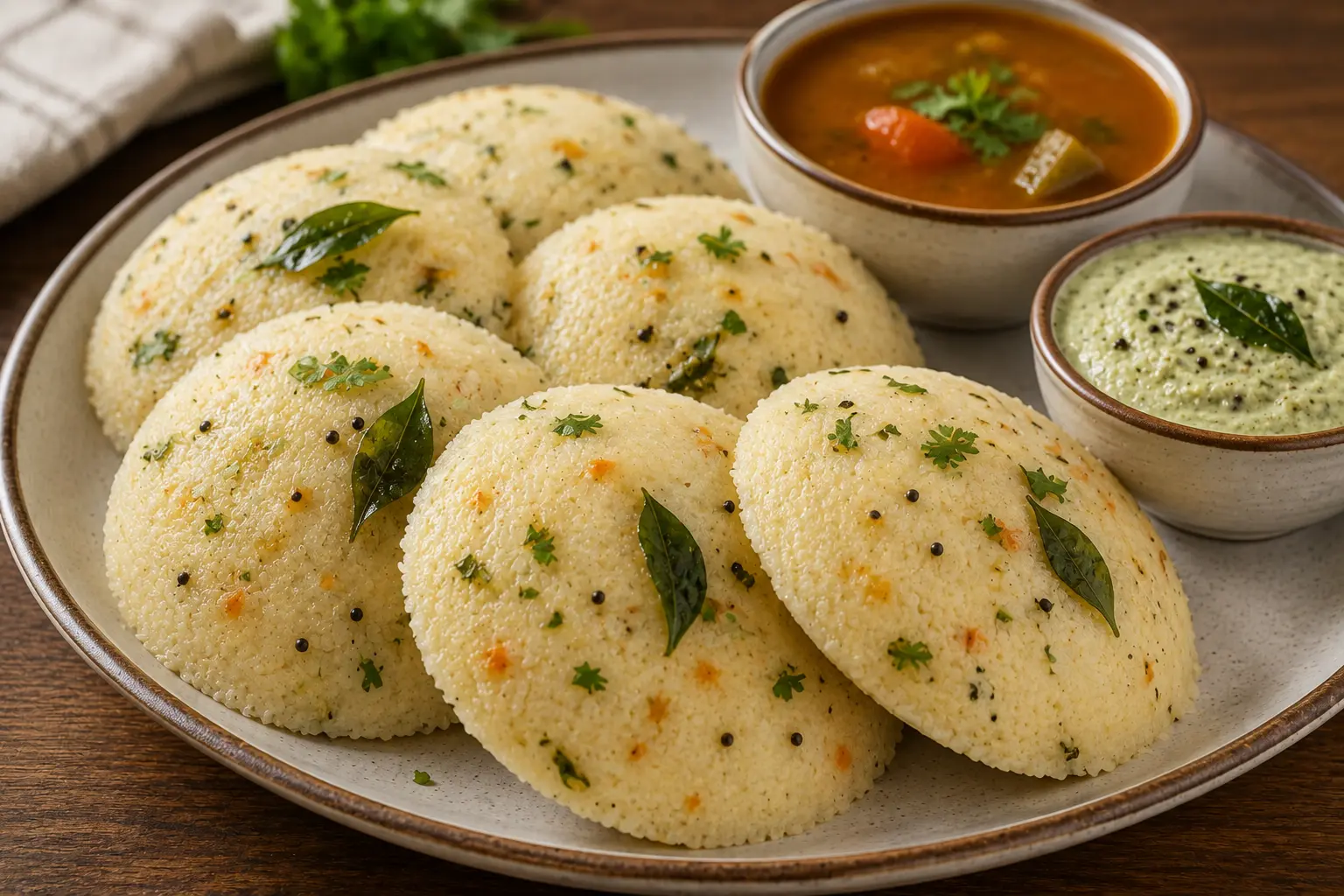
Rava Idli Recipe (Instant Steamed Semolina Cakes)
Rava idli is a popular South Indian steamed breakfast cake made from semolina, yogurt, and spices. Unlike traditional idlis that require soaking lentils and rice, grinding them into a batter, and fermenting them overnight, this instant version can be prepared from start to finish in less than an hour.
The hallmark of a great rava idli is a soft, spongy texture that is moist without being gummy. Success relies on two critical factors: properly roasting the semolina so it does not turn sticky when hydrated, and adding the leaven right before steaming to ensure a light, airy rise.
Why This Recipe Works
- Roasting the semolina in ghee or oil coats the starch granules, preventing them from clumping and turning gummy when mixed with liquid.
- Resting the batter for 15 minutes allows the semolina to fully absorb the liquid, ensuring the steamed idlis are evenly hydrated and soft throughout.
- Adding Eno fruit salt or baking soda just before steaming triggers an immediate foaming action that creates tiny air pockets, mimicking overnight fermentation.
Ingredient Notes
- Rava (Semolina/Sooji): Use medium-coarse semolina, often labeled as upma rava or coarse sooji. Fine semolina (chiroti rava) will make the idlis dense and sticky, while very coarse varieties do not bind well.
- Yogurt (Curd): Slightly sour yogurt works best to mimic the natural tang of fermented idli batter. If your yogurt is fresh and mild, you can add a small squeeze of lemon juice to the batter.
- Eno Fruit Salt: Use regular, unflavored Eno. It reacts with the acidic yogurt to create instant carbon dioxide bubbles. If you do not have Eno, you can use baking soda, though the rise will be slightly less airy.
- Chana Dal and Urad Dal: These split lentils are added during the tempering process. When fried in oil, they become crispy and provide a pleasant texture contrast in the soft idlis.
If You’re Cooking Outside India
- Rava / Semolina: Look for ‘Coarse Semolina’ or ‘Sooji’ in the baking aisle of mainstream supermarkets, or in South Asian grocery stores. Do not use semolina flour meant for pasta, as it is ground too fine.
- Eno Fruit Salt: This can be found in the digestive health aisle of most Indian grocers or major pharmacies. Ensure you buy the unflavored blue pack. If unavailable, substitute with 1/2 teaspoon of baking soda.
- Idli Steamer / Stand: Idlis require a specialized metal stand with shallow molds. You can find these online or at Indian kitchenware shops. If you do not have one, you can steam the batter in small, greased stainless steel bowls (ramekins) placed on a rack inside a covered pot.
How to Make Rava Idli
Tempering and Roasting
Start by heating ghee or oil to fry the mustard seeds, dals, cashews, ginger, and chilies until fragrant. Add the rava directly to this pan and roast on low heat. The goal is to warm the semolina and coat it with oil without browning it.
Hydrating the Batter
Mix the roasted rava with yogurt, water, salt, and fresh coriander. Let this batter rest. During this time, the dry semolina grains will swell and thicken the mixture to a dropping consistency.
Leavening and Steaming
Boil water in your steamer first. Only add the Eno fruit salt to the batter when the steamer is ready. Stir gently until the batter doubles in volume and becomes frothy, then immediately pour it into the greased molds and steam.
Cooking Tips
- Do not over-mix the batter after adding the Eno fruit salt, or you will pop the air bubbles and end up with flat, heavy idlis.
- Always grease the idli molds thoroughly with oil or ghee before pouring the batter to ensure they release cleanly after steaming.
- Let the steamed idlis sit for 2 to 3 minutes after opening the lid before attempting to unmold them. Scooping them out while piping hot will cause them to tear.
Common Mistakes to Avoid
- Idlis are dense and hard: This happens if the batter rested too long after adding the Eno, or if the water in the steamer was not hot enough when you placed the molds inside. Ensure the water is at a rolling boil before mixing in the leaven.
- Idlis are wet and sticky in the center: This means they are undercooked or the water level in the steamer was too high, causing water to splash into the lower molds. Steam on medium heat and check with a toothpick to ensure it comes out clean.
Variations
- Masala Vegetable Rava Idli: Fold finely grated carrots, boiled green peas, and finely chopped French beans into the batter along with the coriander leaves for color and extra texture.
Serving Suggestions
- Serve hot with coconut chutney and a side of warm vegetable sambar.
- Accompany with idli podi (spiced lentil powder) mixed with a splash of sesame oil or melted ghee.
Storage & Make-Ahead
Make ahead: You can roast the semolina with the spiced tempering ahead of time and store it in an airtight container for up to 2 weeks. When ready to eat, simply mix with yogurt and water, rest, add Eno, and steam.
Refrigerate: Store leftover steamed idlis in an airtight container in the refrigerator for up to 3 days.
Freeze: Freeze cooled idlis in a single layer on a baking sheet, then transfer them to a freezer-safe bag for up to 1 month.
Reheat: To restore their soft texture, steam refrigerated or frozen idlis for 3 to 5 minutes. Alternatively, sprinkle with a few drops of water, cover, and microwave for 30 to 45 seconds.
Frequently Asked Questions
Can I make this recipe without an idli stand?
Yes. You can steam the batter in small, greased stainless steel bowls, ceramic ramekins, or silicone muffin cups. Place them on a rack inside a wide pot filled with 2 cm of boiling water, cover tightly, and steam for 12 to 14 minutes.
Why did my idlis turn out sticky inside?
Sticky idlis usually occur if the semolina was not roasted sufficiently, if too much water was added to the batter, or if the water from the steamer lid dripped directly onto the idlis. Ensure your steamer lid is tightly fitted to redirect steam run-off away from the plates.
Can I use store-bought roasted rava?
Even if your packaging says ‘pre-roasted’ or ‘double-roasted’, it is highly recommended to lightly warm the rava in ghee with the tempered spices for 1 to 2 minutes before mixing. This ensures the oil coating is fresh and aromatic.
More Indian Recipes to Try
Browse the IndiPlated recipe index
Rava Idli
Ingredients
Equipment
Method
- Heat ghee or oil in a frying pan over medium heat. Add the mustard seeds and let them splutter. Add the chana dal, urad dal, and cashew halves. Fry for 1 to 2 minutes on low-medium heat until the dals turn light golden and the cashews are pale yellow.
- Add the finely grated ginger, chopped green chilies, chopped curry leaves, and a pinch of asafoetida (hing). Sauté for about 30 seconds until the raw aroma of ginger disappears.
- Turn the heat to low and add the rava (semolina) to the pan. Roast, stirring constantly, for 3 to 4 minutes. The rava should become fragrant and warm to the touch, but do not let it change color or turn brown. Turn off the heat and transfer the roasted mixture to a large mixing bowl to cool slightly.
- To the cooled rava mixture, add the yogurt, 1/2 cup of water, salt, and chopped coriander leaves. Whisk gently to combine into a thick batter without lumps. Cover the bowl and let the batter rest for 15 minutes. The semolina will absorb the liquid and thicken significantly.
- While the batter rests, add 2 to 3 cups of water to your idli steamer or deep pot and bring it to a boil. Grease the idli plates thoroughly with a thin layer of oil or ghee. If desired, place one cashew piece at the bottom of each mold.
- Check the rested batter. If it has become too dry and thick, add 1 to 2 tablespoons of water to bring it back to a thick dropping consistency (like a thick cake batter). Sprinkle the Eno fruit salt evenly over the batter. Pour 1 teaspoon of water directly onto the Eno to activate it; it will begin to bubble and foam immediately.
- Gently fold the foaming Eno into the batter using a spatula. Do not over-mix; stop as soon as the batter looks light, aerated, and uniform. Working quickly, spoon the batter into the greased idli molds, filling each to about 3/4 full to allow room for the rise.
- Place the idli stand inside the steamer once the water is boiling vigorously and releasing steady steam. Cover with a tight-fitting lid and steam on medium-high heat for 10 to 12 minutes. To test for doneness, insert a toothpick into the center of an idli; it should come out clean without any wet batter sticking to it.
- Turn off the heat. Remove the idli stand from the steamer and let it cool for 3 to 5 minutes. Dip a spoon in cold water and gently slide it around the edges of each idli to scoop them out of the molds cleanly.
Notes
Standard unflavored Eno works best. If substituting with baking soda, use 1/2 teaspoon instead of 1 teaspoon.