Prawn Curry Recipe (Indian Coconut Shrimp Curry)
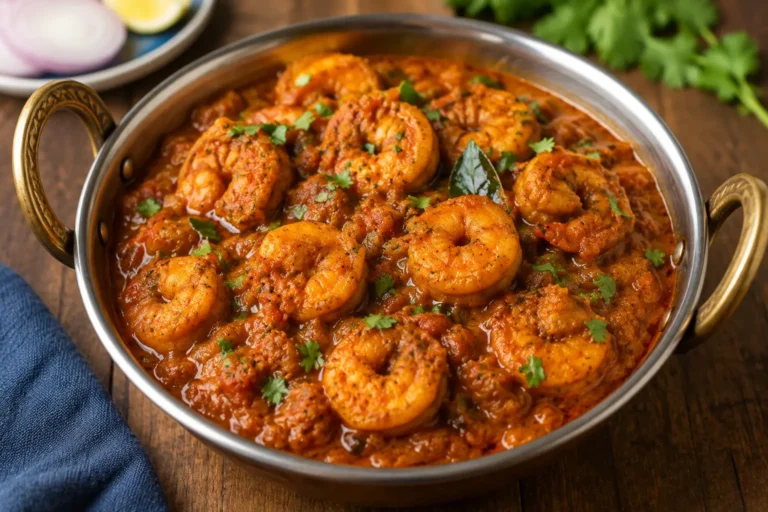
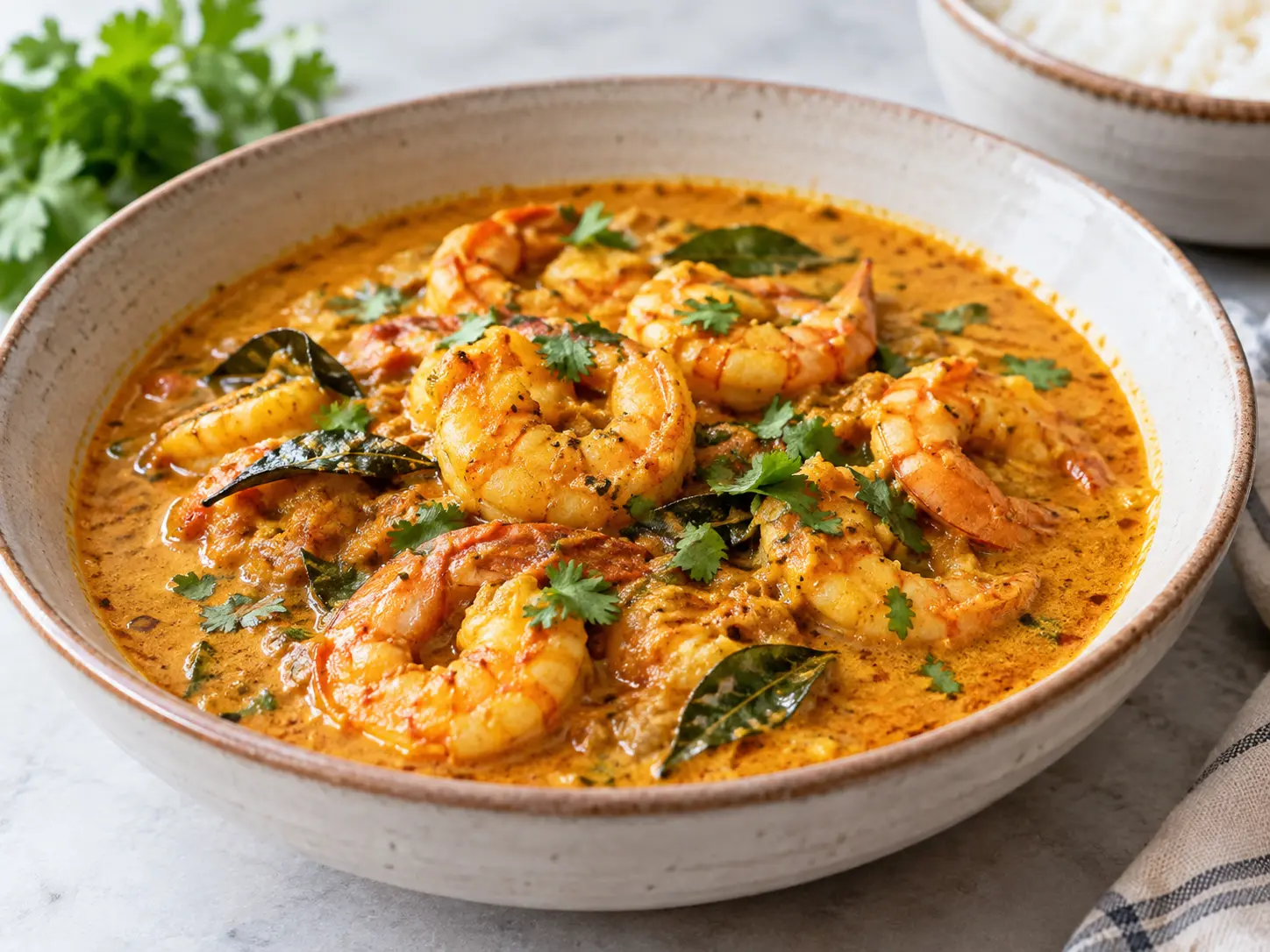
This coastal-style Indian prawn curry features tender prawns simmered in a creamy, spiced coconut milk gravy. It balances the natural sweetness of coconut milk with the tangy depth of tamarind and the mild, warm heat of Kashmiri chili powder.
The key to a successful prawn curry lies in the timing. Because prawns cook very quickly, they are added to the gravy at the very end. This prevents them from overcooking and ensures they remain plump and tender rather than tough and rubbery.
Why This Recipe Works
- Marinating the prawns briefly in turmeric, chili powder, and lime juice builds a savory foundation directly on the seafood before it goes into the curry.
- Diluting the canned coconut milk with a small amount of water prevents the sauce from feeling too heavy and ensures the spices remain prominent.
- Adding the prawns during the final minutes of simmering allows them to cook gently in the residual heat of the curry base, preserving their tender texture.
Ingredient Notes
- Prawns (or Shrimp): Medium-sized, peeled, and deveined prawns work best for this recipe. If using frozen prawns, thaw them completely in the refrigerator and pat them dry thoroughly with paper towels before marinating to prevent excess water from diluting the spices.
- Kashmiri Red Chili Powder: This ground spice provides a vibrant red color and a mild, gentle heat. If you substitute regular cayenne pepper, reduce the quantity by half as it is significantly hotter.
- Coconut Milk: Use unsweetened canned coconut milk. Shake the can very well before opening to emulsify the fat that naturally separates at the top.
- Tamarind Paste: Provides a distinct, fruity sourness that cuts through the richness of the coconut milk. Use a smooth, seedless concentrate for easy mixing.
If You’re Cooking Outside India
- Curry Leaves: Fresh or frozen curry leaves can be found in South Asian grocery stores. If you cannot find them, omit them entirely. Avoid using dried curry leaves, as they lose almost all of their aromatic qualities, and do not substitute bay leaves as the flavor profile is completely different.
- Tamarind Paste: If concentrated tamarind paste is unavailable, you can substitute it with an equal amount of fresh lime juice, stirred into the curry at the very end of cooking after removing the pan from the heat.
How to Make Prawn Curry
Marinating the Seafood
Toss the cleaned prawns with turmeric, chili powder, lime juice, and salt. Let them rest briefly at room temperature while you prepare the other ingredients.
Tempering the Aromatics
Heat coconut oil in a pan and add mustard seeds until they crackle and pop, followed by the curry leaves to release their aroma into the oil.
Building the Masala Base
Cook the onions until soft and golden, then sauté the ginger-garlic paste, tomatoes, and dry spices until the mixture cooks down and the oil begins to separate at the edges.
Simmering the Gravy
Stir in the coconut milk, water, and tamarind paste, allowing the liquid to come to a gentle simmer so the flavors meld together.
Poaching the Prawns
Slide the marinated prawns into the simmering gravy and cook briefly until they turn opaque and curl into loose shapes.
Cooking Tips
- Do not let the coconut milk boil vigorously. Keep the heat on medium-low once the coconut milk is added to prevent the sauce from separating or curdling.
- Keep an eye on the shape of the cooking prawns. They are perfectly done when they form a loose ‘C’ shape. If they curl tightly into an ‘O’ shape, they have been overcooked.
- Adjust the tanginess at the very end of cooking. Taste the gravy before adding the prawns and stir in a touch more tamarind or lime juice if you prefer a sharper finish.
Common Mistakes to Avoid
- Adding the prawns too early in the cooking process: Cook the curry base completely before adding the prawns. The prawns only need 3 to 4 minutes of gentle simmering to cook through completely.
- Using sweetened coconut milk: Double-check the can label before cooking. Sweetened coconut milk intended for desserts or beverages will ruin the savory balance of the curry.
Variations
- Mango Prawn Curry: Omit the tamarind paste and add 3 to 4 slices of peeled raw green mango to the gravy while it simmers, letting the mango cook until tender before adding the prawns.
- Tomato-Based Prawn Curry (No Coconut): Omit the coconut milk entirely and double the quantity of chopped tomatoes, adding 150ml of water to create a lighter, tomato-forward gravy.
Serving Suggestions
- Serve hot over a bed of steamed basmati rice to soak up the spiced coconut gravy.
- Pair with fresh flatbreads like soft rotis or lacy South Indian appams.
- Accompany with a simple side of sliced cucumbers and red onions dressed with lemon juice.
Storage & Make-Ahead
Make ahead: You can prepare the spiced curry base (without the coconut milk and prawns) up to a day in advance. When ready to serve, bring the base to a simmer, stir in the coconut milk and water, then add the prawns to poach fresh.
Refrigerate: Store leftovers in an airtight container in the refrigerator for up to 2 days.
Freeze: Freezing is not recommended for this dish. Cooked prawns tend to become rubbery and watery upon thawing, and the coconut milk sauce can separate and lose its smooth texture.
Reheat: Reheat leftovers gently on the stovetop over low heat, stirring occasionally until hot. Avoid boiling the curry during reheating to keep the prawns tender.
Frequently Asked Questions
Can I use frozen prawns for this recipe?
Yes, frozen prawns work well. Make sure to thaw them completely in the refrigerator, rinse them, and pat them dry thoroughly with paper towels before starting the marinating step so they absorb the spices properly.
What can I use as a substitute for coconut oil?
You can use any neutral cooking oil such as canola, vegetable, or sunflower oil. However, coconut oil is highly recommended as it contributes to the signature coastal aroma of the curry.
How do I prevent the coconut milk from curdling or splitting?
Keep the heat on medium-low once you add the coconut milk to the pan. Do not cover the pan with a lid during this stage, and avoid letting the curry come to a rapid, rolling boil.
More Indian Recipes to Try
Browse the IndiPlated recipe index
Prawn Curry
Ingredients
Equipment
Method
- In a mixing bowl, combine the cleaned prawns with 1/4 teaspoon turmeric powder, 1/2 teaspoon Kashmiri red chili powder, 1 teaspoon lime juice, and 1/2 teaspoon salt. Toss to coat evenly and let sit at room temperature for 10 minutes.
- Heat 2 tablespoons of coconut oil in a deep sauté pan or kadai over medium heat. Once hot, add 1/2 teaspoon of mustard seeds. When they begin to crackle and pop, add the 10 curry leaves and stir quickly for about 10 seconds until fragrant.
- Add the finely chopped onion to the pan. Cook over medium heat, stirring occasionally, for 6 to 8 minutes, or until the onions turn soft and translucent with light golden edges. Add 1 tablespoon of ginger-garlic paste and sauté for another minute until the raw smell disappears.
- Stir in the chopped tomato, 1 teaspoon Kashmiri red chili powder, 1 tablespoon coriander powder, 1/2 teaspoon cumin powder, 1/4 teaspoon turmeric powder, and 1/2 teaspoon salt. Cook for 4 to 5 minutes, stirring frequently and mashing the tomatoes with your spoon, until they soften completely and the oil starts to separate at the edges.
- Turn the heat down to low. Pour in 200 ml of coconut milk, 120 ml of water, and the diluted tamarind paste. Stir thoroughly to combine. Allow the gravy to come to a gentle simmer over medium-low heat for about 3 minutes.
- Gently slide the marinated prawns into the simmering curry. Cook over medium-low heat for 3 to 4 minutes, stirring occasionally, until the prawns turn completely opaque, pink, and curl into a loose 'C' shape. Turn off the heat immediately. Garnish with chopped coriander leaves and serve warm.
Notes
If you do not have tamarind, you can omit it in Step 5 and squeeze fresh lime juice over the curry right after turning off the stove heat in Step 6.