Amritsari Fish Recipe (Spiced Gram Flour Fried Fish)
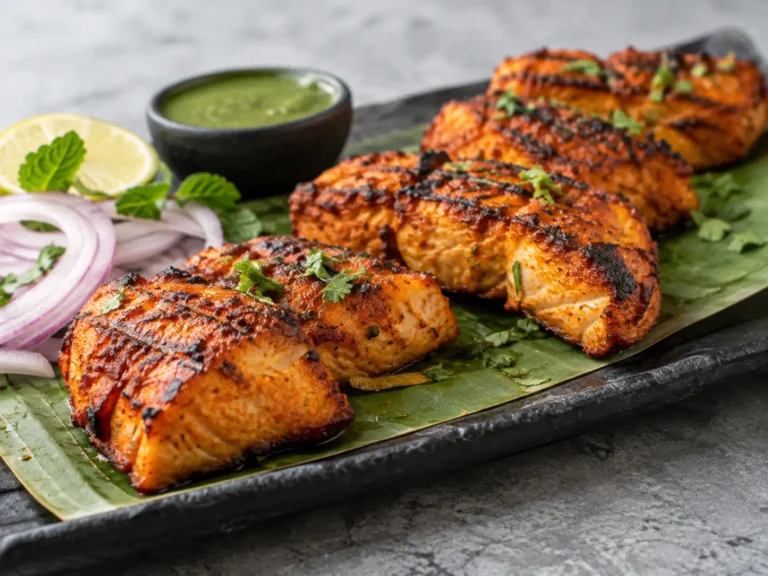
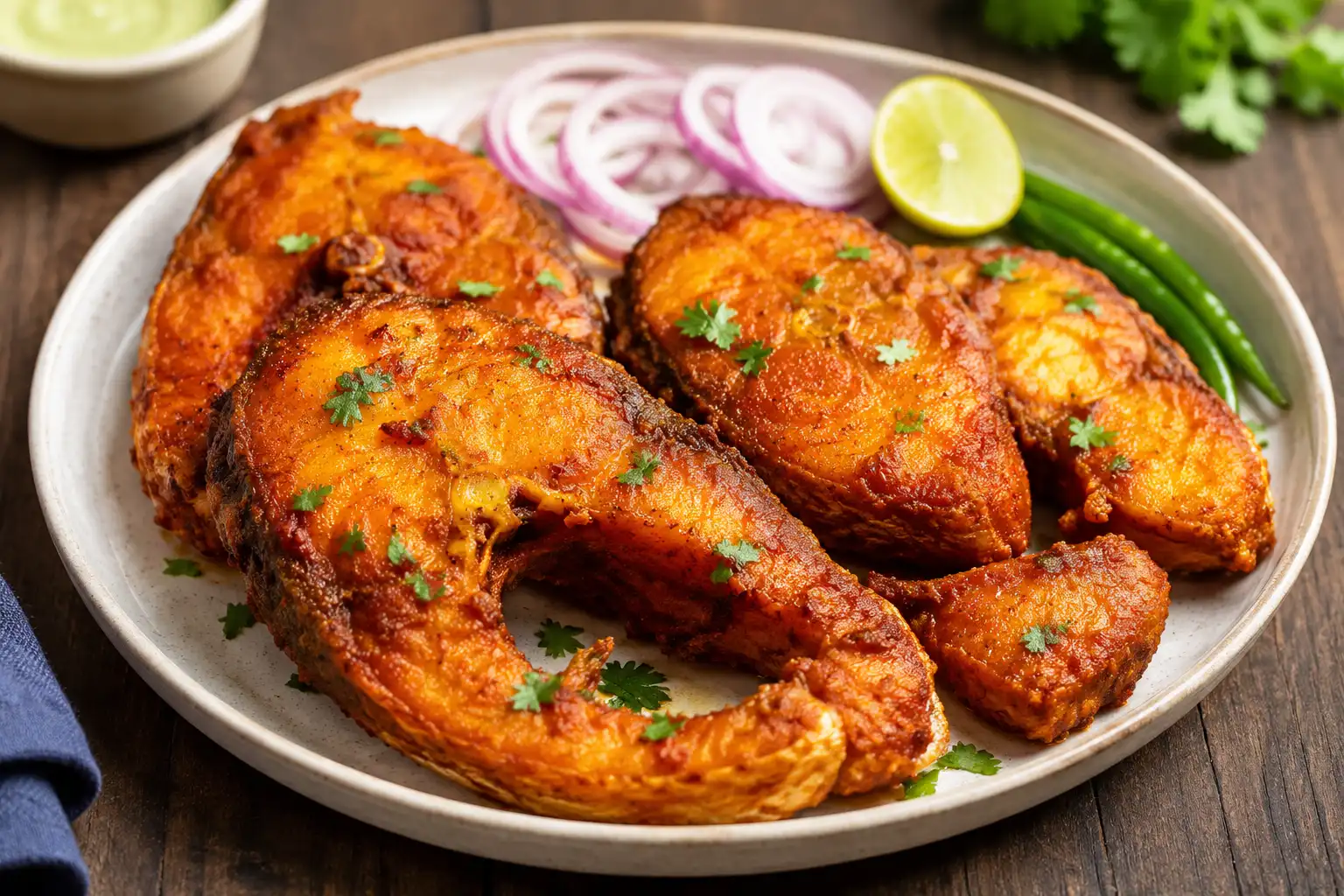
Amritsari fish is a popular fried fish dish from the city of Amritsar, known for its crisp, golden gram flour coating and warm spiced undertones. The interior of the fish remains tender and moist, while the exterior gets its distinct crunch and fragrance from carom seeds (ajwain) and gram flour.
This version relies on a double-marination method. The first marination seasons the fish and draws out excess moisture, while the second builds the light, crisp coating that clings to the fish during frying.
Why This Recipe Works
- The double marination ensures the fish is well-seasoned to the core, which prevents the final dish from tasting flat or watery on the inside.
- A small addition of rice flour alongside the gram flour helps the batter stay crisp for longer after frying.
- Adding carom seeds directly to the coating cuts through the richness of the fried batter and pairs naturally with the fish.
Ingredient Notes
- Fish: Firm white fish fillets work best for this recipe. Cod, haddock, tilapia, or catfish are excellent choices. Cut them into uniform strips so they cook at the same rate.
- Besan (gram flour): Besan is ground from split brown chickpeas and gives the batter its signature nutty flavor. It is finer than Western chickpea flour. If you only have standard chickpea flour, adjust the liquid gradually because it can absorb water differently.
- Ajwain (carom seeds): This spice has a distinct thyme-and-oregano aroma with a sharp bite. If you do not have it, it is best to omit it rather than replacing it with thyme, as thyme has a different flavor profile that alters the identity of the dish.
- Rice flour: Adding a small amount of rice flour is a practical way to achieve a lighter, crispier coating that does not go soft quickly.
If You’re Cooking Outside India
- Besan (gram flour): Look for bags labeled ‘besan’ or ‘gram flour’ in South Asian grocery stores or the international aisle of large supermarkets. Do not confuse it with raw chickpea flour, which has a coarser texture and may require more liquid adjustment to reach a paste consistency.
- Ajwain (carom seeds): These small, striped seeds are readily available at Indian grocers. If you cannot find them, you can skip them; the fish will still taste wonderful, though it will lack that specific herbal aroma.
How to Make Amritsari Fish
First Marination
Toss the clean, dry fish strips with lemon juice, ginger-garlic paste, red chili powder, and salt. This step draws out surface moisture and seasons the fish directly.
Batter Coating
Dust the flours and spices over the marinated fish, then add water a tablespoon at a time. Mix gently by hand until a thick, paste-like batter coats each piece without pooling.
Frying
Lower the coated fish into medium-hot oil. Fry in batches until the exterior is golden-brown and the fish flakes easily.
Cooking Tips
- Do not crowd the pan. Frying too many pieces at once lowers the oil temperature, making the coating absorb oil and become soggy.
- Test the oil before frying. Drop a small speck of batter into the pan; it should sizzle and rise immediately to the surface without turning dark too quickly.
- Keep the batter thick. If the batter is too thin or runny, it will slide off the fish when it hits the hot oil.
Common Mistakes to Avoid
- The batter slides off the fish during frying: This happens if the fish is too wet. Make sure to pat the raw fillets completely dry with paper towels before starting, and add water to the flour very sparingly.
- The fish turns soggy quickly after frying: This occurs when the oil is not hot enough, or if the fried fish is drained on a flat plate where it traps steam. Always fry in hot oil and drain the pieces on a wire rack or paper towels.
Variations
- Semolina (Rava) crust: For an extra-crunchy exterior, roll the wet-battered fish pieces in fine semolina immediately before dropping them into the hot oil.
Serving Suggestions
- Serve hot sprinkled with chaat masala, alongside fresh green coriander-mint chutney.
- Pair with thinly sliced red onions and fresh lemon wedges on the side for a simple appetizer.
Storage & Make-Ahead
Make ahead: The fish can be kept in the first marination for up to 2 hours in the refrigerator. Do not add the flours or water until you are ready to fry, as the flours will draw out moisture and become runny over time.
Refrigerate: Store fried leftovers in an airtight container in the refrigerator for up to 2 days.
Freeze: Freezing is not recommended because the batter loses its crispy texture when thawed.
Reheat: Reheat leftovers in an oven or air fryer at 180C / 350F for 4 to 5 minutes until hot and crisp. Avoid using a microwave, which makes the coating soggy.
Frequently Asked Questions
Can I bake or air-fry this recipe?
Baking or air-frying is not recommended for this style of wet gram flour batter. The batter needs the immediate, intense heat of hot oil to set quickly and become crisp; otherwise, it tends to drip off or become dry and leathery.
What is a good substitute for besan?
Besan (gram flour) is highly recommended for its distinct flavor and fine texture. If unavailable, you can use chickpea flour, but add water very gradually as chickpea flour is coarser and absorbs liquids differently than fine besan.
More Indian Recipes to Try
Browse the IndiPlated recipe index
Amritsari Fish
Ingredients
Equipment
Method
- Pat the fish pieces completely dry with paper towels. In a mixing bowl, combine the fish strips with the lemon juice, ginger-garlic paste, 1 teaspoon of red chili powder, and 1/2 teaspoon of salt. Toss gently to coat. Set aside to marinate for 10 minutes.
- Sprinkle the besan (gram flour), rice flour, ajwain (carom seeds), turmeric powder, coriander powder, and garam masala directly over the marinated fish. Gently toss with your hands so the dry flours cling to the wet seasoned fish.
- Sprinkle 1 tablespoon of water over the mixture and toss gently. If dry flour is still visible, add another tablespoon of water. The goal is a thick, paste-like coating that tightly wraps each piece of fish without any excess liquid pooling in the bowl. Let it rest for 10 minutes.
- Pour oil into a deep frying pan or kadai to a depth of about 5 cm / 2 inches. Heat over medium-high heat until it reaches approximately 180C / 350F. Test by dropping a tiny bit of batter; it should sizzle immediately and float.
- Carefully lower the coated fish pieces into the hot oil one by one. Fry in batches to avoid crowding the pan. Cook for 3 to 4 minutes, turning occasionally, until the batter is deep golden brown and crispy, and the fish inside is opaque and flakes easily. Drain on paper towels.
- Transfer the hot fried fish to a serving platter. Sprinkle immediately with chaat masala and serve warm with green chutney and lemon wedges.
Notes
Adjust water amount gradually during the batter step, as different brands of gram flour absorb water differently.