Idli Recipe (Soft and Spongy Steamed Rice Cakes)
Idli is a popular steamed savory cake made from a fermented batter of rice and black gram (urad dal). It is a staple breakfast across South India, valued for its light, fluffy texture and mild, slightly tangy flavor.
This recipe focuses on a reliable method using idli rice and whole husked black gram. Achieving the characteristic soft, pillowy texture depends on the correct soaking ratio, grinding to the right consistency, and allowing the batter to ferment until it rises and becomes airy.
Why This Recipe Works
- Using a four-to-one ratio of rice to urad dal provides the structure needed for the idlis to hold their shape while remaining light.
- Adding a small amount of fenugreek seeds helps the urad dal fluff up during grinding and supports the natural fermentation process.
- Grinding the urad dal separately into a thick, aerated paste creates tiny air pockets that translate directly into fluffy idlis.
Ingredient Notes
- Idli Rice: A short-grain parboiled rice that yields the best soft texture. Avoid using long-grain jasmine or basmati rice, as they do not contain the right starch profile to make spongy idlis.
- Urad Dal (Gota): Whole, skinned black gram is preferred over split urad dal because it retains more of its natural properties that hold air better when ground.
- Fenugreek Seeds: These small, bitter seeds are added in tiny quantities to aid fermentation and improve the batter’s elasticity.
- Non-Iodized Salt: Use rock salt or sea salt. Iodized salt can sometimes inhibit the natural microbes needed for proper fermentation.
If You’re Cooking Outside India
- Idli Rice: Commonly found in South Asian grocery stores. If unavailable, parboiled short-grain rice (such as ponni parboiled) works well as a direct substitute.
- Urad Dal: Look for whole white urad dal (urad gota) in the lentil aisle of South Asian supermarkets. Split white urad dal (urad dhuli) is a suitable alternative if whole is unavailable.
- Idli Stand/Steamer: A specialized multi-tiered metal stand placed inside a pot or pressure cooker (without the weight). If you do not have one, you can steam the batter in small, greased ramekins placed on a rack inside a covered pot.
How to Make Idli
Soaking the Grains
Wash and soak the rice and dal in separate bowls for at least four to six hours, adding the fenugreek seeds to the dal bowl.
Grinding the Batter
Grind the urad dal with cold water first until it is light, fluffy, and voluminous. Then, grind the rice to a slightly coarse, rava-like consistency.
Mixing and Salting
Combine both batters with salt, mixing thoroughly with your clean hand to introduce oxygen and start the fermentation.
Fermenting
Let the batter rest in a warm, dark place for eight to twelve hours until it doubles in volume and smells pleasantly sour.
Steaming
Pour the batter into greased idli plates and steam on medium-high heat for ten to twelve minutes until cooked through.
Cooking Tips
- Use cold water when grinding to prevent the mixer-grinder from heating up. If the batter gets warm, the natural fermentation process can be disrupted.
- Do not over-grind the rice into a completely smooth paste. A slightly grainy texture gives the idlis their characteristic structure.
- Mix the batter with your clean hand. The natural warmth helps initiate the fermentation process.
Common Mistakes to Avoid
- The batter did not rise or ferment: Keep the batter in a warm spot, such as an oven with the light turned on, or near a heating vent. Ensure you used non-iodized salt, as iodine can slow down fermentation.
- Hard, dense idlis: This usually happens if the urad dal was not ground into a sufficiently fluffy paste, or if the batter was over-mixed after fermenting, which deflates the air bubbles.
- Sticky, wet idlis after steaming: Let the steamed idlis sit in the plates for two to three minutes after turning off the heat before unmolding. Dipping your spoon in water helps them slide out cleanly.
Variations
- Kanchipuram Idli: A spiced variation where the batter is tempered with cumin seeds, black pepper, ginger powder, curry leaves, and cashew nuts before steaming.
- Podi Idli: Steamed idlis are cut into bite-sized pieces and tossed in sesame oil and spicy idli milagai podi (gunpowder spice mix).
Serving Suggestions
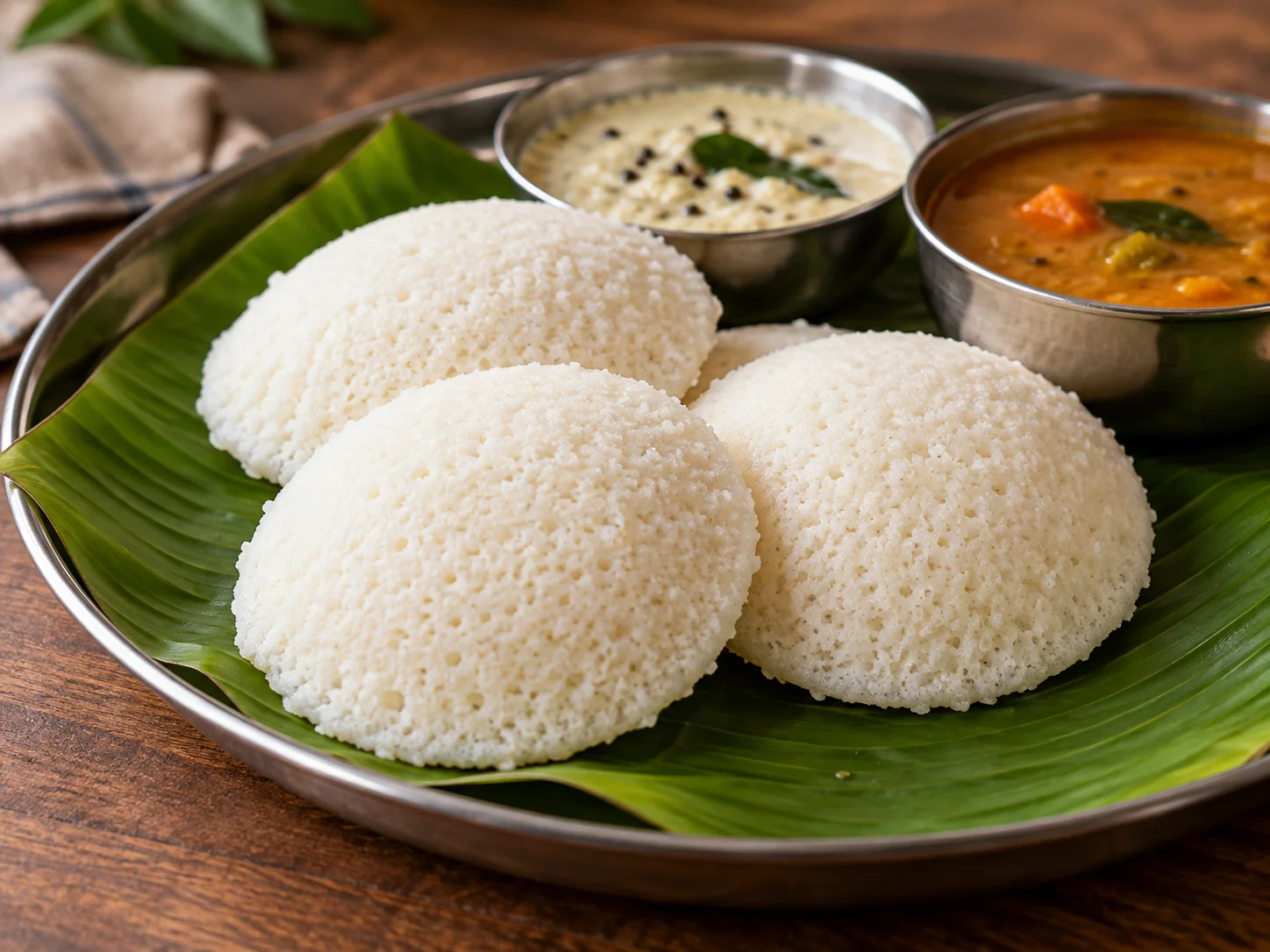
- Serve hot with fresh coconut chutney and warm sambar.
- Pair with tomato-onion chutney or mint-coriander chutney for contrast.
Storage & Make-Ahead
Make ahead: The batter can be prepared and fermented in advance. Store the fermented batter in the refrigerator for up to three to four days.
Refrigerate: Keep cooked idlis in an airtight container in the refrigerator for up to two days.
Freeze: Cooked idlis can be frozen in a single layer, then transferred to a freezer bag for up to one month. Steam to reheat.
Reheat: Reheat refrigerated idlis by steaming them for three to four minutes to restore their soft, moist texture. Avoid microwaving them dry.
Frequently Asked Questions
Why did my idlis turn out hard?
Hard idlis are usually the result of under-ground urad dal or over-mixing the batter after fermentation, which deflates the air bubbles. Ensure the urad dal is ground to a thick, fluffy, whipped-cream consistency.
Can I use normal table salt for the batter?
It is best to use non-iodized salt, such as rock salt or sea salt. Iodized salt contains chemicals that can inhibit the natural microbial growth required for proper fermentation.
How do I ferment the batter in cold weather?
If your kitchen is cold, place the covered batter container inside an oven with the oven light turned on. The light bulb generates just enough gentle warmth to encourage fermentation without cooking the batter.
More Indian Recipes to Try
Browse the IndiPlated recipe index
Idli
Ingredients
Equipment
Method
- Wash the idli rice in cold water until the water runs clear. In a separate bowl, wash the urad dal and fenugreek seeds together. Soak both the rice and the dal-fenugreek mixture in ample water in separate bowls for at least four to six hours.
- Drain the soaked urad dal and fenugreek seeds. Transfer them to a wet grinder or high-speed blender. Add about 1/4 cup of ice-cold water and grind. Gradually add small splashes of cold water as needed, grinding for fifteen to twenty minutes until the dal becomes a very thick, smooth, fluffy, and voluminous paste that floats when a small spoonful is dropped into water.
- Drain the soaked rice and add it to the blender or grinder. Add just enough cold water to allow grinding. Grind until the rice is mostly smooth but retains a very fine, sand-like or semolina-like texture. Do not grind it into a completely smooth paste.
- Pour both the ground urad dal paste and the rice batter into a large mixing bowl or container. Ensure the container has plenty of headspace, as the batter will expand. Add one teaspoon of non-iodized salt. Mix thoroughly with your clean hand for two to three minutes to incorporate air.
- Cover the container loosely with a lid. Place it in a warm, draft-free place (around 26°C to 30°C / 78°F to 86°F) for eight to twelve hours. The batter is ready when it has doubled in volume, looks bubbly and airy, and has a mild, clean, fermented sour aroma.
- Gently stir the fermented batter once or twice from the bottom; do not over-mix or deflate the air. Grease the idli plates with a light coating of sesame oil. Pour a ladleful of batter into each mold, filling them about 3/4 full. Bring two centimeters of water to a boil in your steamer pot, place the idli stand inside, close the lid, and steam on medium-high heat for ten to twelve minutes.
- Turn off the heat and let the steamer sit undisturbed for two to three minutes. Remove the idli stand and let the idlis cool slightly. Dip a spoon in cold water and run it gently around the edges of each mold to lift the soft, fluffy idlis out cleanly.
Notes
Do not over-mix the fermented batter. A light hand preserves the tiny air bubbles that make the steamed idlis soft and spongy.