Rava Dosa Recipe (Crispy Semolina Crepe)
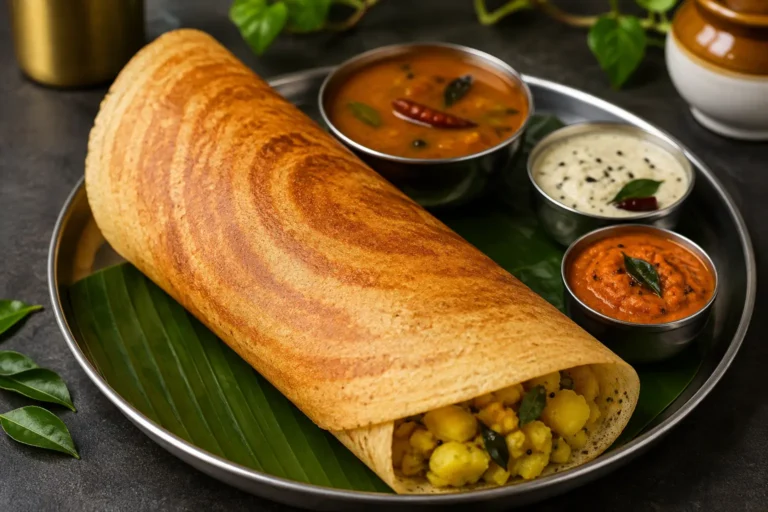
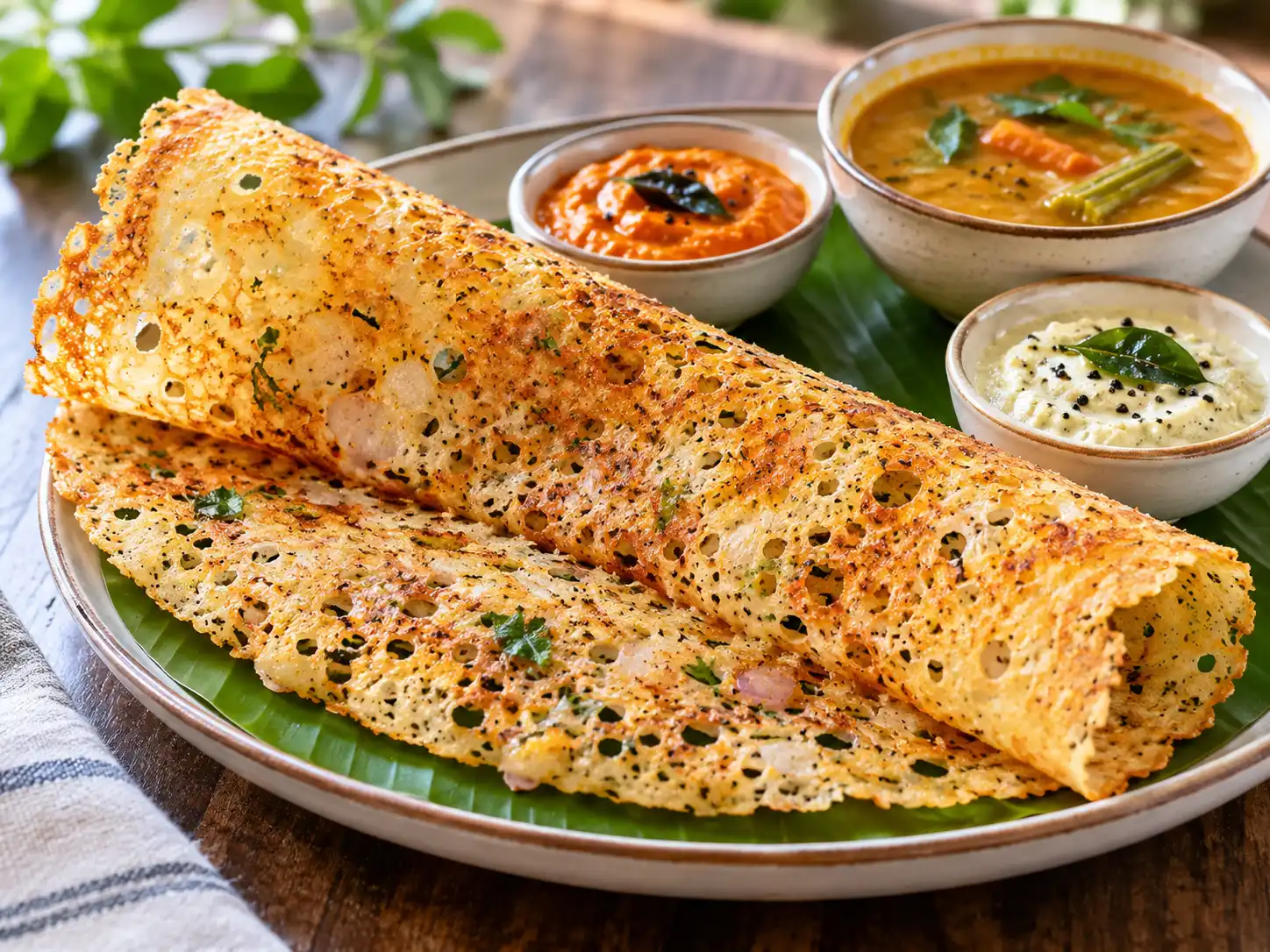
Rava Dosa is a popular South Indian crepe known for its distinctive lace-like pattern and crisp, shatteringly brittle texture. Unlike traditional dosas that require soaking and fermenting lentils and rice overnight, this version relies on fine semolina, rice flour, and all-purpose flour for a quick batter that goes straight from the bowl to the hot griddle.
Making a successful rava dosa comes down to a very thin batter consistency and a properly heated griddle. Because the batter is runny, it is poured from a height rather than spread with a ladle, creating those signature holes and an extra-crispy edge.
Why This Recipe Works
- Using a blend of fine semolina and rice flour creates a rigid, crisp structure that stays crunchy longer than a standard lentil dosa.
- Keeping the batter very thin and pouring it onto a hot griddle allows the mixture to form natural lacy gaps and bubbles.
- Adding a small amount of yogurt helps the edges brown evenly and gives the crepe a subtle tang.
Ingredient Notes
- Fine semolina: Use fine rava or suji. If your semolina is coarse, pulse it briefly in a grinder so the batter remains smooth and pours easily.
- Rice flour: Acts as a crisping agent alongside the semolina, ensuring the dosa holds its crunchy texture.
- Cumin seeds: Provides a warm, earthy background aroma that is characteristic of traditional rava dosas.
If You’re Cooking Outside India
- Fine semolina: Often labeled as fine suji or fine rava at South Asian grocery stores. In standard supermarkets, look for fine wheat semolina or farina.
- Tawa: A traditional flat Indian griddle used for flatbreads and dosas. A heavy-bottomed cast-iron skillet or a well-seasoned non-stick frying pan works well as an alternative.
How to Make Rava Dosa
Mixing the Batter
Whisk together the dry flours, spices, and liquid ingredients until smooth, then let the batter rest so the semolina absorbs moisture.
Adjusting Consistency
Thin the batter with additional water until it resembles heavy cream or skim milk; it must be watery enough to flow through gaps.
Pouring and Cooking
Splash water on a hot griddle to test heat, wipe dry, and pour the batter from a height starting from the outer edges inward.
Cooking Tips
- Stir the batter thoroughly before pouring every single dosa, as the heavy flour settles to the bottom quickly.
- Do not try to spread the batter with the back of a ladle like a regular dosa; simply pour it into the empty spaces on the pan.
Common Mistakes to Avoid
- The batter is too thick, resulting in a soft, spongy crepe instead of a crisp one: Add more water to thin the batter until it pours easily like watery buttermilk.
- The dosa sticks to the pan and tears when you try to lift it: Ensure your cast-iron or non-stick griddle is properly heated and lightly oiled before pouring the batter.
Variations
- Onion Rava Dosa: Sprinkle finely chopped onions, green chilies, and fresh cilantro evenly across the hot griddle right before pouring the batter.
Serving Suggestions
- Serve immediately with a side of fresh coconut chutney.
- Pair with a warm bowl of vegetable sambar.
Storage & Make-Ahead
Make ahead: The dry flour mixture can be combined ahead of time, but mix with water and yogurt shortly before cooking.
Refrigerate: Leftover batter can be stored in an airtight container in the refrigerator for up to 1 day, though it may need thinning with extra water before reuse.
Freeze: Freezing the liquid batter is not recommended.
Reheat: Rava dosas are best eaten immediately while hot and crisp; they do not reheat well.
Frequently Asked Questions
Can I use coarse semolina for rava dosa?
Coarse semolina creates a grainy texture and prevents the batter from flowing smoothly. If you only have coarse semolina, grind it in a dry grinder for a few seconds until fine before mixing.
Why is my rava dosa breaking on the pan?
If the dosa sticks or breaks, your pan may not be hot enough, or the batter might be too thick. Ensure the griddle is properly heated and add a little more water to thin the batter.
More Indian Recipes to Try
Browse the IndiPlated recipe index
Rava Dosa
Ingredients
Equipment
Method
- In a large mixing bowl, combine the fine semolina, rice flour, all-purpose flour, cumin seeds, black peppercorns, chopped curry leaves, and salt.
- Add the plain yogurt and 2 cups of water to the dry mixture. Whisk thoroughly until no lumps remain and a smooth batter forms.
- Cover the bowl and let the batter rest for 20 minutes to allow the semolina to absorb the liquid.
- After resting, check the batter. It should be quite watery. Stir in the remaining 1/2 cup of water (or more if needed) until the consistency resembles thin buttermilk.
- Heat a tawa or heavy non-stick skillet over medium-high heat until hot. Lightly oil the surface.
- Stir the batter well. Ladle a portion of the batter and pour it from a height onto the hot griddle, starting from the outer edges and filling in any large gaps in the center. Drizzle a little oil or ghee around the edges and cook until the bottom is golden brown and crisp.
- Carefully loosen the edges with a spatula, fold the dosa in half, and transfer to a plate. Repeat with the remaining batter, stirring well before each pour.
Notes
Serve the dosas immediately while hot for the best crisp texture.