Lamb Korma Recipe (Mildly Spiced Mughlai Curry)
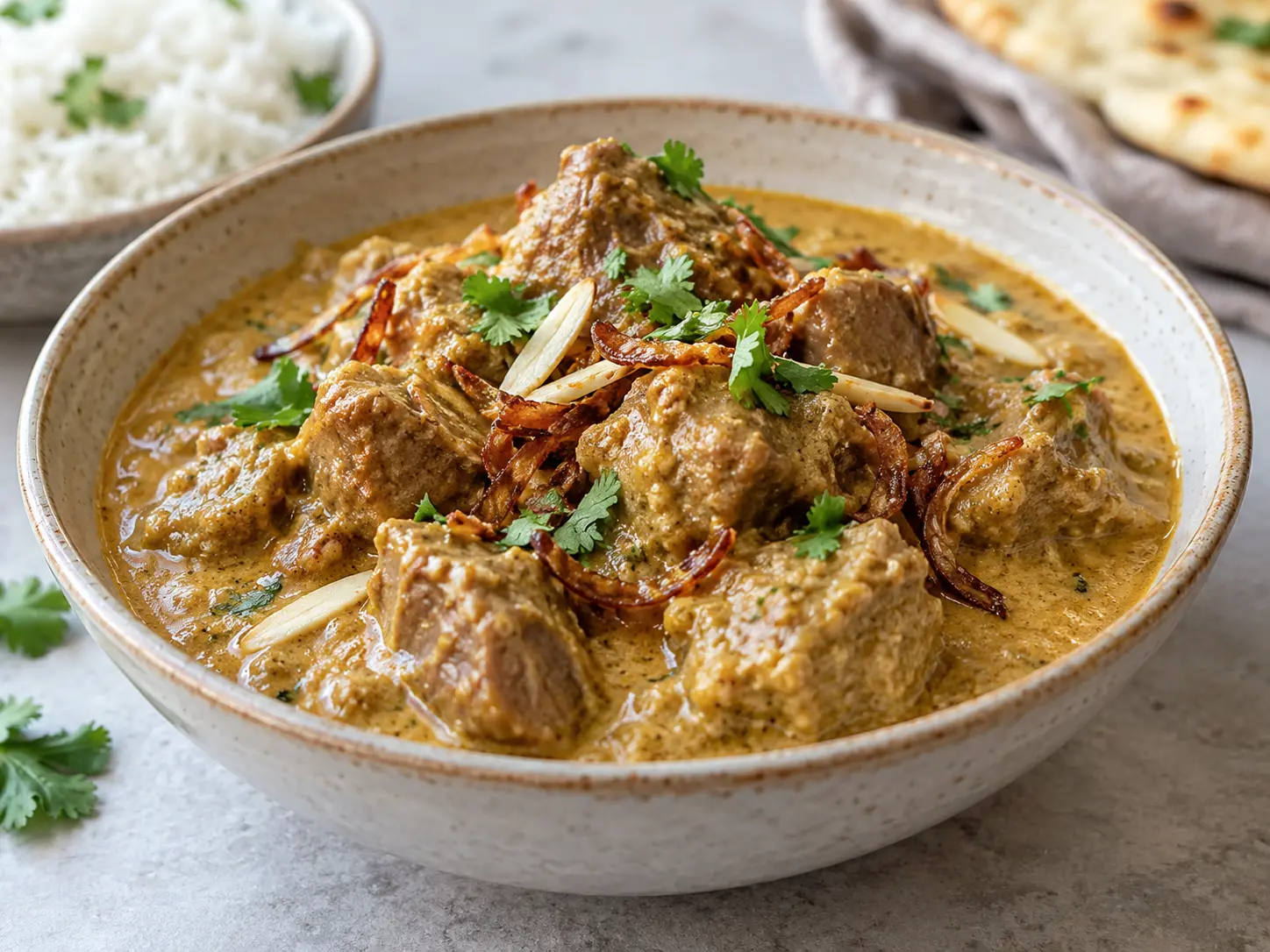
This Lamb Korma recipe produces a rich, aromatic curry with tender lamb pieces coated in a silky sauce of caramelized onions, yogurt, and ground cashews. Unlike fiery Indian curries, korma is known for its mild, complex spice profile and velvety texture, which comes from slow-cooking the meat in its own juices and dairy.
To achieve the characteristic smooth gravy, you must brown the onions evenly and temper the yogurt properly so it does not split when added to the hot pan. This guide breaks down these critical steps with clear visual cues so you can make a reliable korma in your own kitchen.
Why This Recipe Works
- Caramelizing the onions slowly and grinding them creates a naturally sweet, thick base without relying on tomato paste.
- Adding the yogurt at room temperature and whisking it thoroughly prevents curdling when it hits the warm cooking liquid.
- A small paste of soaked cashews emulsifies the gravy, giving it a rich body and preventing the cooking fat from separating completely.
Ingredient Notes
- Lamb shoulder: Use boneless lamb shoulder cut into 4 cm (1.5 inch) cubes. Shoulder has enough fat and connective tissue to stay succulent during a long simmer, whereas leg of lamb can dry out quickly.
- Plain yogurt: Select full-fat, plain yogurt. Low-fat or non-fat yogurts contain more water and are highly prone to curdling when heated.
- Cashews: Raw, unsalted cashews are soaked in hot water and ground into a smooth paste to thicken the korma and add a creamy finish.
- Fried onions (Barista): Thinly and evenly sliced red or yellow onions, fried until a deep golden brown. They provide the sweet background note and distinct grainy texture of korma gravy.
- Kewra water: A distillate of pandanus flowers that gives korma its traditional, sweet floral aroma. Use sparingly as it is highly concentrated.
If You’re Cooking Outside India
- Kewra water: Available at Indian or Middle Eastern grocery stores, often labeled as kewra liquid or pandanus water. If you cannot find it, replace it with a few drops of rose water, or omit it entirely.
- Ghee: Clarified butter, found in the international aisle of most supermarkets or at South Asian grocers. You can substitute with a neutral cooking oil, but ghee provides the traditional buttery undertone.
- Black cardamom: Larger and dark brown with a smoky aroma, quite different from green cardamom. If unavailable, omit it rather than substituting with extra green cardamom.
How to Make Lamb Korma
Frying the Onions
Fry thin slices of onion in ghee or oil until they are evenly golden brown. Drain them on paper towels immediately; they will darken and crisp as they cool. Once cool, crush or grind them into a coarse paste without adding much water.
Searing the Meat and Spices
Bloom the whole spices in the hot fat to release their aroma, then sear the lamb pieces with ginger-garlic paste and ground spices to build a deep flavor base.
Slow Braising
Simmer the lamb with a little water on low heat, covered, until the meat is completely tender. This can take up to 50 minutes depending on the cut of lamb.
Emulsifying the Sauce
Lower the heat, gently whisk in the room-temperature yogurt and cashew paste, and simmer until the oil separates and rises to the top, signaling that the gravy is fully cooked.
Cooking Tips
- Always whisk the yogurt thoroughly before adding it to the pot, and turn the heat down to low to prevent the yogurt from splitting.
- Do not rush the onions. Fry them over medium heat, stirring constantly near the end, so they brown uniformly without burning, which would make the gravy bitter.
- If the gravy becomes too thick after adding the cashew paste, thin it with a few tablespoons of warm water, not cold water.
Common Mistakes to Avoid
- The yogurt splits, leaving white flecks in the gravy: Ensure the yogurt is at room temperature before adding. Remove the pan from the direct heat source entirely, whisk the yogurt in quickly, and then return to low heat.
- The gravy is bitter: This happens when the onions are over-fried or burnt. Onions continue cooking after being removed from the oil, so pull them out when they are light golden brown.
Variations
- Almond Korma (Badami Korma): Substitute the cashews with blanched, skinless almonds to create a slightly different, nutty profile characteristic of traditional royal preparations.
Serving Suggestions
- Serve hot with fresh naan, tandoori roti, or sheermal to scoop up the rich gravy.
- Pair with fragrant saffron pilaf or jeera rice for a complete festive meal.
- Accompany with a simple sliced cucumber and red onion salad dressed with lemon juice to cut through the richness.
Storage & Make-Ahead
Make ahead: You can fry the onions and grind the cashew paste up to a day in advance. Store them separately in the refrigerator.
Refrigerate: Store leftover korma in an airtight container in the refrigerator for up to 3 days. The flavors will deepen overnight.
Freeze: You can freeze the korma for up to 1 month. The gravy might separate slightly upon thawing due to the dairy and nut paste, but stirring while reheating will help re-emulsify it.
Reheat: Reheat gently in a saucepan over low heat, adding a splash of warm water to loosen the gravy. Stir constantly to prevent the cashew paste from sticking to the bottom of the pan.
Frequently Asked Questions
Can I make this recipe in a pressure cooker or Instant Pot?
Yes. After searing the meat (Step 4), pressure cook on high for 12 to 15 minutes with 1/2 cup of water. Let the pressure release naturally, then stir in the fried onion and cashew pastes, simmering on sauté mode for 5 to 7 minutes until thickened.
Why is my korma gravy grainy?
A slightly grainy texture is actually desirable and characteristic of a traditional korma, caused by the crushed fried onions. If it is excessively coarse, ensure your fried onions are ground more finely next time.
Can I make Lamb Korma without cashews?
Yes, you can substitute the cashews with raw almonds (soaked and peeled) or melon seeds (magaj). For a nut-free version, omit the nut paste entirely and slightly increase the amount of fried onions to thicken the gravy.
More Indian Recipes to Try
Browse the IndiPlated recipe index
Lamb Korma
Ingredients
Equipment
Method
- In a medium bowl, combine the lamb cubes, whisked yogurt, ginger paste, garlic paste, Kashmiri red chili powder, coriander powder, and salt. Cover and let marinate at room temperature for 30 minutes while you prepare the other ingredients.
- Heat ghee or oil in your heavy-bottomed pot over medium heat. Add the thinly sliced onions. Fry, stirring frequently, until they turn an even, golden-brown color (about 12 to 15 minutes). Do not let them burn. Use a slotted spoon to transfer them to a plate lined with paper towels. Spread them out so they cool and crisp.
- Once the fried onions are cool and crisp, crush them with your hands or grind them in a small food processor into a coarse paste with 1 tablespoon of water if needed. Set aside. Drain the soaked cashews and blend them with 2 tablespoons of fresh water to form a smooth, thick paste. Set aside.
- In the same pot with the remaining ghee, lower the heat slightly. Add the green cardamom, black cardamom, cloves, cinnamon, and bay leaf. Let them sizzle for 30 seconds until aromatic. Add the marinated lamb with all its marinade. Increase heat to medium-high and sear the lamb, stirring constantly, until the moisture from the yogurt dries up slightly and the oil begins to separate at the edges (about 8 to 10 minutes).
- Add 1/2 cup of warm water and the ground mace. Stir well, scraping the bottom of the pot. Bring to a gentle boil, then turn the heat to low. Cover the pot tightly with a lid and simmer until the lamb is tender (about 45 to 50 minutes). Stir occasionally to ensure the meat does not stick.
- Stir in the prepared crushed fried onions and the cashew paste. Mix thoroughly. Simmer uncovered on low heat for 10 minutes. The gravy will thicken and take on a rich, slightly grainy appearance. If it gets too thick, add a few tablespoons of warm water.
- Sprinkle the garam masala and drizzle the kewra water if using. Stir gently, cover, and let it rest off the heat for 5 minutes before serving. Garnish with ginger juliennes and serve hot.
Notes
For an even richer gravy, you can substitute 1/4 cup of the warm water in Step 5 with warm whole milk.