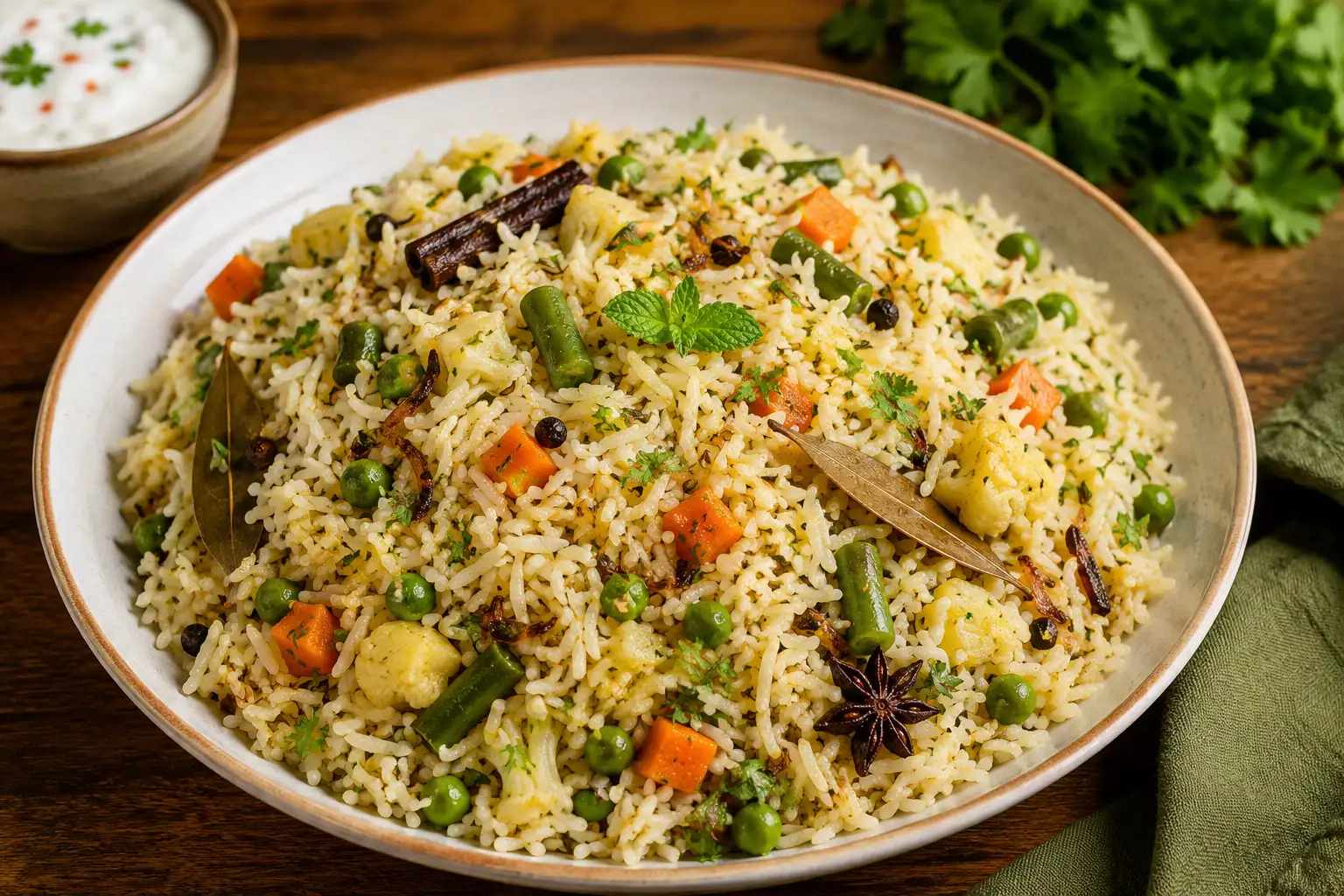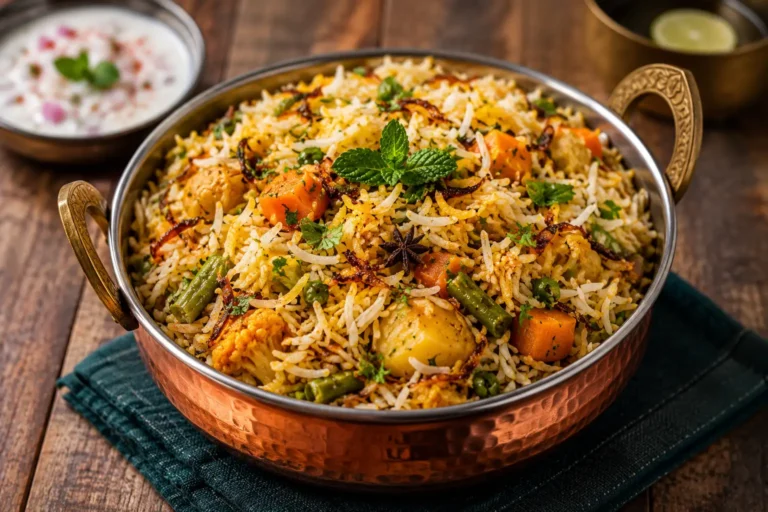
Easy Vegetable Pulao Recipe made with fragrant basmati rice, mixed vegetables, and aromatic Indian spices

Easy Vegetable Pulao Recipe

Introduction

The moment you lift the lid off a freshly cooked pot of Vegetable Pulao, your kitchen transforms. First comes the gentle, warm hiss of steam, followed immediately by the sweet, woody aroma of green cardamom, cloves, and cinnamon. Then, you see it—perfectly long, slender grains of basmati rice, glistening slightly with ghee, studded with vibrant green peas, bright orange carrots, and caramelized onions.

Let’s be completely honest: we have all been served a sad, mushy pile of overcooked rice masquerading as a pulao at some point. It is disappointing, bland, and heavy. But when done right, a great pulao is a work of culinary art where every single grain of rice is distinct, infused with the subtle oils of whole spices, and perfectly seasoned.

This is the kind of comforting meal that brings people together on a quiet Sunday afternoon. While spectacular, rich dishes like a classic Butter Chicken Recipe or a creamy Palak Paneer Recipe often steal the spotlight at weekend dinner parties, this quick vegetable pulao is the quiet, comforting hero that makes the meal feel complete. Grab your favorite heavy-bottomed pot, and let me teach you exactly how to get those perfect, fluffy grains every single time.

Why You’ll Love This Recipe

  • Zero Mushy Rice: Our foolproof water-to-rice ratio guarantees separate, elegant basmati grains every time.
  • Incredibly Aromatic: By blooming whole spices directly in warm fat, we extract deep, authentic flavors that run-of-the-mill spice powders simply cannot match.
  • One-Pot Cleanup: This entire dish comes together in just one pot, saving you precious cleanup time.
  • Infinitely Customizable: Use whatever seasonal vegetables you have in your crisper drawer without affecting the cooking time.
  • Perfect for Meal Prep: It reheats beautifully throughout the week without losing its fragrant aroma.

Ingredients

  • 300 g Basmati Rice (Aged, long-grain preferred)
  • 2 tbsp Ghee (Or neutral cooking oil for a vegan option)
  • 1 tsp Cumin Seeds (Whole)
  • 1 whole Bay Leaf (Tejpatta)
  • 1 inch Cinnamon Stick (Whole)
  • 3 whole Green Cardamom Pods (Lightly crushed to open)
  • 3 whole Cloves (Whole)
  • 100 g Onion (Sliced thinly)
  • 1 tbsp Ginger-Garlic Paste (Freshly crushed is best)
  • 80 g Carrots (Cut into 1/2-inch cubes)
  • 60 g French Beans (Cut into 1/2-inch pieces)
  • 70 g Green Peas (Fresh or frozen)
  • 600 ml Water (Exactly double the volume of rice if measuring by cup)
  • 1.25 tsp Salt (Adjust to taste)

How to Make

Step 1: Wash and Soak the Rice

Place the 300g of basmati rice in a large bowl. Gently rinse it with cold water, swirling with your fingers, and drain the cloudy water. Repeat 3 to 4 times until the water runs completely clear; this washes away excess starch. Cover the rice with fresh water and let it soak for 20 to 30 minutes. You will see the translucent grains turn a solid, milky white color, which prevents them from breaking when cooking.

Step 2: Bloom the Whole Spices

Heat 2 tablespoons of ghee in a heavy-bottomed pot over medium heat. Once warm, add the cumin seeds, bay leaf, cinnamon stick, green cardamom pods, and cloves. Let them sizzle for about 30 seconds until you hear them splutter and a deep, woody aroma fills your kitchen. This infuses the cooking fat with the warm oils of the spices.

Step 3: Sauté the Aromatics

Add the sliced onions to the pot. Sauté for 5 to 6 minutes, stirring occasionally, until they are soft and the edges turn a light golden-brown. Add the ginger-garlic paste and sauté for another 1 minute. You should smell a rich, sweet aroma, and the raw, sharp smell of garlic should disappear completely.

Step 4: Sauté the Vegetables

Add the carrots, French beans, and green peas to the pot. Stir-fry them in the spiced ghee for 2 to 3 minutes. This partial cooking helps seal in their bright colors and ensures they don’t turn mushy later.

Step 5: Add the Soaked Rice

Drain the soaked rice completely. Add the rice to the pot with the vegetables. Using a very gentle hand, toss the rice for 1 minute until the grains are coated with the warm ghee. Be careful not to break the fragile, soaked grains; this coating step helps keep the grains separate after cooking.

Step 6: Simmer the Pulao

Pour in 600ml of water and add the salt. Stir once gently to mix. Bring the liquid to a rolling boil over high heat. Let it boil uncovered for 3 to 4 minutes until the water level drops to meet the level of the rice and you see small steam holes forming on the surface.

Step 7: Steam and Rest

Immediately cover the pot with a tight-fitting lid. Turn the heat down to its lowest setting and let it steam cook undisturbed for exactly 10 minutes. Do not open the lid! Turn off the heat and let the pot sit, still covered, for another 10 minutes to allow the steam to finish cooking the core of the grains.

Step 8: Fluff and Serve

Remove the lid. Using a fork or a flat silicone spatula, gently fluff the rice from the outer edges inward, releasing the trapped steam. Your pulao is ready to be served hot with a side of refreshing raita!

Chef’s Tips

  • 💡 Chef’s Tip: Always use a heavy-bottomed pot with a tight-fitting lid to prevent steam from escaping, which ensures even cooking without burning the bottom.
  • 💡 Chef’s Tip: Resist the urge to stir! Stirring cooking rice breaks the delicate, starch-swollen grains and releases starch, making the pulao sticky.
  • 💡 Chef’s Tip: After turning off the heat, let the pot sit undisturbed for 10 minutes before opening. This allows the steam to redistribute, making the rice incredibly easy to fluff.

Common Mistakes to Avoid

  • Skipping the soaking step: This results in hard, unevenly cooked grains that break easily when stirred.
  • Stirring the rice vigorously while it cooks: This breaks the long basmati grains and releases starches, creating a mushy texture.
  • Using too much water: Too much liquid drowns the rice, turning a fluffy pulao into a soggy porridge.
  • Rushing the onions: If you don’t cook the onions until they are soft and slightly golden, you miss out on the sweet, caramelized foundation of the dish.

💡 Before You Start

Before you turn on the stove, please read this: the absolute most important step of this recipe happens before any heat is applied. You must wash and soak your basmati rice. Rinsing the rice under cold water until the water runs completely clear removes the dusty surface starches that cause rice to clump and turn gummy. Soaking the rice for exactly 20 to 30 minutes allows the grains to absorb water evenly, ensuring they expand to their maximum length without breaking during cooking. Don’t skip this!

Variations

  • Paneer Pulao: Toss in 150g of pan-seared paneer cubes right before sealing the lid to steam for a rich, protein-packed twist.
  • Masala Pulao: Add half a teaspoon of garam masala and a pinch of red chili powder along with the ginger-garlic paste for a deeper, spicier kick.
  • Coconut Milk Pulao: Replace half of the cooking water with unsweetened coconut milk for a rich, coastal flavor profile that pairs wonderfully with spicy curries.

Serving Suggestions

  • The Casual Weeknight: Serve this warm pulao alongside a cooling cucumber-mint raita and a pile of crisp roasted papadums for a comforting, low-effort dinner.
  • The Weekend Feast: Pair it with a rich gravy dish like our Palak Paneer Recipe and some warm, buttery bread made from our Naan Recipe for a restaurant-quality feast at home.
  • The Potluck/Hosting: Present this in a wide, shallow bowl garnished with toasted cashews and crispy fried onions to feed a crowd easily.
  • The Desk Lunch: Pack cold pulao in an airtight container with a side of spicy pickle; it tastes wonderful even at room temperature.

Storage

Let the pulao cool completely to room temperature before storing. Transfer it to an airtight container and store in the refrigerator for up to 3 to 4 days. You can also freeze it in freezer-safe bags for up to a month; just thaw it in the fridge overnight before reheating.

Reheating

To reheat, sprinkle 1 to 2 tablespoons of water over the rice to recreate steam. Microwave on high for 2 minutes with a loose cover, or warm it in a pan on the stove over low heat, covered with a tight lid, for about 5 minutes until steaming hot.

Frequently Asked Questions

Why did my pulao turn out mushy?

Mushy pulao is usually caused by three things: adding too much water, skipping the step of rinsing out the starch, or stirring the rice too much while it cooks. Be sure to measure your water accurately and leave the rice undisturbed once it starts steaming.

Can I use brown rice for this recipe?

Yes, but brown rice requires significantly more water and a much longer cooking time (usually about 40 to 45 minutes of steaming). You will also need to pre-cook the vegetables separately so they do not turn to mush while the brown rice cooks.

How do I make this recipe vegan?

Simply replace the ghee with a high-quality neutral cooking oil, like avocado oil or canola oil. The flavor will still be wonderfully aromatic thanks to the whole spices.

Do I have to use whole spices?

While ground spices can be used in a pinch, whole spices are essential for an authentic pulao. They slowly infuse the rice with flavor without coloring it or making it gritty, which ground spices will do.

Can I use frozen vegetables?

Absolutely! Frozen peas, carrots, and corn work beautifully. There is no need to thaw them beforehand; just toss them into the pot right before adding the rice.

What is the best water-to-rice ratio for pulao?

The golden ratio for aged basmati rice is 1:2. For every 1 cup of rice, you need exactly 2 cups of water. If your rice is not aged, you may want to reduce the water slightly to 1.75 cups.

Conclusion

With its fragrant spices, sweet caramelized onions, and colorful vegetables, this Vegetable Pulao is guaranteed to become a staple in your kitchen. Once you master the simple steps of soaking, blooming, and steaming, you’ll have the confidence to whip up perfect rice dishes whenever the craving strikes. Happy cooking!

Recipe Index

Browse All Recipes →

More Recipes You’ll Love

Easy Vegetable Pulao Recipe made with fragrant basmati rice, mixed vegetables, and aromatic Indian spices

Easy Vegetable Pulao Recipe

A masterclass in making the most aromatic, fluffy, and perfectly seasoned Vegetable Pulao. Say goodbye to mushy rice forever!
Prep Time 25 minutes
Cook Time 20 minutes
Total Time 45 minutes
Servings: 4
Course: Main Course
Cuisine: Indian

Ingredients
  

  • 300 g Basmati Rice Aged, long-grain preferred
  • 2 tbsp Ghee Or neutral cooking oil for a vegan option
  • 1 tsp Cumin Seeds Whole
  • 1 whole Bay Leaf Tejpatta
  • 1 inch Cinnamon Stick Whole
  • 3 whole Green Cardamom Pods Lightly crushed to open
  • 3 whole Cloves Whole
  • 100 g Onion Sliced thinly
  • 1 tbsp Ginger-Garlic Paste Freshly crushed is best
  • 80 g Carrots Cut into 1/2-inch cubes
  • 60 g French Beans Cut into 1/2-inch pieces
  • 70 g Green Peas Fresh or frozen
  • 600 ml Water Exactly double the volume of rice if measuring by cup
  • 1.25 tsp Salt Adjust to taste

Method
 

  1. Place the 300g of basmati rice in a large bowl. Gently rinse it with cold water, swirling with your fingers, and drain the cloudy water. Repeat 3 to 4 times until the water runs completely clear; this washes away excess starch. Cover the rice with fresh water and let it soak for 20 to 30 minutes. You will see the translucent grains turn a solid, milky white color, which prevents them from breaking when cooking.
  2. Heat 2 tablespoons of ghee in a heavy-bottomed pot over medium heat. Once warm, add the cumin seeds, bay leaf, cinnamon stick, green cardamom pods, and cloves. Let them sizzle for about 30 seconds until you hear them splutter and a deep, woody aroma fills your kitchen. This infuses the cooking fat with the warm oils of the spices.
  3. Add the sliced onions to the pot. Sauté for 5 to 6 minutes, stirring occasionally, until they are soft and the edges turn a light golden-brown. Add the ginger-garlic paste and sauté for another 1 minute. You should smell a rich, sweet aroma, and the raw, sharp smell of garlic should disappear completely.
  4. Add the carrots, French beans, and green peas to the pot. Stir-fry them in the spiced ghee for 2 to 3 minutes. This partial cooking helps seal in their bright colors and ensures they don't turn mushy later.
  5. Drain the soaked rice completely. Add the rice to the pot with the vegetables. Using a very gentle hand, toss the rice for 1 minute until the grains are coated with the warm ghee. Be careful not to break the fragile, soaked grains; this coating step helps keep the grains separate after cooking.
  6. Pour in 600ml of water and add the salt. Stir once gently to mix. Bring the liquid to a rolling boil over high heat. Let it boil uncovered for 3 to 4 minutes until the water level drops to meet the level of the rice and you see small steam holes forming on the surface.
  7. Immediately cover the pot with a tight-fitting lid. Turn the heat down to its lowest setting and let it steam cook undisturbed for exactly 10 minutes. Do not open the lid! Turn off the heat and let the pot sit, still covered, for another 10 minutes to allow the steam to finish cooking the core of the grains.
  8. Remove the lid. Using a fork or a flat silicone spatula, gently fluff the rice from the outer edges inward, releasing the trapped steam. Your pulao is ready to be served hot with a side of refreshing raita!

Similar Posts

Leave a Reply

Your email address will not be published. Required fields are marked *

Recipe Rating