Authentic Vegetable Biryani
Introduction
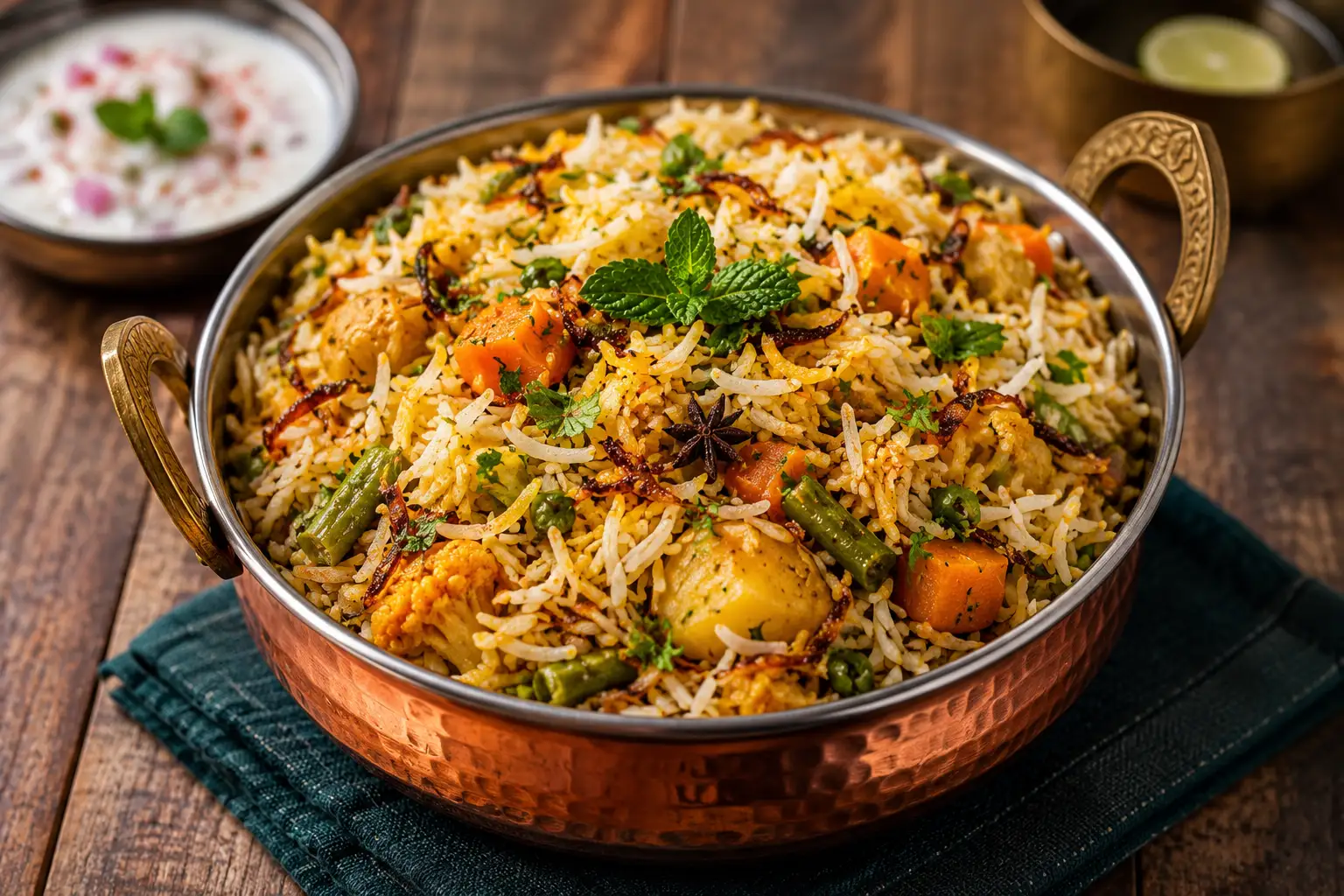
The moment you break the seal of a freshly steamed biryani pot, a cloud of aromatic, cardamom-scented steam rises to greet you. It is a sensory experience like no other. Each forkful reveals a beautiful contrast of snowy-white and saffron-tinted grains of rice, tender, deeply spiced vegetables, and sweet, caramelized onions.
If you have ever been intimidated by the thought of making biryani at home, let me put your mind at ease. While it looks like a culinary masterpiece, biryani is simply about building layers of flavor. By breaking it down into simple, visual stages, you will master this legendary dish on your very first try. If you are still building your confidence with Indian grains, you might also enjoy practicing with our Perfect Jeera Rice to get a feel for cooking Basmati.
This is the kind of curry-infused rice dish that tastes even better when everyone tears pieces of warm flatbread, pulls up a chair, and eats together straight from the table. It is more than just a meal; it is a celebration of spices and textures.
Why You’ll Love This Recipe
- No Mushy Rice: Our step-by-step par-boiling method guarantees separate, fluffy grains every single time.
- Restaurant-Quality Flavor: The combination of fresh mint, cilantro, and saffron-infused milk creates an incredible depth of aroma.
- Highly Customizable: You can swap in your favorite seasonal vegetables or add paneer for extra protein.
- Perfect for Gatherings: It is a beautiful, self-contained centerpiece dish that easily feeds a crowd.
- Naturally Vegetarian: A hearty, satisfying, and flavor-packed vegetarian main course that even meat-lovers adore.
Ingredients
- 400 g Basmati Rice (Long-grain, rinsed and soaked for 30 minutes)
- 150 g Cauliflower florets (Cut into bite-sized pieces)
- 120 g Carrots (Sliced into 1/2-inch rounds)
- 100 g Green Beans (Cut into 1-inch pieces)
- 130 g Potatoes (Peeled and cubed)
- 2 large Red Onions (Thinly sliced for frying)
- 120 g Plain Yogurt (Whisked until smooth)
- 1.5 tbsp Ginger-Garlic Paste (Freshly ground is best)
- 1 tsp Kashmiri Red Chili Powder (For vibrant color and mild heat)
- 0.5 tsp Turmeric Powder (For golden color)
- 1 tbsp Biryani Masala Powder (Store-bought or homemade)
- 0.5 cup Fresh Mint and Cilantro (Chopped, plus extra for garnish)
- 3 tbsp Ghee (Divided use)
- 1 pinch Saffron Threads (Soaked in 3 tbsp warm milk)
How to Make
Step 1: Soak the Rice
Rinse the 400g of Basmati rice in cold water 3-4 times until the water runs completely clear to remove excess starch. Soak in fresh water for 30 minutes, then drain.
Step 2: Caramelize the Onions (Birista)
Heat 2 tablespoons of ghee or oil in a heavy-bottomed pot over medium heat. Add the sliced onions and fry, stirring frequently, until they turn a deep, even golden brown (about 12-15 minutes). Remove half of the onions and set aside on paper towels; they will crisp up as they cool.
Step 3: Cook the Vegetables
In the same pot with the remaining onions, add the ginger-garlic paste and sauté for 1 minute until fragrant. Add all the chopped vegetables (500g total), turmeric, red chili powder, biryani masala, and salt. Cook for 5 minutes until the vegetables are slightly coated in spices.
Step 4: Simmer the Curry Base
Lower the heat and stir in the whisked yogurt to prevent curdling. Cover and cook on low heat for 10 minutes until the vegetables are fork-tender but still hold their shape, surrounded by a thick gravy.
Step 5: Par-Boil the Rice
While the vegetables cook, bring a large pot of water to a rolling boil with 1 tablespoon of salt. Add the soaked rice. Cook for exactly 6-7 minutes. You want the rice to be 70% cooked—the grains should bend easily but still feel firm and chalky in the center when bitten. Drain immediately.
Step 6: Layer the Biryani
Over the vegetable curry in the pot, layer the par-boiled rice evenly. Sprinkle the reserved caramelized onions, chopped mint, cilantro, and drizzle the saffron milk and remaining tablespoon of melted ghee over the top.
Step 7: The Dum Steam
Seal the pot tightly by placing a layer of foil over the top, then putting the lid on to trap the steam. Cook on your lowest stovetop setting for 15 minutes. Turn off the heat and let it rest, unopened, for another 10 minutes.
Step 8: Fluff and Serve
Gently open the lid and use a thin silicone spatula or a large spoon to scoop from the bottom, bringing up the spiced vegetables and mixing them gently with the fluffy white and yellow rice. Serve immediately.
Chef’s Tips
- 💡 Chef’s Tip: Always salt your rice boiling water generously. It should taste as salty as sea water; this is your only chance to season the inside of the rice grains.
- 💡 Chef’s Tip: Do not stir the rice too much once it goes into the boiling water. Long-grain Basmati is fragile when wet and can break easily.
- 💡 Chef’s Tip: Use a heavy-bottomed pot or place a flat tawa (griddle) under your pot during the final steam. This prevents the bottom layer of vegetables from scorching.
Common Mistakes to Avoid
- ❌ Overcooking the rice initially: If you boil the rice completely, it will turn into mush during the final steaming stage. It must have a firm bite in the center.
- ❌ Using rushed, pale onions: Rushing the onion-frying process leads to bitter or soggy onions. Take your time to get them evenly golden and sweet.
- ❌ Skipping the rice soaking step: Soaking the rice for 30 minutes allows the grains to absorb water, ensuring they expand to their maximum length and cook evenly.
- ❌ Not sealing the pot tightly: If steam escapes during the final cook, the rice on top will remain hard and dry instead of becoming fluffy and tender.
💡 Before You Start
Before you turn on the stove, measure out all your spices and chop your vegetables. Biryani involves a few simultaneous steps—like boiling the rice while the vegetables simmer—so having your ingredients prepped and sitting in bowls (mise en place) will keep you relaxed and in control of your kitchen.
Variations
- Paneer Veg Biryani: Gently pan-fry 150g of cubed paneer in a little ghee and layer it in with the vegetable curry for a rich, protein-packed variation.
- Vegan Biryani: Substitute the yogurt with unflavored coconut yogurt or cashew cream, and use cooking oil instead of ghee.
- Spicy Hyderabadi Style: Add 3-4 slit green chilies and an extra half-teaspoon of red chili powder to the vegetable marinade for a fiery kick.
Serving Suggestions
- The Weekend Feast: Serve this hot biryani alongside a cooling cucumber raita, sliced red onions, and lemon wedges for a perfect Sunday family lunch.
- The Dinner Party: Pair this vibrant vegetarian main with our iconic Butter Chicken Recipe or our classic Chicken Curry Recipe for the ultimate crowd-pleasing Indian spread.
- A Simple Weeknight Upgrade: Keep it light by pairing a leftover bowl of biryani with a simple side salad of cucumber, tomato, and red onion tossed in lemon juice.
- The Celebration Menu: Serve alongside crispy papadums and sweet mango chutney to create an interactive, festive dining experience for your guests.
Storage
Store any leftovers in an airtight container in the refrigerator for up to 3 days. The flavors actually deepen overnight, making next-day biryani incredibly delicious.
Reheating
To reheat, sprinkle a tablespoon of water over the rice to create moisture. Cover tightly with microwave-safe wrap and microwave on medium power, or gently heat in a covered pan on the stovetop over low heat until steaming hot throughout.
Frequently Asked Questions
Can I use normal long-grain rice instead of Basmati?
For authentic results, Basmati is highly recommended. Its long, slender shape and unique aroma define a biryani. Standard long-grain rice won’t yield the same fluffy, fragrant texture.
Why did my rice turn out mushy?
This happens if the rice was boiled too long during the par-boiling stage, or if there was too much liquid left in the vegetable curry before layering. Aim for a firm-to-the-bite rice grain before layering.
Do I have to use saffron?
While saffron adds a classic floral aroma and gorgeous yellow color, you can substitute it with a tiny pinch of turmeric dissolved in warm milk for color, though the flavor profile will slightly differ.
Can I make this recipe dairy-free?
Yes! Use coconut yogurt instead of dairy yogurt, and substitute the ghee with oil (like avocado or coconut oil) and the saffron milk with warm almond or coconut milk.
How do I know if the steam is sealed properly?
If you don’t see any steam escaping from the sides of the lid, it is sealed. Using aluminum foil under a heavy lid is the easiest way to ensure a tight seal at home.
What is the best way to clean my Basmati rice?
Place the rice in a bowl, cover with cool water, and gently swirl with your fingers. Drain the cloudy water. Repeat this 3 to 4 times until the water remains clear.
Conclusion
With its beautiful colors and rich aromas, this Vegetable Biryani is guaranteed to impress anyone who sits at your table. Take it slow, enjoy the process of layering, and watch your kitchen transform into a fragrant Indian kitchen. Happy cooking!
Recipe Index
More Recipes You’ll Love
Authentic Vegetable Biryani
Ingredients
Method
- Rinse the 400g of Basmati rice in cold water 3-4 times until the water runs completely clear to remove excess starch. Soak in fresh water for 30 minutes, then drain.
- Heat 2 tablespoons of ghee or oil in a heavy-bottomed pot over medium heat. Add the sliced onions and fry, stirring frequently, until they turn a deep, even golden brown (about 12-15 minutes). Remove half of the onions and set aside on paper towels; they will crisp up as they cool.
- In the same pot with the remaining onions, add the ginger-garlic paste and sauté for 1 minute until fragrant. Add all the chopped vegetables (500g total), turmeric, red chili powder, biryani masala, and salt. Cook for 5 minutes until the vegetables are slightly coated in spices.
- Lower the heat and stir in the whisked yogurt to prevent curdling. Cover and cook on low heat for 10 minutes until the vegetables are fork-tender but still hold their shape, surrounded by a thick gravy.
- While the vegetables cook, bring a large pot of water to a rolling boil with 1 tablespoon of salt. Add the soaked rice. Cook for exactly 6-7 minutes. You want the rice to be 70% cooked—the grains should bend easily but still feel firm and chalky in the center when bitten. Drain immediately.
- Over the vegetable curry in the pot, layer the par-boiled rice evenly. Sprinkle the reserved caramelized onions, chopped mint, cilantro, and drizzle the saffron milk and remaining tablespoon of melted ghee over the top.
- Seal the pot tightly by placing a layer of foil over the top, then putting the lid on to trap the steam. Cook on your lowest stovetop setting for 15 minutes. Turn off the heat and let it rest, unopened, for another 10 minutes.
- Gently open the lid and use a thin silicone spatula or a large spoon to scoop from the bottom, bringing up the spiced vegetables and mixing them gently with the fluffy white and yellow rice. Serve immediately.