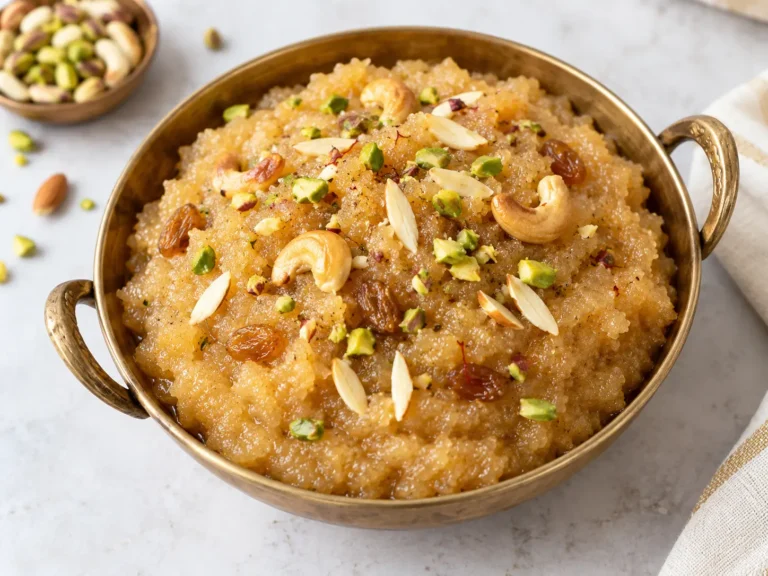
Authentic Gajar Halwa (Carrot Halwa)
Introduction
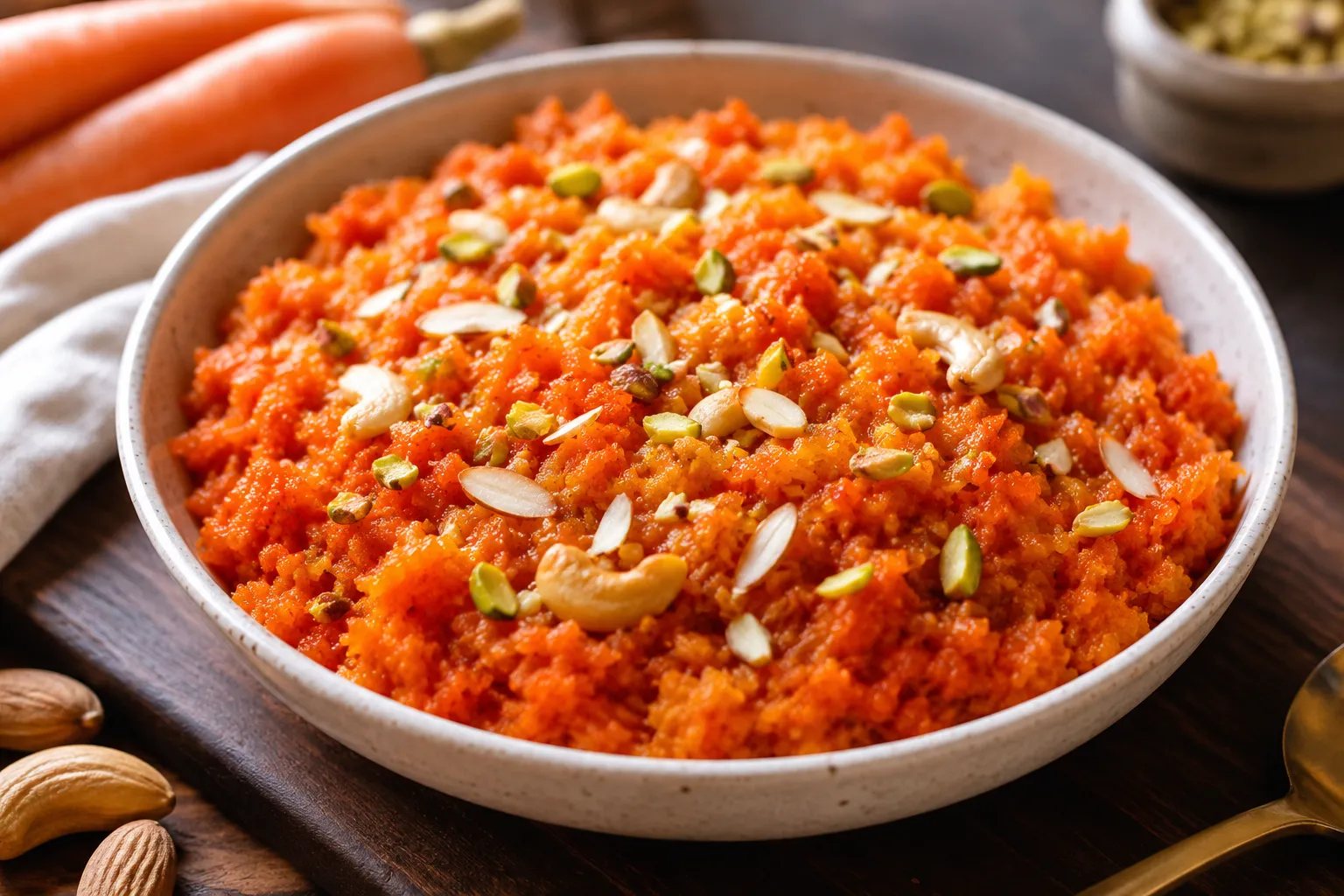
The sweet aroma of grated carrots slow-cooking in pure ghee, mingled with the warm, floral scent of freshly crushed cardamom, is the ultimate sensory cue that celebration has arrived. Gajar Halwa is more than just a dessert; it is a beloved winter ritual in Indian households. As the milk slowly reduces, clinging to the carrots and transforming into rich, caramelized solids, the kitchen fills with an inviting warmth that makes everyone gather around the stove.
You do not need to be an expert pastry chef to master this classic. All you need are fresh carrots, a heavy-bottomed pan, and a little patience. This is the kind of heartwarming treat that tastes best when shared at the end of a long family meal, scraping the last sweet bits directly from the pan together while the winter wind blows outside.
Why You’ll Love This Recipe
- Truly authentic texture and deep flavor without relying on store-bought condensed milk.
- Incredibly forgiving and foolproof, making it the perfect dessert project for beginners.
- No fancy kitchen equipment required—just a simple box grater and a sturdy pan.
- Perfectly balanced sweetness that lets the natural flavor of the carrots shine through.
- Keeps beautifully in the fridge, meaning it tastes even more rich and mature the next day.
Ingredients
- 500 g Carrots (peeled and finely grated)
- 1 liter Whole Milk (full-fat is recommended)
- 4 tbsp Ghee (divided)
- 100 g Granulated Sugar (adjust to taste)
- 0.5 tsp Cardamom Powder (freshly ground green cardamom)
- 2 tbsp Cashews and Almonds (sliced and toasted in ghee)
How to Make
Step 1: Sauté the Carrots
Melt 2 tablespoons of ghee in a heavy-bottomed pan over medium heat. Add the grated carrots and sauté for 7-8 minutes until they soften, shrink slightly, and turn deep orange.
Step 2: Add Milk and Simmer
Pour in the whole milk and bring the mixture to a boil. Reduce heat to medium-low and let it simmer, stirring occasionally to prevent sticking.
Step 3: Reduce Milk
Cook for about 35-40 minutes, scraping down the sides of the pan regularly, until the milk has almost completely evaporated and the carrots are soft.
Step 4: Add Sugar and Remaining Ghee
Stir in the sugar and the remaining 2 tablespoons of ghee. The mixture will become slightly liquidy again as the sugar dissolves.
Step 5: Final Roasting
Continue to cook on low heat, stirring constantly, until the moisture evaporates again and the halwa starts pulling away cleanly from the sides of the pan.
Step 6: Finish and Garnish
Stir in the cardamom powder and toasted nuts. Turn off the heat immediately to preserve the fresh cardamom aroma. Serve warm.
Chef’s Tips
- 💡 Chef’s Tip: Always use the fine or medium side of your grater. Coarsely grated carrots will not melt into that uniform, melt-in-your-mouth texture.
- 💡 Chef’s Tip: Do not leave the stove unattended during the final reduction stage. Once the liquid volume drops, milk solids can stick and burn in a matter of seconds.
- 💡 Chef’s Tip: Add a tiny, almost imperceptible pinch of salt along with the sugar. It acts as a natural flavor enhancer, beautifully balancing the intense sweetness.
Common Mistakes to Avoid
- ❌ Using skim or low-fat milk, which results in a watery halwa that lacks the rich, velvety mouthfeel of the traditional recipe.
- ❌ Adding the sugar too early in the cooking process, which prevents the carrot fibers from softening completely and leaves you with crunchy bits.
- ❌ Rushing the reduction by using high heat, which scorches the bottom of your pan and ruins the delicate flavor with a burnt taste.
- ❌ Skipping the final ghee-roasting step, leaving the halwa pale and soggy instead of glossy, rich, and deeply caramelized.
💡 Before You Start
Before you light the stove, set up your workspace. Grating 500 grams of carrots by hand takes a bit of effort, so get that step completed first. It is also absolutely vital to select a heavy-bottomed pan or a traditional Indian kadhai. A thin pan will scorch the milk and carrots before they have a chance to caramelize, ruining your dessert. Have your chopped nuts and freshly ground cardamom measured and ready in small bowls right next to your stove for a smooth, stress-free cooking experience.
Variations
- Quick Condensed Milk Halwa: For a faster version, cook the carrots in a splash of milk, then stir in sweetened condensed milk, adjusting the extra sugar down to taste.
- Vegan Coconut Carrot Halwa: Swap the whole milk for thick coconut milk and replace the ghee with coconut oil for a tropical, plant-based twist.
- Festive Khoya Halwa: Fold in 100 grams of crumbled unsweetened khoya (evaporated milk solids) during the final roasting stage for an ultra-luxurious, bakery-style finish.
Serving Suggestions
- The Weekend Feast Finisher: Serve this halwa warm right after a comforting weekend family lunch of spicy curry and fresh, hot Naan Recipe.
- The Ultimate Contrast: Serve the Gajar Halwa piping hot alongside a scoop of cold, premium vanilla bean ice cream for an incredible play on temperatures.
- The Party Starter: If you are hosting a festive evening, treat your guests to a batch of crisp Samosa Recipe beforehand, concluding the night with warm bowls of this sweet carrot dessert.
- Cozy Weeknight Comfort: Store individual portions in small ramekins in the fridge, then microwave for 30 seconds for a quick, warming treat on a cold winter night.
Storage
Let the halwa cool completely to room temperature before transferring it to an airtight container. Store it in the refrigerator, where it will keep beautifully for up to 5 days. You can also freeze it in freezer-safe containers for up to 1 month.
Reheating
To reheat, place the desired portion in a small saucepan with a splash of milk or a teaspoon of ghee over low heat, stirring gently until heated through. Alternatively, microwave on medium power for 45-60 seconds, stirring halfway through to ensure even heating.
Frequently Asked Questions
Why is my Gajar Halwa watery?
This happens when the sugar dissolves and releases moisture. Simply keep sautéing the halwa on low heat, stirring constantly, until all the excess moisture evaporates and the ghee begins to separate.
Can I use a food processor to grate the carrots?
Yes, you can use the fine shredding disc of a food processor to save time, though grating by hand with a box grater yields a slightly more authentic, melt-in-your-mouth texture.
Can I freeze Gajar Halwa?
Absolutely. Allow the halwa to cool completely, then freeze it in an airtight container for up to 1 month. Thaw in the refrigerator overnight before reheating.
What are the best carrots to use for this recipe?
In India, sweet red Delhi carrots are traditionally used during winter. Outside of India, fresh, tender orange carrots work perfectly year-round—just ensure they are juicy and sweet.
Do I need to peel the carrots before grating?
Yes, it is best to lightly peel the carrots to remove any dirty skin, hair, or fibrous outer layers, which can affect the smooth texture of the halwa.
What can I use instead of khoya?
You do not need khoya for this recipe! By reducing whole milk directly with the carrots, you naturally create milk solids (khoya) in the pan, saving you an extra trip to the store.
Conclusion
Mastering Gajar Halwa is a comforting, slow-cooking journey that fills your home with unmatched warmth and sweetness. By focusing on simple ingredients, visual cues, and patient cooking, you will create a dessert that rivals any Indian sweet shop. Gather your loved ones, dish out the warm bowls, and enjoy the fruits of your labor!
Recipe Index
More Recipes You’ll Love

Authentic Gajar Halwa (Carrot Halwa)
Ingredients
Method
- Melt 2 tablespoons of ghee in a heavy-bottomed pan over medium heat. Add the grated carrots and sauté for 7-8 minutes until they soften, shrink slightly, and turn deep orange.
- Pour in the whole milk and bring the mixture to a boil. Reduce heat to medium-low and let it simmer, stirring occasionally to prevent sticking.
- Cook for about 35-40 minutes, scraping down the sides of the pan regularly, until the milk has almost completely evaporated and the carrots are soft.
- Stir in the sugar and the remaining 2 tablespoons of ghee. The mixture will become slightly liquidy again as the sugar dissolves.
- Continue to cook on low heat, stirring constantly, until the moisture evaporates again and the halwa starts pulling away cleanly from the sides of the pan.
- Stir in the cardamom powder and toasted nuts. Turn off the heat immediately to preserve the fresh cardamom aroma. Serve warm.