Rasmalai Recipe (Soft Cottage Cheese Discs in Saffron Milk)
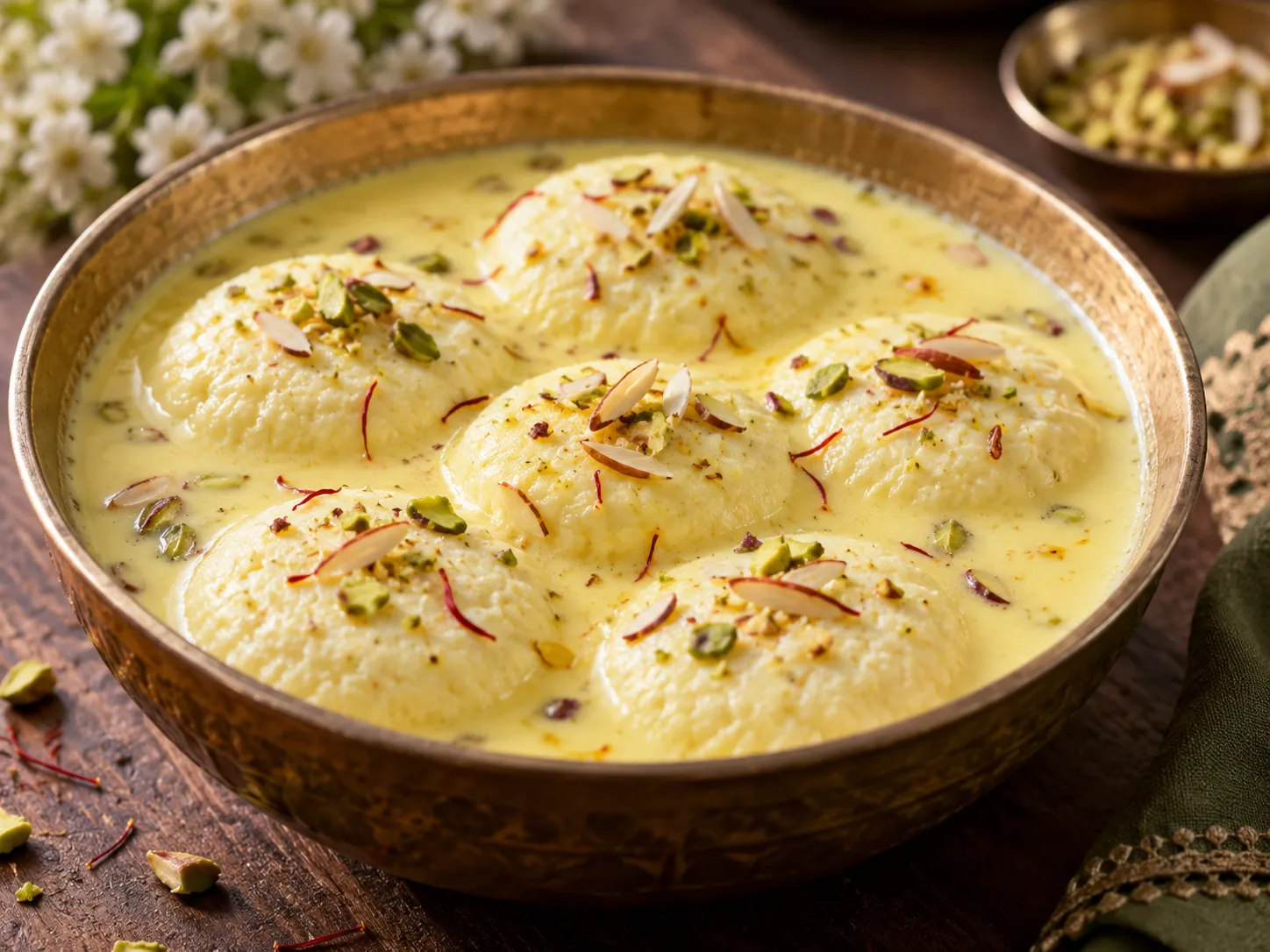
Rasmalai is a popular sweet consisting of delicate, flattened cottage cheese discs, called chenna, simmered in sugar syrup and then soaked in a rich, cardamom- and saffron-infused thickened milk. When properly prepared, the cheese discs are light, spongy, and easily absorb the aromatic sweet milk without breaking apart.
Achieving the ideal texture requires focusing on two key stages: curdling the milk at the right temperature so the cheese remains soft, and draining the curd to the correct moisture level before kneading. This recipe details the exact visual and tactile cues needed at each stage to ensure success.
Why This Recipe Works
- Diluting the acidic curdling agent with water and cooling the milk slightly before adding it prevents the proteins from tightening, resulting in exceptionally soft paneer.
- A small addition of cornstarch acts as a reliable binder, preventing the delicate cheese discs from splitting or dissolving when boiled in the sugar syrup.
- Boiling the discs in a wide, covered pan allows the steam to cook them evenly, helping them double in size while keeping their shape.
Ingredient Notes
- Whole Milk: Use standard full-fat whole milk for both the cheese discs and the thickened milk. Low-fat or skim milk does not contain enough fat to form soft, pliable cheese curd, and it will not thicken properly into rabri.
- Lemon Juice or Vinegar: This provides the acid needed to separate the curds from the whey. Diluting it with an equal amount of water prevents harsh curdling, which can lead to a rubbery texture.
- Saffron (Kesar): Saffron strands provide the signature pale-yellow color and warm aroma to the sweet milk. Steeping them in a little warm milk first helps release their color.
- Cornstarch: Just a small pinch is used to bind the chenna. Too much cornstarch makes the discs dense and floury, while too little can cause them to break in the boiling syrup.
If You’re Cooking Outside India
- Milk Selection: When shopping outside India, look for standard pasteurized whole milk with at least 3.25% to 4% fat. Avoid milk labeled ultra-pasteurized (UP) or ultra-heat-treated (UHT), as the high-heat process alters the proteins, making it difficult to curdle properly.
- Cornstarch: In the UK and Australia, this ingredient is commonly sold under the name cornflour. Ensure you use white cornstarch powder and not yellow cornmeal.
How to Make Rasmalai
Making and Washing the Chenna
The milk is brought to a boil, cooled slightly, and curdled using diluted acid. The soft curd is strained through a cloth and washed with cold water to remove the acidic taste.
Draining and Kneading
The curd is hung to drain passive moisture until it is moist but not wet. It is then rubbed against a flat surface until it forms a smooth, cohesive dough.
Preparing the Rabri
Whole milk is simmered and reduced by half, then sweetened and flavored with ground cardamom and steeped saffron strands.
Cooking and Soaking
The kneaded dough is shaped into small, flat discs, boiled in sugar syrup until doubled in size, gently squeezed of excess syrup, and soaked in the warm rabri.
Cooking Tips
- Always let the boiled milk cool for two minutes before adding the diluted lemon juice to ensure the resulting curd is tender.
- Check the moisture of the chenna after draining: it should feel soft like playdough. If it is dry and crumbly, sprinkle a few drops of water while kneading.
- Do not over-knead the chenna. Stop as soon as the mixture forms a smooth ball and your palms begin to feel slightly oily.
Common Mistakes to Avoid
- The chenna discs disintegrate or break apart while boiling in the sugar syrup: This happens if the cheese curd was too dry or was not kneaded enough to form a cohesive dough. Add a teaspoon of cornstarch to bind the dough, and ensure the sugar syrup is at a rapid rolling boil before adding the discs.
- The finished discs are dense, hard, or rubbery in the center: This is caused by over-draining the curd or over-kneading the dough, which releases the fat and makes the mixture greasy. Ensure you only drain the curd for 45 minutes and stop kneading when the dough is smooth.
Variations
- Angoori Rasmalai: Shape the chenna into very small, grape-sized balls instead of flat discs. These are boiled in syrup and soaked in the sweet milk in the same manner, making them easy to portion.
- Kesar Rasmalai: Increase the quantity of saffron in the rabri and steep it longer to give the dessert a deeper yellow hue and a highly pronounced saffron aroma.
Serving Suggestions
- Serve chilled in small bowls, garnished with additional slivered pistachios and almonds.
- Offer this sweet alongside savory festive snacks like samosas or pakoras to balance the rich sweetness.
Storage & Make-Ahead
Make ahead: You can prepare this dessert up to 24 hours before serving. This resting time allows the cheese discs to fully absorb the saffron milk, improving both texture and flavor.
Refrigerate: Store the dessert in a clean, airtight container in the refrigerator for up to 3 to 4 days.
Freeze: Freezing is not recommended because the delicate structure of both the cheese discs and the reduced milk will break down and become grainy upon thawing.
Reheat: This dessert is best enjoyed cold or at room temperature. If you prefer it slightly warm, microwave a serving gently for 10 to 15 seconds.
Frequently Asked Questions
Why did my chenna discs turn hard or rubbery?
The curd was likely drained for too long, making it dry, or the dough was kneaded too much, which separates the fat and makes the cheese greasy and dense.
Can I use store-bought paneer to make Rasmalai?
No. Store-bought paneer has already been pressed and is too dry and dense to be kneaded into a smooth dough. Freshly made, moist curd (chenna) is necessary for this recipe.
How do I know if my chenna is drained properly?
After 45 minutes of hanging, the chenna should feel soft and crumbly, similar to fresh playdough. It should not be wet enough to leave water on your hands, nor dry enough to crumble into hard pieces.
More Indian Recipes to Try
Browse the IndiPlated recipe index
Rasmalai
Ingredients
Equipment
Method
- Bring 1 liter of whole milk to a boil in a medium pot over medium-high heat, stirring occasionally. Once boiling, turn off the heat and let the milk cool for 2 minutes. Gradually add the diluted lemon juice, one tablespoon at a time, stirring gently in a single direction. Stop adding juice as soon as the milk curdles completely, leaving a clear, greenish-blue liquid whey.
- Pour the curdled milk into a colander lined with a clean cheesecloth to catch the curd. Rinse the curd under cold running water for 1 minute to cool it down and wash away any sour lemon taste. Gather the corners of the cloth, squeeze gently to expel excess water, and hang the bag over a sink or colander to drain passively for 45 minutes.
- While the curd is draining, combine the other 1 liter of whole milk in a heavy-bottomed pan and bring to a boil. Lower the heat and simmer for 35 minutes, stirring frequently and scraping down the sides of the pan, until the milk is reduced by half. Add 100 grams of sugar, the steeped saffron, and cardamom powder. Simmer for 2 minutes until the sugar is dissolved, then turn off the heat and keep the rabri warm.
- Remove the drained curd from the cheesecloth and place it on a clean, flat work surface. The curd should feel soft and moist but not wet. Add 1 teaspoon of cornstarch. Use the heel of your palm to rub and knead the mixture for 5 to 7 minutes until it becomes a smooth, cohesive dough that no longer sticks to your hands.
- Divide the kneaded dough into 12 equal portions. Roll each portion gently between your palms to form a smooth ball, then press lightly to flatten it into a disc about 3 cm in diameter. Ensure there are no cracks along the edges. If cracks form, knead that portion briefly before reshaping.
- In a wide, deep pot, heat 150 grams of sugar and 1 liter of water over high heat. Bring the syrup to a rapid rolling boil. Gently slide the shaped discs into the boiling syrup. Cover the pot tightly with a lid and cook over medium-high heat for 15 minutes. The discs will expand to double their original size.
- Turn off the heat and let the discs cool in the syrup for 5 minutes. Use a slotted spoon to lift a disc, then gently press it between two flat spoons to squeeze out the excess sugar syrup. Drop the warm, squeezed disc directly into the warm rabri. Repeat for all discs. Let the dessert cool to room temperature, then cover and refrigerate for at least 3 hours before serving. Garnish with almonds and pistachios.
Notes
The warm cheese discs must be gently squeezed before soaking so they can absorb the saffron-flavored rabri like a sponge.
Chilling for at least 3 hours is highly recommended to develop the flavor and set the texture.