Jalebi Recipe (Crispy Indian Funnel Cakes)
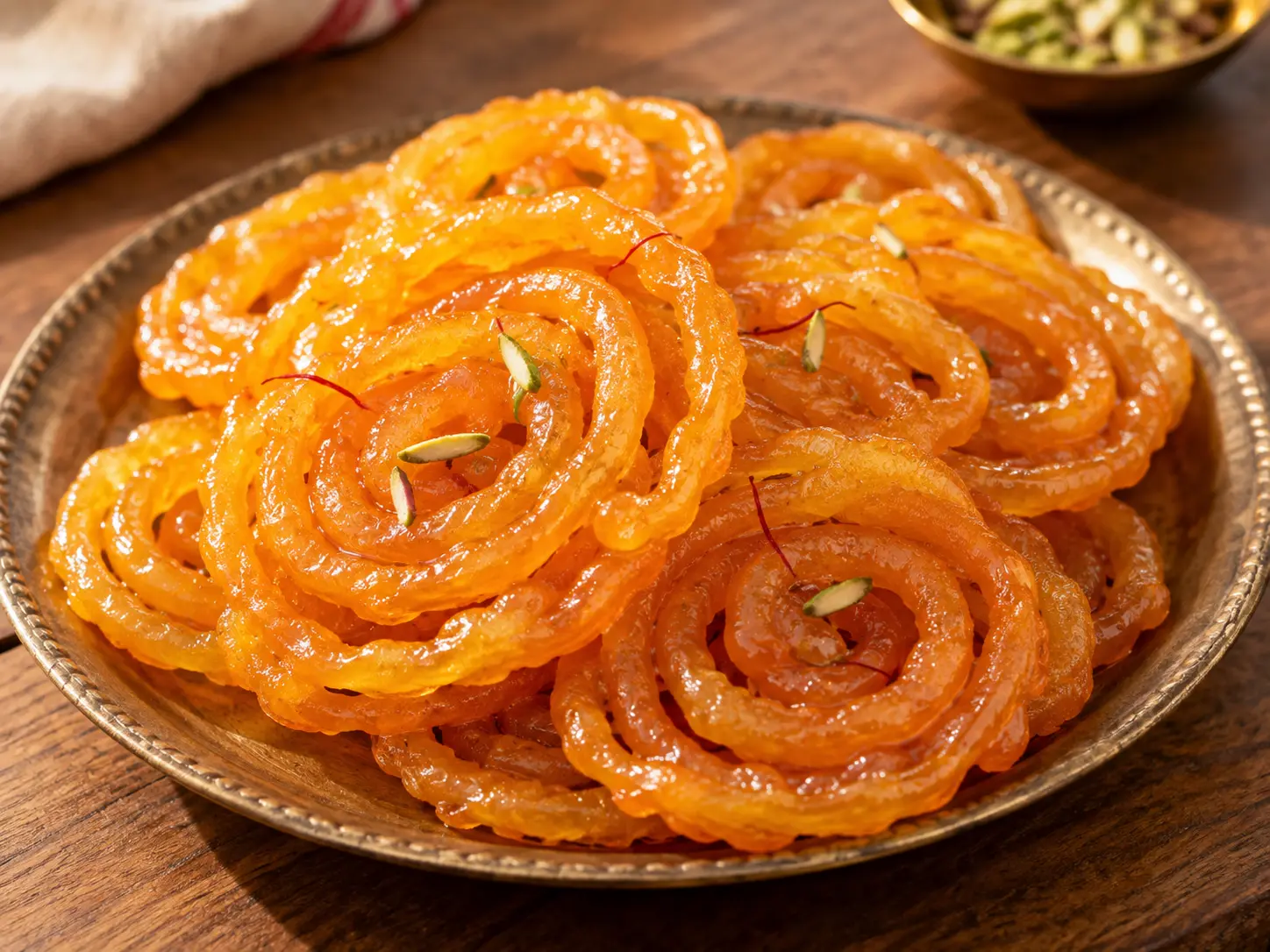
Jalebi is a classic Indian sweet known for its bright orange, spiral shape, crisp exterior, and juicy, syrup-filled interior. Traditionally made by fermenting a flour batter overnight, this instant version uses sour yogurt and baking powder to mimic that signature tangy flavor and light texture in a fraction of the time.
The secret to a perfect jalebi lies in two critical stages: getting the batter to a smooth, thick-ribbon consistency so it holds its shape in the pan, and cooking the sugar syrup to a precise one-string consistency. This recipe guides you through both, ensuring your jalebis absorb the sweet cardamom-infused syrup without losing their satisfying crunch.
Why This Recipe Works
- Adding cornflour to the batter provides structural stability and keeps the fried spirals crispy even after they absorb the warm syrup.
- Using sour yogurt provides the lactic acid needed to mimic the tangy flavor of a traditionally fermented batter while helping activate the baking powder.
- Adding a splash of lemon juice to the sugar syrup prevents it from crystallizing as it cools, keeping the syrup fluid enough to penetrate the jalebi shells.
Ingredient Notes
- Maida (All-Purpose Flour): This is the primary flour used to build the structure of the jalebi. Do not use self-rising flour or bread flour, as they alter the density and rise of the batter.
- Cornflour (Cornstarch): Known as cornstarch in North America, this ingredient is essential for giving the jalebi its lasting crispiness. Regular flour alone can yield a soft or soggy texture once soaked.
- Sour Yogurt (Dahi): Provides the characteristic fermented tang. If your yogurt is fresh and mild, leave it at room temperature for a few hours before using to increase its acidity.
- Baking Powder: Provides the immediate rise and airy pockets inside the batter, allowing the fried spirals to soak up the sugar syrup.
- Saffron (Kesar): Adds a warm yellow hue and floral aroma to the sugar syrup. You can complement this with a tiny drop of orange food color in the batter if you prefer the bright orange look.
- Lemon Juice: A small amount added to the hot syrup stops the sugar molecules from bonding and forming hard crystals upon cooling.
If You’re Cooking Outside India
- Cornflour vs. Cornstarch: In the UK and India, this ingredient is called cornflour. In the US and Canada, look for cornstarch (the fine white powder used for thickening sauces, not yellow cornmeal).
- Yogurt: Use plain whole-milk yogurt. If using thick Greek yogurt, whisk it thoroughly with a tablespoon of water first so it incorporates into the batter without leaving lumps.
- Squeeze Bottle or Piping Bag: A plastic condiment squeeze bottle with a nozzle opening of about 3 to 4 mm works best for beginners. Alternatively, use a sturdy zip-top bag and snip off a tiny corner.
How to Make Jalebi
Prepare the Sugar Syrup
Boil the sugar, water, cardamom, and saffron until the mixture reaches a single-thread (one-string) consistency. Stir in the lemon juice and keep the syrup warm on the lowest setting.
Mix the Batter
Whisk the dry ingredients, then slowly incorporate the yogurt and water. Beat the batter vigorously to introduce air until it falls in a thick, continuous ribbon. Let it rest briefly, then stir in the baking powder.
Fry the Spirals
Pipe the batter into medium-hot ghee or oil, making tight concentric circles. Fry on both sides until they turn light golden and feel completely rigid when touched with tongs.
Soak and Drain
Immediately transfer the hot, fried jalebis into the warm sugar syrup. Let them soak for 30 to 45 seconds, pressing them down gently so they absorb the syrup, then lift and drain on a wire rack.
Cooking Tips
- The frying fat should be about 3 cm (1.2 inches) deep in a flat-bottomed pan. If the oil is too shallow, the jalebi will flatten; if too deep, it will drift and lose its spiral shape.
- Keep the sugar syrup warm, not boiling hot. If the syrup is cold, the jalebis will not absorb it; if it is boiling hot, the jalebis will turn soft and soggy.
- Test the oil temperature by dropping a small dollop of batter into the pan. It should sink slightly, then rise to the surface immediately and sizzle gently. If it stays at the bottom, the oil is too cold.
Common Mistakes to Avoid
- The jalebis are flat and did not puff up: This happens if the batter is too thin or the oil is not hot enough. Adjust a thin batter by whisking in 1 tablespoon of flour, and ensure the oil is heated to medium before piping.
- The jalebi becomes soft and loses its crunch quickly after soaking: This is caused by thin sugar syrup or under-frying. Ensure the syrup reaches a clear one-string consistency and fry the jalebi until it is completely firm before soaking.
- The syrup has crystallized and left white sugar patches on the jalebis: The syrup was boiled too long or lacked acid. Always add a teaspoon of lemon juice to the hot syrup to prevent crystallization.
Variations
- Kesar Jalebi: Enhance the syrup with a larger pinch of crushed saffron and a splash of rose water for a deeply fragrant, traditional floral flavor profile.
Serving Suggestions
- Serve hot and fresh with warm, unsweetened Rabdi (thickened milk) to balance the intense sweetness of the jalebis.
- Enjoy alongside savory snacks like hot samosas or fafda for a classic sweet-and-savory breakfast combination.
Storage & Make-Ahead
Make ahead: The sugar syrup can be prepared up to 2 days in advance and kept in the refrigerator. Reheat until warm before frying the jalebis.
Refrigerate: Store leftover jalebis in an airtight container in the refrigerator for up to 3 days. They will lose some crispness but remain flavorful.
Freeze: Freezing is not recommended for jalebis, as the delicate syrup-soaked starch structure becomes soggy and breaks down upon thawing.
Reheat: To restore some of the crispness, reheat the jalebis in a preheated oven or toaster oven at 150C (300F) for 3 to 5 minutes. Avoid using a microwave, which makes them soft and limp.
Frequently Asked Questions
Why did my jalebis turn soggy immediately after soaking?
This happens if the sugar syrup is too thin (did not reach one-string consistency) or if the jalebis were under-fried and not fully crispy before being placed in the syrup.
Can I use wheat flour (atta) instead of maida?
Wheat flour changes the texture entirely, making the jalebis heavy, dense, and soft. For the characteristic light and crispy crunch, maida (all-purpose flour) is strongly recommended.
What if I do not have a squeeze bottle?
A clean, thick plastic zip-top bag or a clean milk packet works well. Fill the bag with batter, seal it, and snip a tiny corner (about 3 mm wide) to pipe the spirals.
Why did the sugar syrup crystallize on the cold jalebis?
This occurs if the syrup is boiled too long past the one-string stage or if lemon juice was omitted. The lemon juice prevents the sugar from recrystallizing as the jalebis cool.
More Indian Recipes to Try
Browse the IndiPlated recipe index
Jalebi
Ingredients
Equipment
Method
- In a saucepan, combine 200g sugar, 120ml water, 3 crushed cardamom pods, and a pinch of saffron. Bring to a boil over medium heat, stirring until the sugar dissolves. Lower the heat and simmer for 5 to 7 minutes until the syrup thickens slightly and reaches a single-thread (one-string) consistency. When you touch a cooled drop between your thumb and index finger and pull them apart, a single thread should form without breaking. Stir in 1 tsp lemon juice, remove from heat, and keep warm on a low stove setting.
- In a mixing bowl, whisk together 125g maida, 1 tbsp cornflour, a pinch of baking soda, and optional orange food color or turmeric. Whisk in 60g smooth sour yogurt. Gradually add up to 120ml water, whisking vigorously for 3 to 4 minutes to incorporate air. The batter must be smooth, completely lump-free, and fall in a thick but flowing ribbon when lifted. Let the batter rest at room temperature for 10 minutes.
- After resting, sprinkle 1/2 tsp baking powder over the batter and gently whisk it in. Transfer the batter into a squeeze bottle or a piping bag fitted with a small round nozzle.
- Add ghee or oil to a flat-bottomed pan until it reaches a depth of about 3 cm (1.2 inches). Heat over medium-high heat. Test the heat by dropping a speck of batter; it should rise immediately to the surface without turning brown too quickly. Reduce the heat slightly to medium to maintain a steady temperature.
- Squeeze the bottle to pipe the batter directly into the medium-hot fat. Start from the center and swirl outwards to form 3 overlapping concentric circles, finishing by overlapping the last line across the center of the spiral to seal it. Fry for 2 minutes, then flip using tongs or a skewer. Fry the other side for 1 to 2 minutes until the jalebis are pale golden, firm, and rigid.
- Immediately lift the hot jalebis from the oil, shaking off any excess fat, and drop them into the warm sugar syrup. Use a spoon to press them gently into the syrup so they are fully submerged. Soak for 30 to 45 seconds until they absorb the syrup and become translucent. Lift the jalebis out and place them briefly on a wire rack to drain any excess syrup. Serve immediately while warm.
Notes
If the jalebis lose their shape or disintegrate when piped, the batter is too thin. Whisk in 1 tablespoon of maida.
Always pipe into medium-hot oil. If the oil is too hot, the batter will expand unevenly and you won't be able to form spirals.