Uttapam Recipe (South Indian Savory Pancakes)
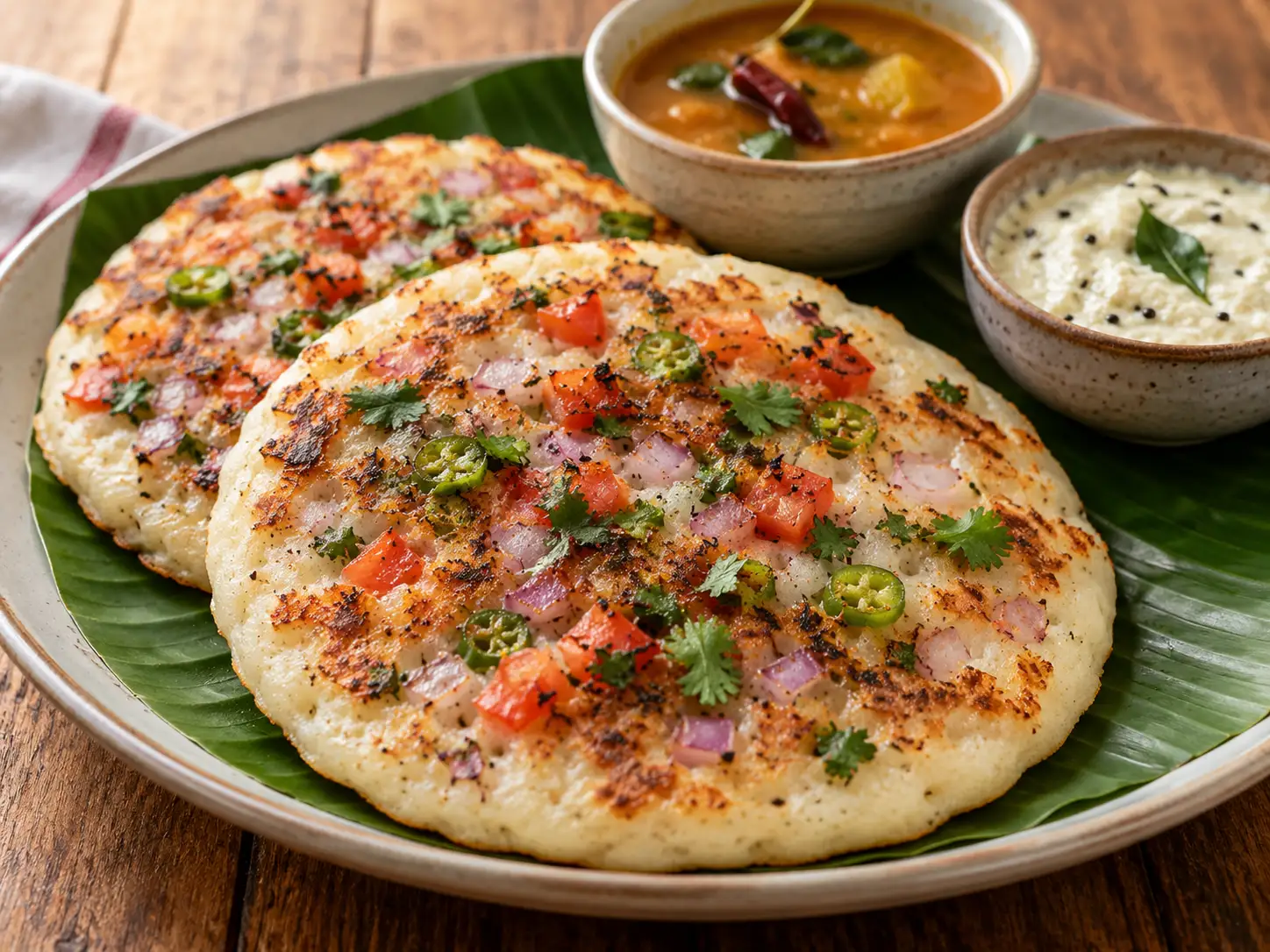
Uttapam is a classic South Indian griddle cake made from a fermented batter of rice and split black lentils. Unlike thin, crispy dosas, uttapam is thick, soft, and slightly spongy, with a gently crisped exterior. It is commonly topped with finely chopped vegetables like red onions, tomatoes, green chilies, and fresh coriander, which cook directly into the batter.
This recipe focuses on achieving the contrast of a soft, airy interior and golden-brown, crispy edges. Whether using homemade or store-bought batter, the key is managing the heat of your griddle and applying the toppings at the right moment so they steam-cook while remaining beautifully caramelized.
Why This Recipe Works
- Using a heavy flat griddle ensures even heat distribution, which gives the uttapam its characteristic golden-brown crust without burning.
- Pressing the toppings down with a spatula immediately after sprinkling helps them stick to the batter and soften properly.
- Cooking on medium-low heat prevents the thick center from remaining raw while the bottom browns.
Ingredient Notes
- Idli or Dosa Batter: Use a thick, well-fermented rice and lentil batter. If the batter is too thin, the uttapam will spread out like a thin pancake instead of holding its signature thick, spongy shape. If it is cold from the fridge, let it sit at room temperature for 30 minutes before cooking.
- Red Onions: Finely chop the red onions. Larger pieces will not stick to the batter properly and may remain raw and sharp-tasting.
- Green Chilies: Indian green chilies add a bright heat. Finely mince them so the spice is distributed evenly across the surface.
If You’re Cooking Outside India
- Uttapam/Dosa Batter: Ready-made fermented idli or dosa batter is commonly found in the refrigerated section of South Asian or Indian grocery stores. Look for tubs labeled Idli and Dosa Batter.
How to Make Uttapam
Temper the Batter
Bring the fermented batter to room temperature so it spreads easily and bubbles cook through evenly.
Prep the Toppings
Finely chop onions, tomatoes, green chilies, and coriander leaves. Toss them together so they are ready to sprinkle quickly.
Spread the Batter
Ladle the batter onto a hot, oiled griddle. Spread it gently into a thick disc without smoothing it out completely.
Apply Toppings and Cook
Immediately add the chopped vegetable mixture, press gently so they embed in the wet batter, and cook on medium-low heat until bubbles form on top.
Flip and Caramelize
Drizzle oil around the edges, flip the uttapam, and press down so the vegetable toppings contact the hot griddle directly and brown slightly.
Cooking Tips
- Always use a heavy-bottomed pan, preferably a cast iron griddle or skillet. It retains heat better and prevents hot spots.
- If using store-bought batter that is very thick, add water one tablespoon at a time. The batter should be easily pourable but significantly thicker than crêpe batter.
- Keep the heat at medium-low. Because uttapam is thick, cooking it on high heat will burn the bottom before the center cooks through.
Common Mistakes to Avoid
- Toppings falling off the uttapam when flipped: Sprinkle the toppings immediately after pouring the batter while it is still wet. Use a spatula to gently press the vegetables down into the batter so they stick.
- The middle of the uttapam remains raw and gooey: This happens if the griddle is too hot or the uttapam is poured too thick. Reduce the heat to medium-low and cover the pan with a lid during the first side of cooking to trap the steam.
Variations
- Cheese Uttapam: Sprinkle a handful of grated mild cheddar or mozzarella cheese over the vegetable toppings just before flipping or immediately after flipping.
- Podi Uttapam: Dust a generous teaspoon of idli podi (spiced lentil powder) over the wet batter along with the toppings before drizzling with ghee.
Serving Suggestions
- Serve hot directly from the griddle with fresh coconut chutney.
- Pair with warm vegetable sambar for a classic South Indian breakfast.
- Accompany with tomato-onion chutney for a tangy contrast.
Storage & Make-Ahead
Make ahead: You can chop the vegetable toppings and store them in an airtight container in the refrigerator for up to 24 hours. Keep the batter refrigerated until 30 minutes before cooking.
Refrigerate: Store leftover cooked uttapams in an airtight container in the refrigerator for up to 2 days.
Freeze: Freezing is not recommended as the vegetable toppings lose their crisp texture and become soggy upon thawing.
Reheat: To reheat, place the uttapam on a hot griddle over medium-low heat, sprinkle a few drops of water on the pan, cover with a lid, and warm for 1-2 minutes until heated through.
Frequently Asked Questions
Can I use sourdough discard or normal pancake batter instead?
No. Uttapam relies on the unique flavor and texture profile of fermented rice and urad dal batter. Wheat flour or sourdough discard batters will yield a completely different texture and taste.
My uttapam is sticking to the pan. How do I fix this?
This is common with cast iron pans that are not well-seasoned. Make sure the pan is sufficiently hot before pouring the batter, and rub a sliced onion dipped in oil across the surface before cooking each batch.
Why is my uttapam dense instead of spongy?
This happens if the batter is not well-fermented or if it was beaten too vigorously right before pouring, which knocks out the air bubbles. Stir the batter gently rather than whipping it before cooking.
More Indian Recipes to Try
Browse the IndiPlated recipe index
Uttapam
Ingredients
Equipment
Method
- In a medium bowl, combine the finely chopped red onion, chopped tomato, minced green chilies, and fresh coriander leaves. Toss well to mix the ingredients evenly. Set aside.
- Heat a tawa, flat cast iron griddle, or heavy-bottomed skillet over medium heat. To test if it is ready, sprinkle a few drops of water on the surface; the water should sizzle and evaporate immediately. Wipe the surface clean with a damp paper towel.
- Reduce the heat to medium-low. Pour a large ladleful (about 1 cup) of the fermented batter onto the center of the hot griddle. Using the back of the ladle, gently spread the batter outward in a circular motion to form a thick pancake, about 15 cm / 6 inches in diameter. Do not spread it thin like a dosa; it should be about 1 cm thick.
- Immediately sprinkle about 3 to 4 tablespoons of the prepared vegetable mixture evenly over the surface of the wet batter. If using salt, sprinkle a tiny pinch of salt over the toppings. Using the flat side of your spatula, gently press the toppings down so they embed firmly into the batter.
- Drizzle 1 teaspoon of oil or ghee around the edges of the uttapam and a few drops over the toppings. Cover the pan with a lid. Cook on medium-low heat for 3 to 4 minutes. You will see bubbles forming and popping on the surface, and the edges will start to turn a light golden-brown and release from the pan.
- Remove the lid. Slide the spatula underneath and carefully flip the uttapam over. Press down gently with the spatula so the vegetables make flat contact with the hot griddle. Cook uncovered for 1 to 2 minutes on this side, until the vegetables are slightly caramelized and golden brown.
- Flip the uttapam back once more to ensure the bottom is fully cooked and crisp. Remove it from the griddle and place it on a serving plate. Repeat the process for the remaining batter and toppings, cooking each uttapam for about 5 minutes total and wiping the griddle clean between batches.
Notes
Wiping the pan with a lightly oiled paper towel between batches helps prevent the next uttapam from sticking.
Keep cooked uttapams warm by stacking them on a plate covered with a clean kitchen towel.