Prawn Biryani Recipe (Indian Spiced Rice with Shrimp)
Prawn Biryani is a highly aromatic dish where marinated prawns are cooked in a spiced yogurt base, layered with parboiled basmati rice, and steamed together. Unlike meat-based biryanis that require long simmering, prawns cook quickly, making this version faster to prepare while delivering deep, savory flavor.
The success of this dish relies on two critical stages: parboiling the rice to precisely 70% doneness so it finishes steaming without becoming mushy, and searing the prawns just enough so they remain tender rather than turning rubbery during the final steaming phase.
Why This Recipe Works
- Parboiling the rice with whole spices infuses fragrance directly into the grains before they are layered.
- Searing the marinated prawns briefly in the hot masala base prevents them from overcooking during the subsequent steaming stage.
- A heavy-bottomed pan diffuses heat evenly during the steaming process, preventing the delicate seafood masala at the bottom from scorching.
Ingredient Notes
- Prawns: Medium to large raw prawns work best. Ensure they are completely peeled and deveined. If using frozen prawns, thaw them thoroughly and pat them dry with paper towels to prevent excess moisture from diluting the masala.
- Basmati Rice: Look for aged long-grain basmati rice. Aged rice grains expand without breaking and dry out better, which keeps the grains separate after steaming.
- Fried Onions (Birista): Thinly sliced onions fried until deep golden brown. They provide a foundational sweet and savory flavor to the gravy and the layered toppings.
- Yogurt: Plain, full-fat yogurt acts as the base for the marinade, tenderizing the prawns and helping the spices cling to them.
If You’re Cooking Outside India
- Prawns / Shrimp: Raw, frozen peeled shrimp are widely available in standard supermarkets. Look for packages labeled 31/40 count (which means 31 to 40 shrimp per pound) for an ideal size.
- Saffron: Saffron is commonly found in the spice aisle of international markets or specialty grocers. If unavailable, you can omit it; do not substitute with turmeric for the topping, as turmeric has a completely different flavor profile when applied dry.
How to Make Prawn Biryani
Marinating the Prawns
Coating the prawns in yogurt, lemon juice, turmeric, and chili powder to build a flavorful barrier and tenderize the seafood.
Frying the Onions
Slicing onions evenly and frying them in oil or ghee until golden brown, creating the flavor base for the gravy and the garnish.
Parboiling the Rice
Cooking washed basmati rice in heavily salted boiling water with whole spices until the grains are cooked on the outside but still firm in the very center.
Cooking the Masala Base
Sautéing the ginger-garlic paste, green chilies, and ground spices, then tossing the marinated prawns in this hot base just until they start to curl.
Layering and Steaming (Dum)
Assembling the rice over the prawn masala, scattering herbs and fried onions, sealing the pot with a tight lid, and steaming on very low heat.
Cooking Tips
- Wash the basmati rice in multiple changes of cold water until the water runs completely clear to remove excess surface starch.
- Salt the rice boiling water generously; it should taste like mild seawater so the rice grains are seasoned from within.
- Check the parboiled rice by pressing a grain between your fingers; it should break into three distinct pieces but still feel firm, not soft or mushy.
Common Mistakes to Avoid
- Overcooking the prawns during the masala preparation stage: Cook the prawns in the hot gravy for no more than 4 to 5 minutes. They should be just pink and slightly curled; they will finish cooking during the steaming stage.
- The bottom of the biryani burns during the steaming stage: Place a flat cast-iron griddle or tawa under your cooking pot during the low-heat steam phase to distribute the heat evenly.
Variations
- Coconut Milk Prawn Biryani: Replace half of the yogurt in the marinade with thick, unsweetened coconut milk to add a subtle coastal flavor to the gravy.
Serving Suggestions
- Serve hot with a side of cool cucumber and onion yogurt raita.
- Pair with fresh lemon wedges and thinly sliced raw red onions.
- Serve alongside roasted papadums for a crunchy contrast.
Storage & Make-Ahead
Make ahead: The onions can be fried and stored in an airtight container at room temperature up to a day in advance. The rice can be washed and soaked 30 minutes before cooking.
Refrigerate: Store leftovers in an airtight container in the refrigerator for up to 2 days.
Freeze: Freezing is not recommended because thawed prawns easily turn rubbery and the steamed rice loses its texture.
Reheat: Reheat gently in a covered pan on the stove over low heat with a splash of water, or microwave in a covered bowl to retain steam.
Frequently Asked Questions
Can I use frozen prawns directly in the recipe?
No, you must thaw frozen prawns completely and pat them dry first. Raw frozen prawns release a lot of water when cooked, which will make the biryani masala watery and cause the rice to turn soggy.
What can I use if I do not have a heavy-bottomed pot?
If you are using a thin-bottomed pot, place a flat skillet or griddle (tawa) on the stove burner, heat it, and then place your biryani pot directly on top of the skillet during the final 15-minute steaming stage. This distributes the heat evenly and prevents burning.
How do I know if the rice is parboiled correctly?
Take a grain of rice from the boiling pot and press it between your thumb and index finger. It should break into three pieces, indicating the core is still firm and dry, while the outer layer is soft.
More Indian Recipes to Try
Browse the IndiPlated recipe index
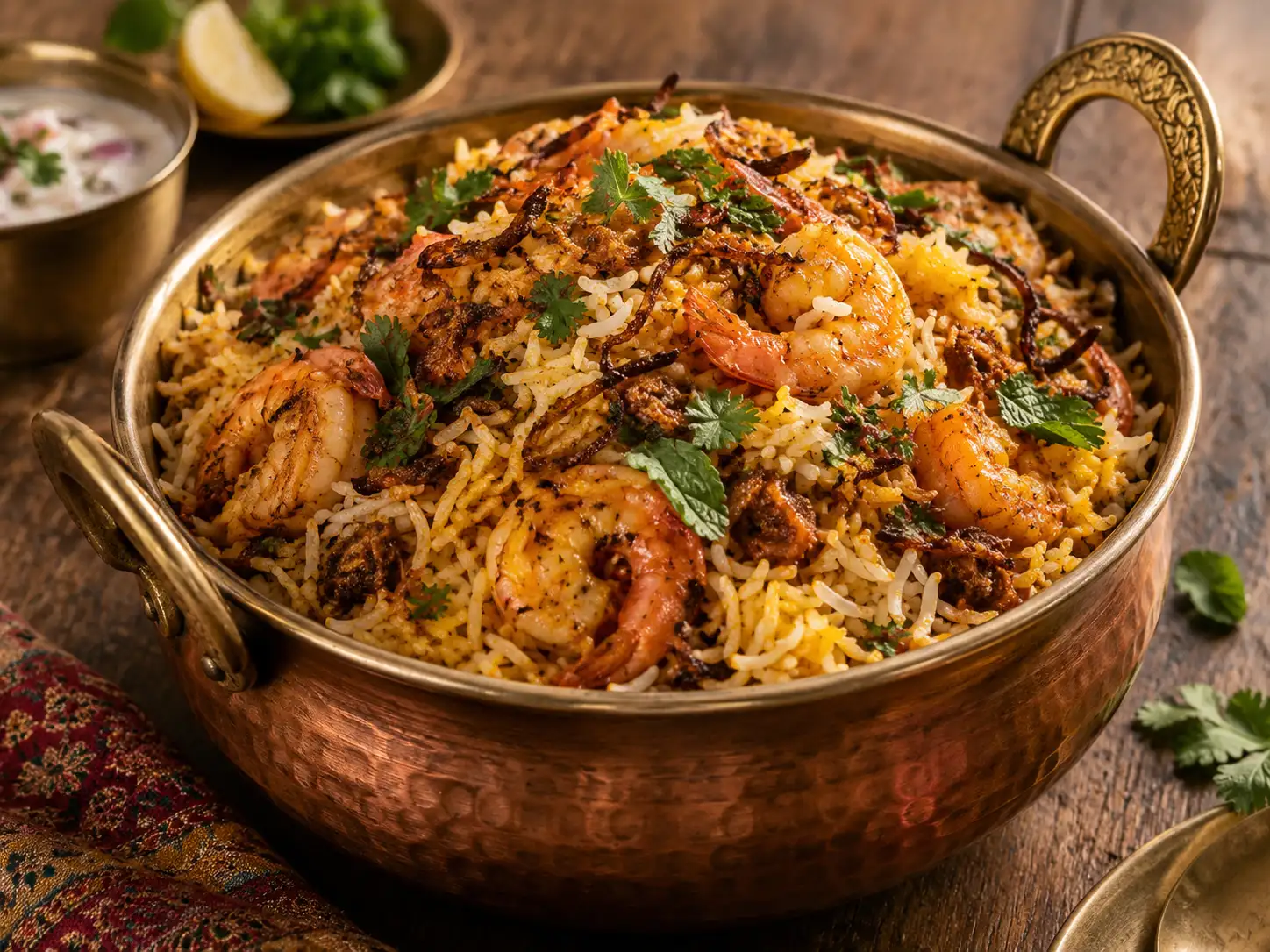
Prawn Biryani
Ingredients
Equipment
Method
- In a bowl, combine the cleaned prawns with the yogurt, lemon juice, turmeric powder, 1/2 teaspoon of Kashmiri red chili powder, 1/2 teaspoon of salt, and 1/2 tablespoon of ginger-garlic paste. Stir until well coated. Cover and set aside in the refrigerator to marinate for 20 minutes.
- Heat 3 tablespoons of oil or ghee in your heavy-bottomed pot over medium heat. Add the sliced onions and fry for 12 to 15 minutes, stirring frequently. The onions should turn golden brown and crisp. Remove half of the fried onions using a slotted spoon and drain them on paper towels; reserve these for layering later.
- While the onions are frying, bring 6 cups of water to a boil in a large pot. Add 1 tablespoon of salt, the bay leaf, crushed green cardamoms, cloves, and cinnamon stick. Add the soaked and drained basmati rice. Cook over medium-high heat for 7 to 8 minutes. Test the rice: it should be cooked on the outside but still have a firm bite in the center. Drain immediately in a colander and set aside.
- In the heavy-bottomed pot containing the remaining fried onions and oil, lower the heat to medium-low. Add 1 tablespoon of ginger-garlic paste and the slit green chilies. Sauté for 2 minutes until the raw smell disappears. Stir in the remaining 1/2 teaspoon of Kashmiri red chili powder, coriander powder, cumin powder, and garam masala powder. Cook for 1 minute, stirring constantly.
- Increase the heat to medium. Add the marinated prawns along with all of the marinade liquid to the spice base. Stir well and cook for 4 to 5 minutes, just until the prawns turn pink and start to curl slightly. Do not cook them fully. Turn off the heat.
- Spread half of the chopped mint and coriander leaves over the prawn mixture in the pot. Layer all of the parboiled rice evenly over the top. Scatter the reserved fried onions and the remaining mint and coriander leaves over the rice. Drizzle the saffron milk (if using) and 1 tablespoon of melted ghee over the surface.
- Cover the pot with a tight lid. To seal the steam, you can place a piece of aluminum foil under the lid before closing. Cook on the lowest heat setting for 15 minutes. Turn off the heat and let the pot sit, unopened, for 5 minutes. Remove the lid and gently fluff the biryani with a fork, mixing the layers slightly before serving.
Notes
If your cooking pot does not have a thick bottom, place a flat tawa or griddle under the pot during Step 7 to prevent the bottom layer from scorching.