
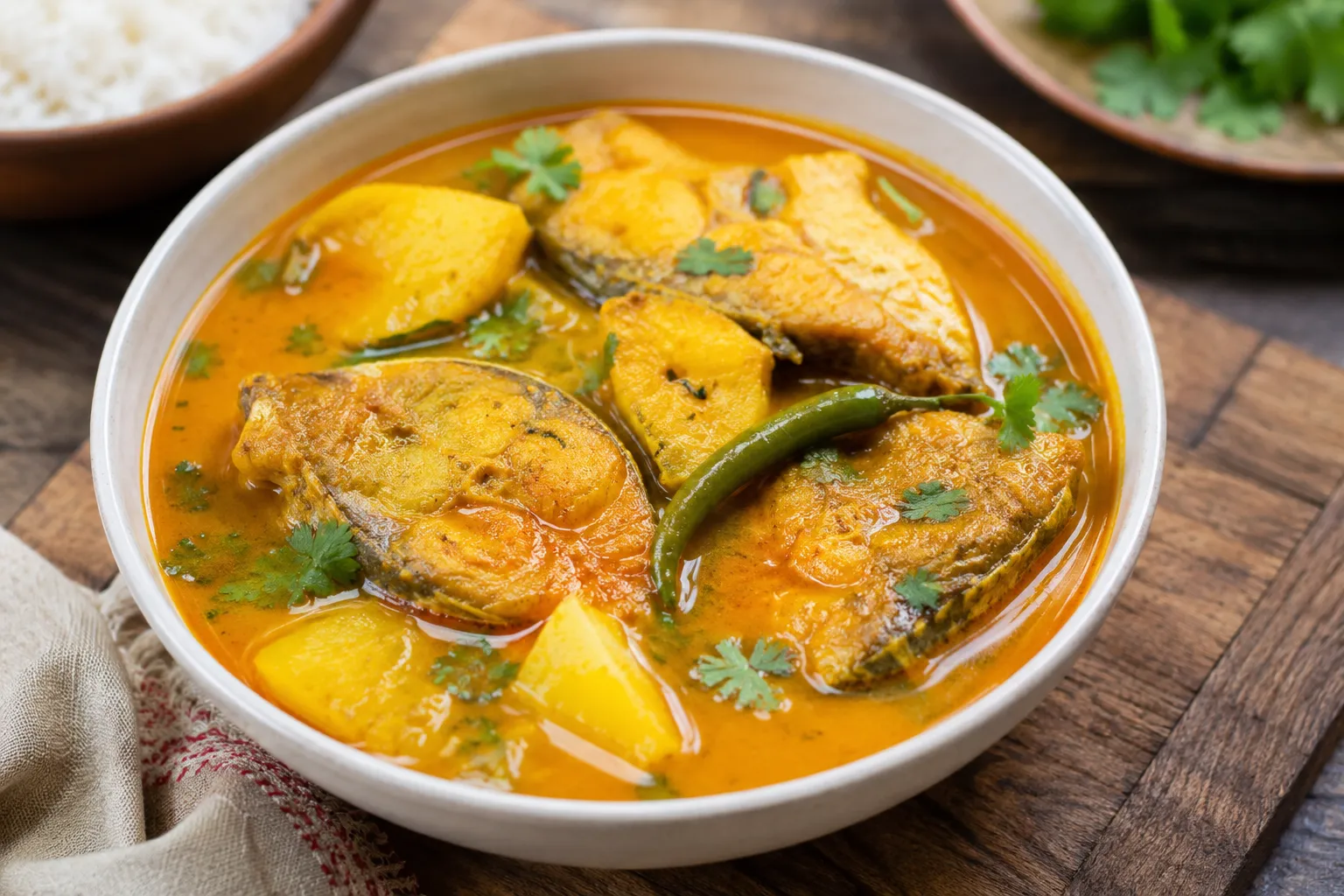
Bengali Macher Jhol Recipe (Light Fish Curry with Potatoes)
Macher Jhol is a light, comforting Bengali fish curry designed to accompany warm white rice. Unlike thick, rich gravies that rely on heavy onion pastes, this traditional version features a thin, runny broth spiced gently with nigella seeds, ginger, cumin, and fresh green chilies.
The success of this dish lies in two key stages: properly smoking the mustard oil to remove its raw sharpness, and gently simmering the pre-fried fish steaks at the end so they absorb the light spices without breaking apart.
Why This Recipe Works
- Smoking the mustard oil first removes the raw, harsh pungency, leaving a smooth, characteristic warmth that defines Bengali cooking.
- Mixing dry ground spices with a splash of water before adding them to the hot oil prevents them from scorching and turning bitter.
- Simmering the fried fish uncovered at the very end allows it to absorb the spiced broth while keeping the delicate flesh from breaking.
Ingredient Notes
- Rohu or Catla: Traditional Bengali freshwater carp. Look for bone-in steaks cut crosswise. The bones contribute depth to the light broth and help the fish keep its shape during frying and simmering.
- Mustard Oil: Required for the authentic earthy aroma of Bengali cuisine. Buy cold-pressed (kachchi ghani) mustard oil.
- Nigella Seeds (Kalo Jeere / Kalonji): Small black seeds that add a subtle, peppery, slightly onion-like aroma when bloomed in hot oil. Do not substitute with onion seeds or black sesame.
- Green Chilies: Slit them lengthwise to release their fresh aroma and moderate heat into the broth without making the dish overly spicy.
If You're Cooking Outside India
- Fish Substitutions: If Rohu or Catla is unavailable, use firm, white-fleshed fish like sea bass, cod, snapper, or halibut. Choose thick bone-in steaks if possible. If using boneless fillets, cut them into thick pieces and reduce the final simmering time to prevent them from disintegrating.
- Mustard Oil Availability: In some countries, mustard oil is sold with a 'For External Use Only' label due to regulations on erucic acid. Many South Asian home cooks use it regardless. If you prefer an alternative, use canola or sunflower oil, but note that the distinctive pungent flavor profile of the curry will be missing.
How to Make Bengali Macher Jhol
Prep and Marination
Pat the fish steaks completely dry before rubbing them with turmeric and salt. This prevents them from sticking to the pan or causing hot oil to splutter during frying.
Smoking and Searing
Heat the mustard oil in a kadai or deep pan until a thin wisp of white smoke rises, then lower the heat. Sear the marinated fish until pale golden on both sides.
Frying the Potatoes
Fry the potato wedges in the same flavored oil until they develop lightly golden edges, which helps them hold their shape during simmering.
Building the Broth
Temper the oil with nigella seeds and green chilies, then cook down the tomatoes and ginger. Add the cumin paste and warm water to form the light gravy base.
Simmering to Finish
Simmer the potatoes until fork-tender before returning the fried fish to the pan for a final gentle simmer to meld the flavors.
Cooking Tips
- Never skip heating the mustard oil to its smoking point. If you add ingredients to cold or lukewarm mustard oil, the raw erucic acid flavor will overpower the light curry.
- Use warm or hot water when building the gravy. Cold water lowers the temperature of the pan suddenly, which can make the potatoes cook unevenly.
- Handle the fish with care. Turn the fish steaks only once during frying to prevent them from breaking.
Common Mistakes to Avoid
- Overcrowding the pan when frying the fish: Fry the fish steaks in batches. Overcrowding lowers the oil temperature, causing the fish to steam and tear rather than developing a clean, golden crust.
- Adding the fish too early to the gravy: Only add the fish when the potatoes are almost fully cooked. Boiling the fish for too long will make it dry, rubbery, or cause it to disintegrate into the runny broth.
Variations
- Macher Jhol with Cauliflower (Aloo Phoolgobi Macher Jhol): Add medium cauliflower florets to the dish. Fry them lightly in the mustard oil after frying the potatoes, then simmer them together in the gravy.
- Bori Macher Jhol: Fry a handful of Bengali lentil dumplings (bori) in the mustard oil until golden, set aside, and add them to the curry during the last 5 minutes of simmering so they absorb the warm broth.
Serving Suggestions
- Serve piping hot alongside freshly steamed plain white Basmati or Gobindobhog rice.
- Accompany with a simple side of sliced cucumbers, red onions, and a fresh lemon wedge to squeeze over the fish.
Storage & Make-Ahead
Make ahead: You can chop the vegetables and fry the fish a few hours ahead, but assemble the gravy close to serving time so the potatoes and fish maintain their best texture.
Refrigerate: Store leftovers in an airtight container in the refrigerator for up to 2 days. The flavors often deepen overnight as the fish absorbs the spices.
Freeze: Freezing is not recommended for this curry. Simmered potatoes lose their structure and become watery and grainy when thawed.
Reheat: Reheat gently in a small pan over medium-low heat on the stovetop. Avoid stirring vigorously so you do not break the tender fish steaks.
Frequently Asked Questions
Can I make this recipe without mustard oil?
Yes, you can use a neutral oil like canola or sunflower oil, but you will miss the characteristic pungent, earthy aroma that mustard oil provides to traditional Bengali fish curries.
Why did my fish break apart in the gravy?
This usually happens if the fish is boiled too vigorously or stirred too much. Always fry the fish first to help it hold its shape, and slide it gently into the gravy near the end of cooking, simmering uncovered without stirring.
What can I use instead of Rohu fish?
Firm, white-fleshed saltwater fish like sea bass, cod, snapper, or halibut make excellent substitutes. Cut them into thick, bone-in steaks if possible, or use thick fillets.
More Indian Recipes to Try
Browse the IndiPlated recipe index
Bengali Macher Jhol
Ingredients
Equipment
Method
- Place the patted-dry fish steaks in a shallow dish. Rub evenly with 1/2 teaspoon of turmeric powder and 1/2 teaspoon of salt. Set aside at room temperature to marinate for 15 minutes.
- Heat 3 tablespoons of mustard oil in a kadai or deep skillet over medium-high heat. Wait until you see a thin, steady wisp of white smoke rising from the surface. Turn off the heat and let the oil cool for 2 minutes to prevent the fish from burning instantly when added.
- Turn the heat back to medium. Carefully place the marinated fish steaks into the hot oil. Fry for 2 to 3 minutes on the first side until golden brown, then flip gently and fry the other side for another 2 minutes. Remove the fish from the pan with a slotted spoon and set aside on a plate.
- In the same remaining oil, add the potato wedges. Fry them on medium heat for about 4 minutes, turning occasionally, until they develop pale golden edges. Remove the potatoes and set aside on the plate with the fish.
- Lower the heat to medium-low. Add the nigella seeds and 2 of the slit green chilies to the remaining oil. Fry for 30 seconds until the seeds crackle and release a peppery aroma.
- Add the ginger paste and chopped tomato. Sauté on medium heat for 4 to 5 minutes, pressing down on the tomatoes with your spatula, until they soften completely and the oil starts to separate at the edges.
- In a small bowl, mix the remaining 1/2 teaspoon of turmeric powder, 1 teaspoon of cumin powder, and 1/2 teaspoon of Kashmiri red chili powder with 2 tablespoons of water to form a smooth paste. Pour this paste into the pan. Stir and cook for 2 minutes on medium heat until the raw smell of the spices disappears.
- Return the fried potatoes to the pan. Add 360 ml of warm water and 1 teaspoon of salt. Stir well and bring the mixture to a boil. Cover the pan, lower the heat, and simmer for 8 minutes, or until the potatoes can be easily pierced with a fork.
- Gently slide the fried fish steaks and the remaining 2 slit green chilies into the simmering gravy. Cook uncovered on medium-low heat for 4 to 5 minutes so the fish absorbs the spices. Garnish with fresh chopped coriander leaves if using, then turn off the heat. Serve hot.
Notes
If using boneless fish fillets, cut them into thick chunks (about 5 cm wide) and reduce the final simmering step to 3 minutes to avoid overcooking.
The gravy should be runny and light, not thick. Adjust the water slightly if it reduces too much during cooking.


3 Comments