Mint Chutney Recipe (Fresh Indian Herb Dip)
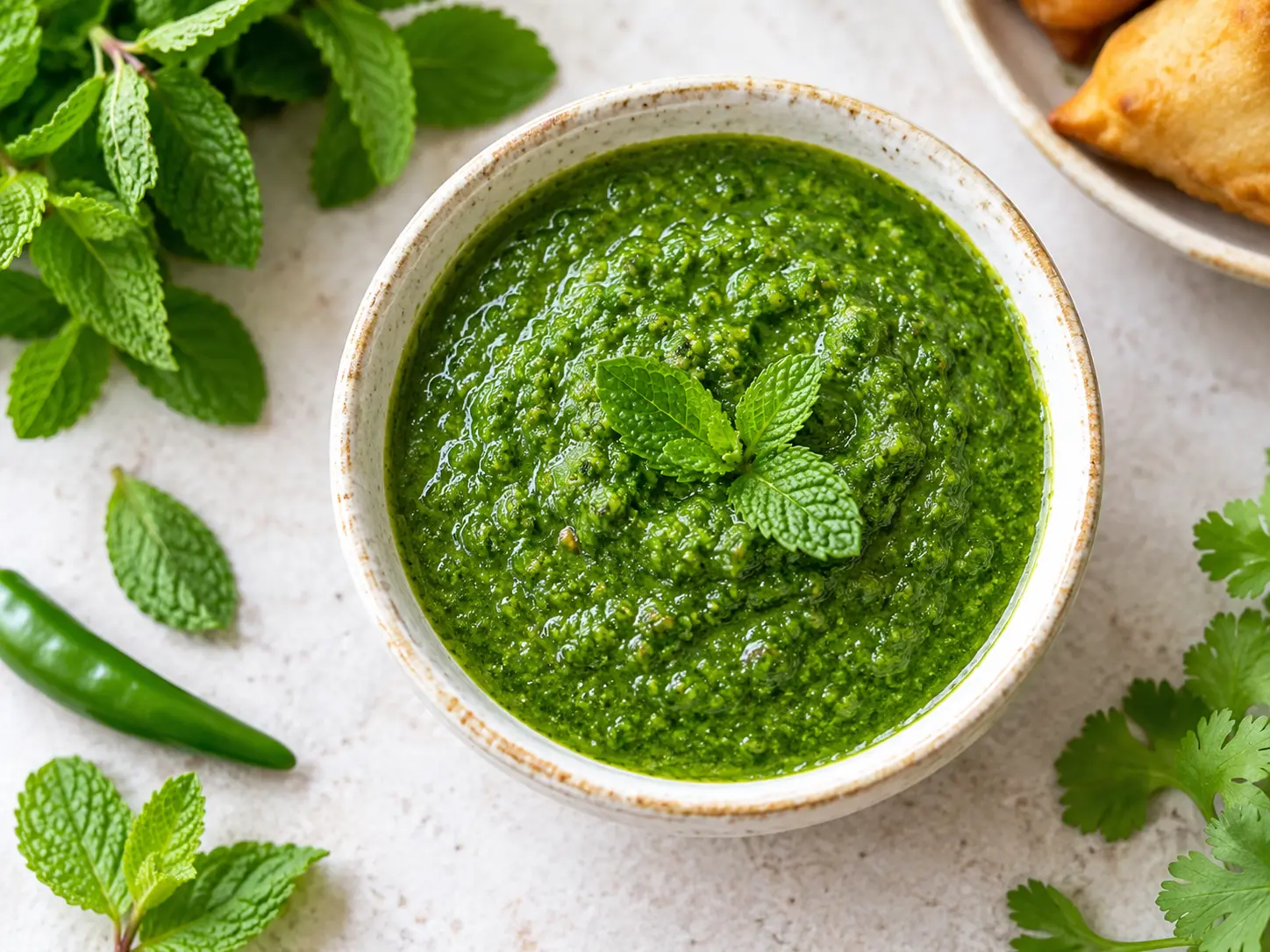
Mint chutney is a sharp, vibrant green condiment made by blending fresh herbs, green chilies, aromatics, and an acid like lemon juice or yogurt. It brings a sharp, refreshing contrast to rich, fried, or spiced Indian snacks.
This version relies on a balanced mix of fresh mint and coriander leaves, sharpened with lemon juice and balanced with a pinch of sugar. It comes together in a few minutes in a standard blender or food processor.
Why This Recipe Works
- Using a mix of both mint and coriander prevents the chutney from tasting overly medicinal or bitter, as coriander softens the strong flavor of fresh mint.
- Adding a small ice cube or a splash of cold water while blending keeps the blades from heating up, which helps the herbs retain their bright green color instead of turning dark.
Ingredient Notes
- Mint leaves: Use fresh, tender green leaves and discard thick, woody stems which can make the chutney fibrous.
- Coriander leaves: Known as cilantro in many international markets. They add bulk and a mild, earthy background flavor.
- Green chilies: Serrano peppers or Indian green chilies work well. Adjust the quantity depending on how much heat you prefer.
If You’re Cooking Outside India
- Fresh Mint and Coriander: Available at most local grocery stores, supermarkets, or South Asian specialty shops.
- Black salt (Kala Namak): A sulfurous rock salt found in Indian grocery stores that adds a distinct tangy edge; regular table salt or sea salt is a workable substitute.
How to Make Mint Chutney
Prep the Herbs
Pick the tender mint and coriander leaves, wash them thoroughly in cold water, and drain excess moisture.
Blend
Combine the herbs, aromatics, spices, and lemon juice in a blender with a splash of cold water and process until smooth.
Adjust and Serve
Taste the chutney and adjust salt, lemon, or heat before serving or storing.
Cooking Tips
- Add a tablespoon of thick yogurt if you prefer a creamier, milder dip for kebabs and grilled snacks.
Common Mistakes to Avoid
- The chutney turns dark brown instead of bright green: Blending too long builds up heat in the jar. Pulse in short intervals and use ice-cold water to maintain the color.
Variations
- Dahi Pudina Chutney: Blend in half a cup of beaten plain yogurt at the very end for a creamy, cooling accompaniment.
Serving Suggestions
- Serve alongside warm samosas, pakoras, or tandoori appetizers.
- Use as a spread for wraps, sandwiches, and rolls.
Storage & Make-Ahead
Make ahead: Can be made a few hours before serving and kept covered.
Refrigerate: Store in an airtight glass jar in the refrigerator for up to 2 days. Press a piece of plastic wrap directly onto the surface to prevent oxidation.
Freeze: Freezing is not recommended as fresh herbs lose their bright texture and flavor upon thawing.
Reheat: Serve chilled or at room temperature. Do not heat.
Frequently Asked Questions
Can I make this chutney without garlic or ginger?
Yes, you can omit ginger entirely. The chutney will still taste fresh and herbaceous.
Why does my mint chutney taste bitter?
Using too many mature mint stems or over-blending until the mixture heats up can cause bitterness. Stick to tender leaves and blend in short pulses.
More Indian Recipes to Try
Browse the IndiPlated recipe index
Mint Chutney
Ingredients
Equipment
Method
- Place the mint leaves, coriander leaves, green chilies, ginger, lemon juice, cumin powder, salt, and sugar into a blender jar.
- Add the cold water. Pulse and blend until a smooth, vibrant green paste forms. Avoid over-blending to keep the color bright.
- Transfer to a bowl, taste for salt or lemon, and serve immediately or chill until needed.