Lamb Biryani Recipe (Fragrant Layered Rice and Meat)
A great lamb biryani relies on two main textures: exceptionally tender, succulent meat and separate, fluffy grains of rice that have absorbed the aromatic fat and spices without becoming mushy. This recipe uses the layered dum method, where parboiled rice and partially cooked lamb curry are sealed together in a heavy pot to steam slowly on low heat.
The key to success with this version is managing the moisture in the gravy and the doneness of the rice before they are combined. By following the visual and tactile cues below, you can consistently achieve the characteristic separation of grains and deep flavor integration that makes biryani stand out.
Why This Recipe Works
- Braising the lamb shoulder on low heat before layering ensures the meat is completely tender, avoiding the common mistake of tough, undercooked lamb in a quickly steamed pot.
- Parboiling the basmati rice to exactly seventy percent doneness allows the grains to finish cooking in the steam of the sealed pot without losing their structure.
- A heavy-bottomed pan placed over a flat griddle (tawa) diffuses the heat evenly during the final stage, preventing the meat at the bottom of the pot from scorching.
Ingredient Notes
- Lamb shoulder: Choose bone-in lamb shoulder cut into roughly four-centimeter pieces. The bones release marrow and gelatin as they simmer, which thickens the gravy and coats the rice grains with rich flavor.
- Basmati rice: Look for aged, extra-long grain basmati rice. Aged rice contains less moisture, meaning the grains are less likely to stick together or break during boiling and mixing.
- Yogurt: Use plain, full-fat yogurt. The lactic acid in full-fat yogurt tenderizes the tough collagen in the lamb shoulder during the marinating process.
- Onions: Thinly and uniformly sliced red or yellow onions are essential for making the barista (fried onions). Even slicing ensures they cook at the same rate and do not burn.
If You’re Cooking Outside India
- Kewra water: This is a distillate made from pandanus flowers, offering a distinct floral aroma common in Northern Indian biryanis. It can be found in South Asian specialty stores or online. If you cannot find it, rose water is an acceptable alternative, or you can omit it entirely.
- Shahi Jeera (Black Cumin): These seeds are thinner, darker, and sweeter than standard cumin seeds. They add a refined, herbal aroma to the rice. You can buy them at Indian grocery stores. If unavailable, do not substitute with regular cumin; simply omit them from the boiling water.
How to Make Lamb Biryani
Marinating and Braising the Lamb
The lamb is first coated in yogurt, ginger, garlic, and ground spices to tenderize. It is then seared and gently simmered with fried onions and water until the meat is tender and the sauce has reduced to a thick, clingy gravy.
Parboiling the Rice
The washed and soaked basmati rice is boiled in salted water seasoned with whole spices. The goal is to cook the rice until it is long and pliable but still firm in the center, which takes about six to seven minutes.
Layering and Dum Cooking
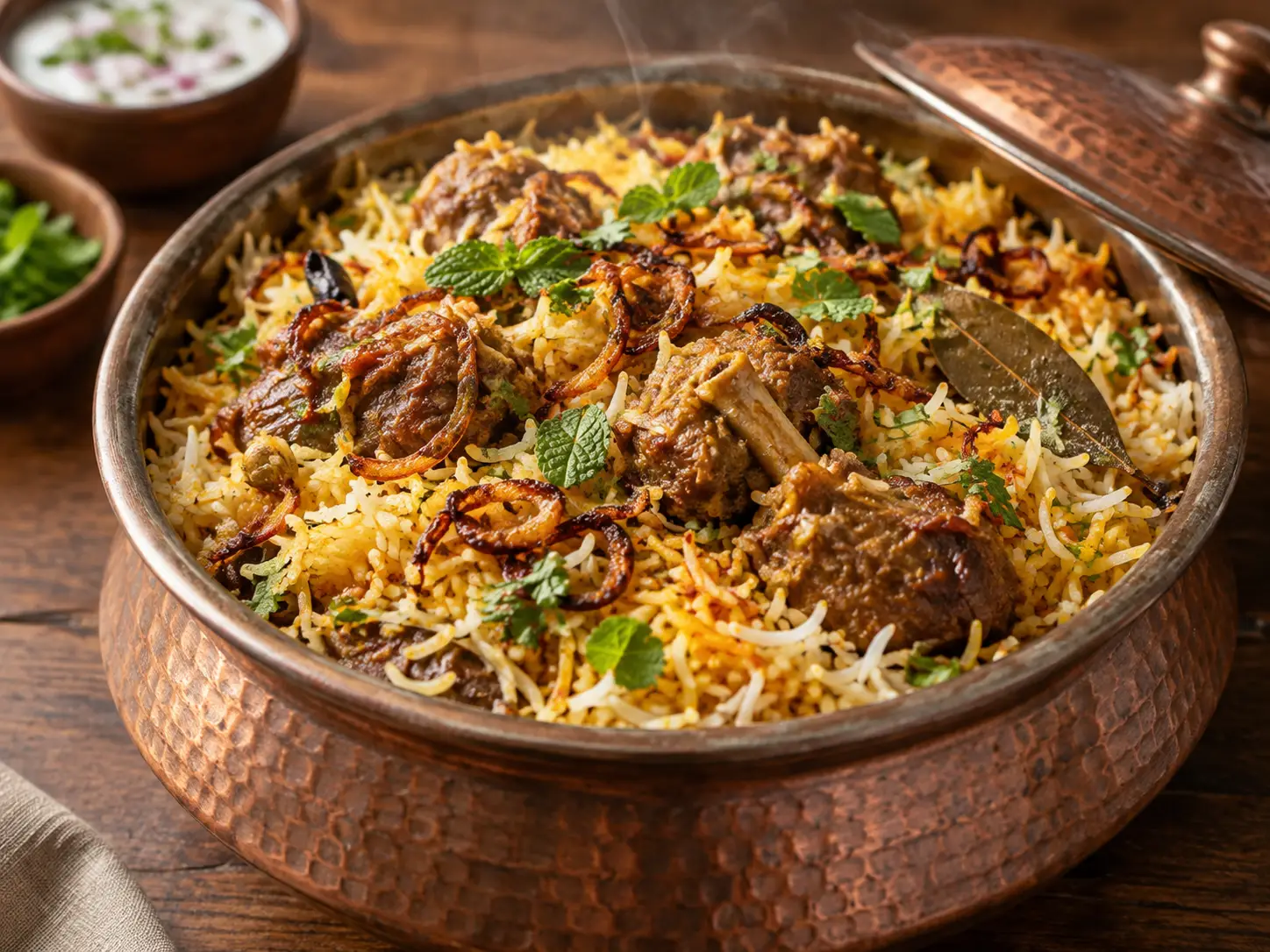
The cooked lamb gravy, herbs, caramelized onions, and hot rice are layered in a heavy pot. The pot is sealed tightly with foil and a lid, then placed over indirect heat to allow the steam to finish cooking the rice and meld the flavors.
Cooking Tips
- Wash the raw rice in several changes of cold water until the water runs clear. This removes excess surface starch, which is the primary cause of sticky, clumping rice.
- Keep a very close eye on the onions as they fry. They transition from perfectly caramelized to bitter and burnt within thirty seconds.
- Do not skip the resting step after cooking. Letting the pot sit unopened for ten minutes allows the steam to redistribute, settling the rice grains so they do not break when you scoop them out.
Common Mistakes to Avoid
- The gravy is too watery when layering: If there is too much liquid at the bottom of the pot, the steam will overcook the bottom layer of rice into a porridge. Simmer the lamb uncovered for a few extra minutes before assembly until the gravy is thick and coats the meat heavily.
- Using a thin-bottomed pot for the final steam stage: Thin metal pots transfer heat too quickly, scorching the meat. Use a heavy Dutch oven or cast-iron pot, and place a flat metal griddle or tawa directly underneath the pot to act as a heat diffuser.
Variations
- Kolkata Style Lamb Biryani: Add halved, boiled potatoes that have been lightly fried and seasoned with turmeric and salt into the layers alongside the meat.
- Spicy Green Masala Biryani: Blend fresh mint, coriander, and green chilies into a smooth paste and add it to the lamb marinade for a brighter, herbaceous flavor and higher heat level.
Serving Suggestions
- Serve hot with a side of cool cucumber and mint raita to balance the heat and richness of the spices.
- Pair with thinly sliced red onions dressed with fresh lemon juice and a pinch of salt.
- Serve alongside a sweet, chilled mango lassi to complement the savory depth of the lamb.
Storage & Make-Ahead
Make ahead: The lamb can be marinated up to twenty-four hours in advance and stored in the refrigerator. The onions can also be fried a day ahead and kept in an airtight container at room temperature.
Refrigerate: Store leftover biryani in an airtight container in the refrigerator for up to three days.
Freeze: We do not recommend freezing assembled biryani, as the rice grains will lose their texture and become mushy upon thawing.
Reheat: To reheat, place the biryani in a microwave-safe dish, sprinkle with a tablespoon of water, cover tightly, and heat until piping hot. Alternatively, steam it in a covered pan on very low heat.
Frequently Asked Questions
Can I use boneless lamb instead of bone-in?
Yes, you can use boneless lamb leg or shoulder cut into 4 cm chunks. However, bone-in cuts provide more gelatin and depth to the gravy, which yields a more flavorful and moist biryani.
What should I do if my rice is still too hard after the dum stage?
If the rice is undercooked, sprinkle 2 to 3 tablespoons of warm water or milk over the top layer of rice, reseal the pot tightly with foil, and place it back on low heat over the griddle for an additional 7 to 10 minutes.
How do I know if the lamb is cooked properly before layering?
The lamb must be tender enough to break apart easily with your fingers or a fork with minimal resistance. If it is still tough, add another 1/4 cup of water and continue to simmer covered on low heat before starting the layering process.
More Indian Recipes to Try
Browse the IndiPlated recipe index
Lamb Biryani
Ingredients
Equipment
Method
- In a large mixing bowl, combine the lamb shoulder, whisked yogurt, ginger-garlic paste, Kashmiri red chili powder, turmeric powder, garam masala, salt, and lemon juice. Mix thoroughly to coat all the meat pieces. Cover and refrigerate to marinate for at least 1 hour.
- Heat the cooking oil in your heavy-bottomed pot over medium heat. Add the thinly sliced onions. Fry them, stirring frequently to ensure even browning, for 12 to 15 minutes until they turn a deep golden brown and crisp up. Using a slotted spoon, remove half of the fried onions and spread them on a plate lined with paper towels to drain; leave the remaining onions and oil in the pot.
- Place the pot with the remaining fried onions and oil back over medium-high heat. Add the slit green chilies and the marinated lamb (along with all marinade). Sear the meat, stirring continuously, for 5 to 7 minutes until the lamb changes color from pink to a dull brown. Pour in 240 ml of water and bring to a simmer. Cover with a tight lid, reduce heat to low, and cook for 40 to 45 minutes, or until the lamb is tender when pierced with a fork and the gravy has reduced to a thick, rich paste that clings to the meat.
- While the meat is simmering, crush the saffron threads into the warm milk and set aside to steep. Ensure your basmati rice has been thoroughly rinsed 3 to 4 times to remove excess starch, then soak it in cold water for 30 minutes.
- In a separate large pot, bring 2 liters of water to a boil along with the 2 tablespoons of salt, black cumin seeds, green cardamom, cloves, cinnamon stick, and bay leaf. Drain the soaked rice and add it to the boiling water. Cook on high heat for exactly 6 to 7 minutes. Test a grain: it should be long, bend slightly without snapping, and have a small, firm white core when pressed between your fingers (about 70% cooked). Drain the rice immediately through a colander and set aside.
- Remove the pot of cooked lamb from the heat. Spread the lamb and its thick gravy evenly across the bottom of the pot. Sprinkle half of the reserved fried onions, half of the chopped mint, and half of the chopped coriander over the meat. Spread the drained, hot parboiled rice evenly over this herb layer. Drizzle the saffron-steeped milk, melted ghee, and kewra water (if using) evenly over the top of the rice. Finish by sprinkling the remaining fried onions, mint, and coriander.
- Cover the pot tightly with a layer of aluminum foil, then press the lid firmly down over the foil to create an airtight seal. Place a flat griddle or tawa on your stove over medium heat for 3 minutes to heat up. Place the sealed biryani pot directly on top of the hot griddle, turn the heat to low, and steam-cook for 20 minutes.
- Turn off the heat. Do not open the lid. Let the pot sit undisturbed on the warm griddle for 10 minutes to allow the steam to settle. Gently remove the lid and foil, and use a wide, flat spoon or saucer to scoop the biryani from the side of the pot, bringing up layers of spiced lamb, white rice, and yellow saffron rice without over-mixing or breaking the long grains.
Notes
If you do not have foil, you can make a simple, stiff dough out of whole wheat flour and water, rolling it into a log to press around the seam where the lid meets the pot rim.