Vegetable Upma

Vegetable Upma

Introduction

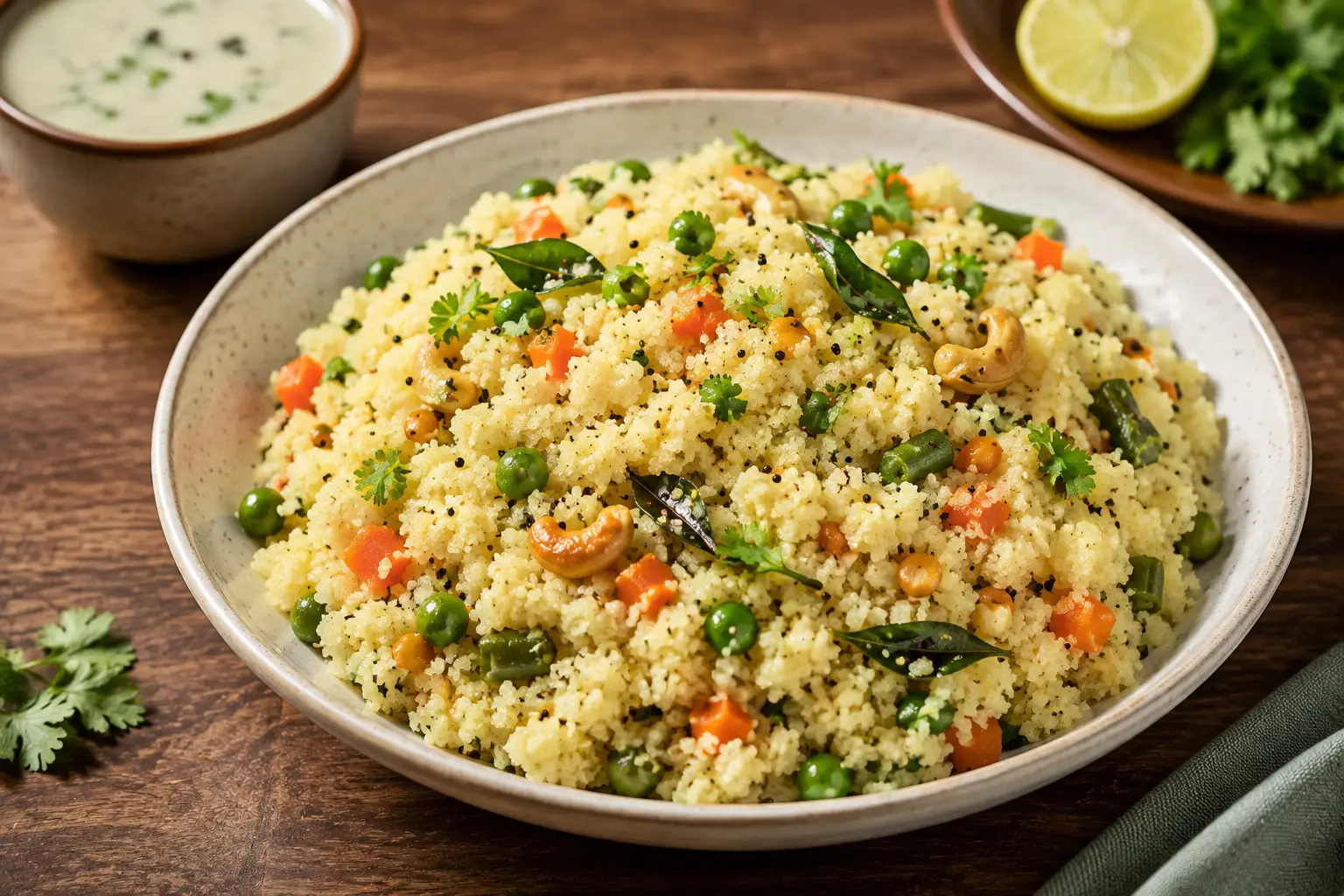
Imagine waking up to the aroma of mustard seeds crackling in warm ghee, mingled with the earthy scent of fresh curry leaves and sweet toasted semolina. That is the magic of a fresh plate of Vegetable Upma. It is a humble, comforting South Indian breakfast staple that, when made right, is incredibly fluffy, savory, and deeply satisfying.

For many beginners, upma can feel intimidating because it easily turns sticky or lumpy if you do not know the secrets to grain separation. But do not worry; I am here to walk you through it. Think of this as the ultimate cozy breakfast—sitting right alongside other beloved classics like a crispy, fermented Masala Dosa Recipe.

We are going to focus on roasting your semolina to perfection and mastering the water-to-grain ratio. Once you learn these visual cues, you will be making fluffy, cafe-style upma with your eyes closed.

Why You’ll Love This Recipe

  • Perfect Texture Every Time: Learn the precise water-to-semolina ratio so your upma is delightfully fluffy, never mushy or dry.
  • Packed with Colorful Veggies: A fantastic way to sneak in a serving of fresh, nutrient-dense vegetables first thing in the morning.
  • Under 30 Minutes: This is one of the fastest, most nourishing warm breakfasts you can whip up on a busy weekday morning.
  • Pantry-Friendly: Made with basic ingredients like semolina, mustard seeds, onions, and frozen peas that you likely already have.
  • Incredibly Customisable: Once you master the base technique, you can swap the vegetables or adjust the spice levels to suit your family’s tastes.

Ingredients

  • 180 g Semolina (Rava/Sooji) (Fine or medium grain)
  • 2 tbsp Cooking Oil or Ghee (Plus 1 tsp extra for finishing)
  • 1 tsp Mustard Seeds
  • 1 tsp Chana Dal (Split Bengal gram)
  • 1 tsp Urad Dal (Split black gram)
  • 10 leaves Curry Leaves (Fresh)
  • 1 tsp Ginger (Finely grated)
  • 2 pieces Green Chilies (Slit or finely chopped)
  • 100 g Onion (Finely chopped)
  • 75 g Carrot (Finely diced)
  • 50 g French Beans (Finely chopped)
  • 40 g Green Peas (Fresh or frozen)
  • 600 ml Water (Adjust to 720ml for softer texture)
  • 1 tsp Salt (Adjust to taste)
  • 1 tbsp Lemon Juice (Freshly squeezed)
  • 2 tbsp Coriander Leaves (Finely chopped for garnish)

How to Make

Step 1: Dry Roast the Semolina

Add 180g of semolina to a wide pan over medium-low heat. Dry roast, stirring continuously, for 5-7 minutes. You should smell a warm, toasted, nutty aroma, but the grains should not turn dark brown. Immediately transfer to a plate to stop the cooking process.

Step 2: Temper the Spices

Heat 2 tablespoons of oil or ghee in the same pan over medium heat. Add the mustard seeds, chana dal, and urad dal. Let the mustard seeds crackle and the lentils turn a lovely light golden-brown.

Step 3: Sauté Aromatics and Onions

Add the fresh curry leaves, grated ginger, and chopped green chilies to the hot oil. They will sizzle instantly and smell incredibly fragrant. Stir in 100g of finely chopped onions and sauté for 3 minutes until translucent.

Step 4: Cook the Vegetables and Boil Water

Add 75g of diced carrots, 50g of French beans, and 40g of green peas. Sauté for 2 minutes. Pour in 600ml of water and add 1 teaspoon of salt. Bring the mixture to a rapid, rolling boil over medium-high heat.

Step 5: Add Semolina Slowly

Reduce the heat to low. With one hand, slowly pour the roasted semolina into the boiling water in a steady stream. At the same time, stir continuously with your other hand to prevent any lumps from forming.

Step 6: Steam and Finish

Once all water is absorbed, cover the pan with a tight lid. Let it steam on the lowest heat for 2-3 minutes. Turn off the heat, stir in 1 tablespoon of lemon juice, a teaspoon of fresh ghee, and fresh coriander. Fluff gently with a fork and let rest for 2 minutes before serving.

Chef’s Tips

  • 💡 Chef’s Tip: Always roast the semolina, even if the package says ‘pre-roasted.’ An extra 3-4 minutes of gentle dry roasting ensures the grains stay separate and fluffy when water is added.
  • 💡 Chef’s Tip: The golden ratio for a soft yet fluffy upma is 1 part semolina to 2.5 parts water. If you prefer a much softer, wetter consistency, you can increase the water to 3 parts.
  • 💡 Chef’s Tip: Never rush the pouring stage. Drizzle the roasted semolina in a thin, steady stream while stirring vigorously. This prevents dry pockets of semolina from getting trapped in cooked starch.

Common Mistakes to Avoid

  • Pouring the semolina all at once: This causes instant clumping and leaves you with hard, dry flour pockets inside the cooked upma.
  • Not roasting the semolina enough: Under-roasted semolina releases too much starch when mixed with hot water, resulting in a sticky, glue-like paste.
  • Using cold water: Always bring the water and vegetables to a rolling boil before adding the semolina to ensure even heat distribution and proper cooking.
  • Over-browning the onions: Caramelized onions make the upma sweet and discolored; they should only be sautéed until translucent.
  • Stirring too vigorously after steaming: Once the upma is steamed, handle it gently. Heavy-handed stirring at the end breaks the delicate grains and makes the texture gummy.

💡 Before You Start

Before you turn on the stove, make sure you chop all your vegetables and measure out your ingredients. Upma cooks very quickly once the water starts boiling, and you will not have time to chop veggies mid-way. Additionally, always read through the recipe to understand the pouring-and-stirring technique—this is the single most important step to prevent lumps!

Variations

  • Tomato Upma (Thakkali Upma): Add two finely chopped, juicy tomatoes along with the onions. Sauté them until mushy to create a tangy, beautiful orange-hued upma.
  • Masala Upma (Kharabath): Stir in half a teaspoon of vangi bath powder or sambar powder and a pinch of turmeric along with the veggies for a spicy, bold Karnataka-style breakfast.
  • Oats Upma: For a wholesome twist, swap the semolina entirely for rolled oats that have been lightly pulsed in a blender and roasted before cooking.

Serving Suggestions

  • The Busy Weekday Breakfast: Scoop hot upma into a small bowl, press it down gently, and invert it onto a plate for a clean, dome-shaped presentation. Serve it with a side of quick coconut chutney and a hot cup of South Indian filter coffee.
  • A Cozy Weekend Brunch: Pair your warm vegetable upma with a crispy Masala Dosa Recipe and a bowl of steaming sambar. It is the ultimate weekend feast that will make your home smell like a traditional South Indian eatery.
  • The Rainy Afternoon Snack: Upma makes a wonderful late-afternoon tea snack. Serve it hot alongside some crispy banana chips and a spicy cup of ginger chai.
  • A Comforting Weeknight Light Dinner: If you want something lighter than a heavy curry, serve this upma with a spoonful of spicy mango pickle and a dollop of fresh, cool yogurt. It’s just as comforting as our simple Egg Curry Recipe on a tired evening.

Storage

Store any leftover Vegetable Upma in an airtight container in the refrigerator for up to 2 days. Because semolina contains starches that solidify when cold, the upma will tighten up and harden significantly in the fridge. Do not worry—this is completely normal!

Reheating

To reheat, transfer the upma to a microwave-safe bowl or a pan on the stove. Sprinkle 1 to 2 tablespoons of water over the top to restore moisture. Cover it tightly with a lid or damp paper towel and heat on low. The steam will rehydrate the semolina, making it incredibly soft, fluffy, and fresh again. Avoid high dry heat, which will dry it out.

Frequently Asked Questions

Why did my upma turn out sticky or gooey?

This usually happens for two reasons: either the semolina was not roasted thoroughly before cooking, or too much water was added. Toasting the grains builds a protective starch layer that prevents them from turning into a paste when cooked.

What is the best type of semolina (rava) to use for upma?

Medium or fine semolina (often labeled as upma rava, Bombay rava, or sooji) is ideal. Avoid using roasted rava straight out of the packet without a quick touch-up roast, and do not use super-fine chiroti rava, which is meant for doughs.

Can I make upma gluten-free?

Traditional semolina is made from wheat and contains gluten. To make a gluten-free version, you can substitute the semolina with roasted coarse rice rava (idli rava) or roasted quinoa flakes using the same cooking process.

How do I prevent lumps from forming in my upma?

The secret is two-fold: keep the flame low when adding the semolina, and drizzle it in very slowly while whisking or stirring the boiling water constantly. Do not dump all the semolina in at once.

Is Vegetable Upma healthy?

Yes! It is a nutrient-dense, low-fat breakfast packed with dietary fiber from the fresh vegetables. It provides sustained energy throughout the morning without heavy fats.

Can I use frozen vegetables instead of fresh?

Absolutely. You can use frozen peas, carrots, and corn. Since frozen vegetables are already par-boiled, you can add them directly to the boiling water right before you stir in the semolina.

Conclusion

Cooking a perfect plate of Vegetable Upma is all about mastering the simple dance of roasting, stirring, and steaming. Once you see how easy it is to achieve that light, fluffy texture, this nourishing South Indian classic will easily find its way into your weekly breakfast rotation. Gather your veggies, roast your rava, and enjoy the comforting, spiced goodness!

Recipe Index

Browse All Recipes →

More Recipes You’ll Love

Vegetable Upma

A comforting, savory South Indian breakfast made with toasted semolina, fresh vegetables, and fragrant tempered spices. Warm, fluffy, and ready in 25 minutes!
Prep Time 10 minutes
Cook Time 15 minutes
Total Time 25 minutes
Servings: 3

Ingredients
  

  • 180 g Semolina Rava/Sooji (Fine or medium grain)
  • 2 tbsp Cooking Oil or Ghee Plus 1 tsp extra for finishing
  • 1 tsp Mustard Seeds
  • 1 tsp Chana Dal Split Bengal gram
  • 1 tsp Urad Dal Split black gram
  • 10 leaves Curry Leaves Fresh
  • 1 tsp Ginger Finely grated
  • 2 pieces Green Chilies Slit or finely chopped
  • 100 g Onion Finely chopped
  • 75 g Carrot Finely diced
  • 50 g French Beans Finely chopped
  • 40 g Green Peas Fresh or frozen
  • 600 ml Water Adjust to 720ml for softer texture
  • 1 tsp Salt Adjust to taste
  • 1 tbsp Lemon Juice Freshly squeezed
  • 2 tbsp Coriander Leaves Finely chopped for garnish

Method
 

  1. Add 180g of semolina to a wide pan over medium-low heat. Dry roast, stirring continuously, for 5-7 minutes. You should smell a warm, toasted, nutty aroma, but the grains should not turn dark brown. Immediately transfer to a plate to stop the cooking process.
  2. Heat 2 tablespoons of oil or ghee in the same pan over medium heat. Add the mustard seeds, chana dal, and urad dal. Let the mustard seeds crackle and the lentils turn a lovely light golden-brown.
  3. Add the fresh curry leaves, grated ginger, and chopped green chilies to the hot oil. They will sizzle instantly and smell incredibly fragrant. Stir in 100g of finely chopped onions and sauté for 3 minutes until translucent.
  4. Add 75g of diced carrots, 50g of French beans, and 40g of green peas. Sauté for 2 minutes. Pour in 600ml of water and add 1 teaspoon of salt. Bring the mixture to a rapid, rolling boil over medium-high heat.
  5. Reduce the heat to low. With one hand, slowly pour the roasted semolina into the boiling water in a steady stream. At the same time, stir continuously with your other hand to prevent any lumps from forming.
  6. Once all water is absorbed, cover the pan with a tight lid. Let it steam on the lowest heat for 2-3 minutes. Turn off the heat, stir in 1 tablespoon of lemon juice, a teaspoon of fresh ghee, and fresh coriander. Fluff gently with a fork and let rest for 2 minutes before serving.

Similar Posts

Leave a Reply

Your email address will not be published. Required fields are marked *

Recipe Rating