
Gulab Jamun Recipe (Soft Indian Milk-Solid Dumplings in Sugar Syrup)
Gulab jamun consists of fried milk-solid dumplings soaked in a warm, cardamon-scented sugar syrup. The exterior absorbs the sweet liquid while the interior stays soft and spongy.
This recipe uses khoya (reduced milk solids) as the base for a rich texture. Success depends on kneading the dough just enough to prevent cracks and frying over low heat so the center cooks through before the outside darkens too quickly.
Why This Recipe Works
- Using grated khoya combined with a small amount of all-purpose flour creates a pliable dough that holds its shape during frying without becoming dense.
- Keeping the oil temperature low allows the dumplings to expand gradually and cook right to the center before the exterior browns.
- Soaking the fried jamuns in warm, rather than boiling, syrup helps them absorb the liquid evenly without breaking apart.
Ingredient Notes
- Khoya (Mawa): Use plain unsweetened khoya (either soft-textured chikni khoya or crumbly dried khoya). Grate it finely so it mixes smoothly with the flour.
- Paneer: A small amount of mashed paneer mixed into the khoya prevents the dumplings from turning too dense and helps keep them soft.
- All-purpose flour (Maida): Acts as a binder for the milk solids. Use only the recommended amount so the dumplings do not turn rubbery.
- Green cardamom: Provides the characteristic aromatic note for both the dough and the sugar syrup. Crush the pods lightly before adding.
- Rose water: Stirred into the finished syrup off the heat to add a subtle floral fragrance. Omit it if you prefer a plain cardamom flavor.
If You’re Cooking Outside India
- Khoya (Mawa): Found in the refrigerated or frozen section of South Asian grocery stores. If unavailable, plain unsweetened milk peda or ricotta cheese cooked down on the stove until thick can serve as alternatives, though texture will vary.
- Paneer: Available in South Asian grocery stores and many mainstream supermarkets in the cheese or international aisle. Firm tofu is not a recommended substitute here.
How to Make Gulab Jamun
Make the Sugar Syrup
Simmer sugar, water, and crushed cardamom until the sugar dissolves and the liquid turns slightly sticky without forming a thick single-thread consistency.
Prepare the Dough
Mash the grated khoya and paneer until smooth, then gently mix in the flour, baking powder, and milk until a soft, cohesive dough forms without heavy kneading.
Shape the Balls
Divide the dough into equal portions and roll them between your palms into smooth, crack-free spheres.
Fry at Low Heat
Fry the dumplings in ghee or oil kept at a low, steady temperature, stirring the oil gently so they brown evenly on all sides.
Soak and Rest
Transfer the hot fried dumplings directly into the warm sugar syrup and let them rest for at least one to two hours before serving.
Cooking Tips
- Roll the dough balls firmly between your palms to ensure there are no surface cracks, which can cause the dumplings to split open in hot oil.
- Test one small piece of dough in the oil first; if it dissolves or breaks apart, work in a tiny pinch more flour to the rest of the dough.
- Keep the heat low throughout frying. If the oil is too hot, the outside will burn before the raw center cooks.
Common Mistakes to Avoid
- Cracking while frying: Caused by dry dough or insufficient kneading. Knead the khoya mixture slightly longer or add a few drops of milk to bring the dough together.
- Dense or hard center: Caused by too much flour or frying at too high a temperature. Measure the flour carefully and keep the oil heat low and steady.
- Dumplings collapsing in syrup: The syrup may be boiling hot when the dumplings are added, or the dumplings were under-fried. Ensure the syrup is warm, not actively boiling.
Variations
- Stuffed Gulab Jamun: Press a small sliver of pistachio or almond and a tiny piece of edible sugar crystal (misri) into the center of each dough ball before sealing and frying.
Serving Suggestions
- Serve warm in small bowls with a couple of spoonfuls of the soaking syrup poured over the top.
- Pair with a scoop of plain vanilla ice cream for a warm-and-cold dessert combination.
Storage & Make-Ahead
Make ahead: The sugar syrup can be prepared a day in advance and gently warmed before adding freshly fried dumplings.
Refrigerate: Store leftover gulab jamun in an airtight container in the refrigerator for up to 4 days. Bring to room temperature or warm gently before serving.
Freeze: Freezing is not recommended as the soft texture of the soaked dumplings changes significantly upon thawing.
Reheat: Warm leftovers gently in a microwave-safe dish for 20 to 30 seconds or over low heat on the stovetop.
Frequently Asked Questions
Why did my gulab jamun break apart while frying?
This usually happens if the dough is too dry or lacks enough binding flour. Knead the dough slightly more or add a few drops of milk to restore moisture, and ensure the dough balls are rolled without surface cracks.
Can I use milk powder instead of khoya?
While milk powder can be used to make a different style of gulab jamun dough, this specific recipe is formulated and tested for khoya and paneer. Substituting milk powder directly will alter the texture and require different liquid ratios.
Should the sugar syrup be thick like honey?
No. The syrup should remain thin and sticky rather than forming a thick thread, so the dumplings can easily absorb the liquid into their centers.
More Indian Recipes to Try
Browse the IndiPlated recipe index
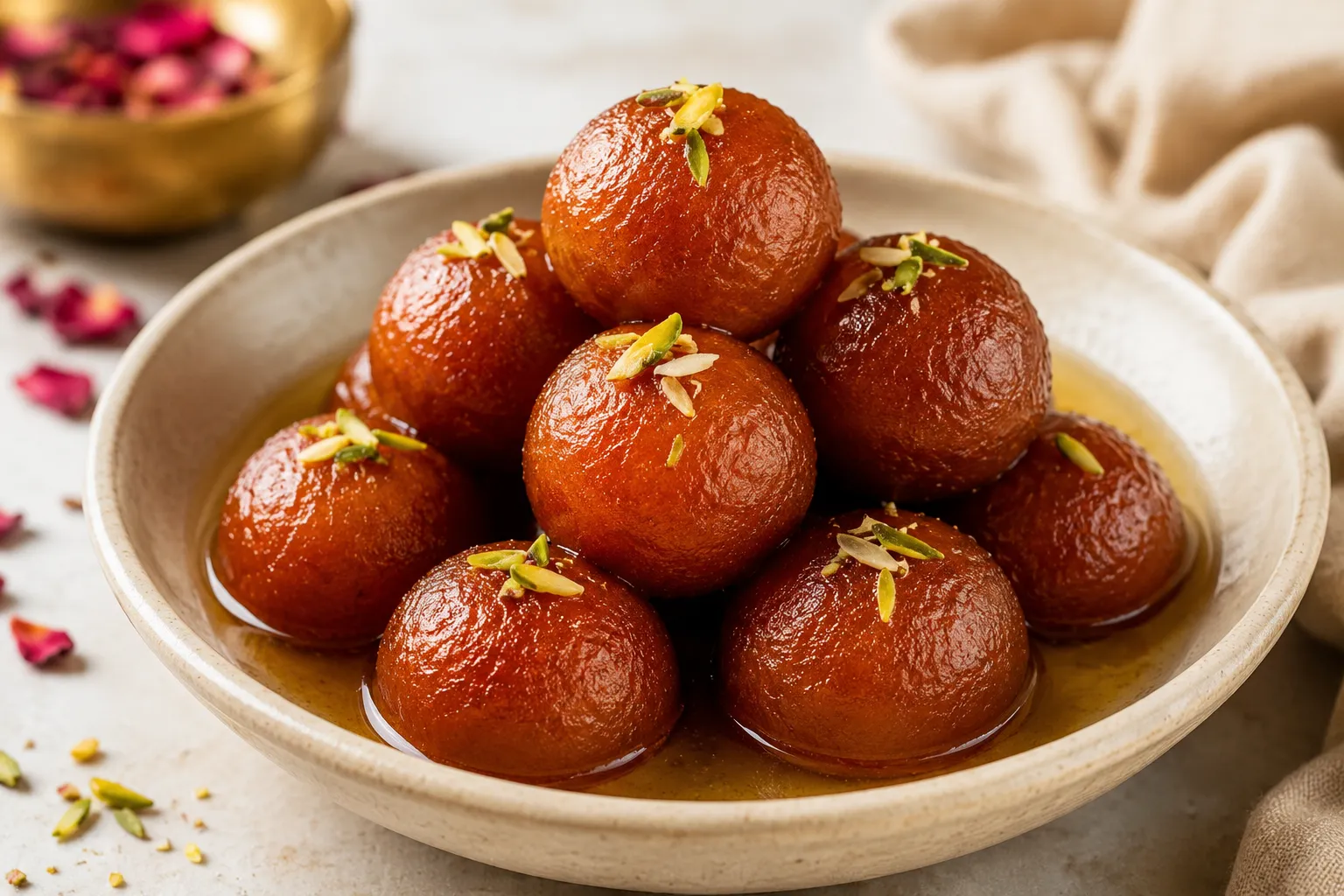
Gulab Jamun
Ingredients
Equipment
Method
- Combine sugar, water, and crushed cardamom pods in a wide pan over medium heat. Stir until the sugar dissolves completely. Add the lemon juice and let the syrup simmer for 5 minutes until it feels slightly sticky between your fingers. Turn off the heat, stir in the rose water if using, and keep the syrup warm.
- In a wide mixing bowl, place the grated khoya and grated paneer. Using the heel of your hand, mash the mixture together for 2 to 3 minutes until smooth and free of large lumps.
- Sprinkle the all-purpose flour and baking powder over the mashed khoya mixture. Gently combine everything using your fingertips. Add the milk one tablespoon at a time to bring the mixture together into a soft, pliable dough. Do not over-knead.
- Divide the dough into 16 equal portions. Roll each portion firmly between the palms of your hands to form smooth balls with no cracks on the surface.
- Heat ghee or oil in a heavy-bottomed pan over low heat. The oil should be low in temperature; test a tiny piece of dough to ensure it rises slowly without sizzling violently or browning instantly. Place half of the dough balls into the warm oil. Gently move the oil around them with a spoon so they brown evenly to a deep golden-brown shade over 8 to 10 minutes. Remove with a slotted spoon and repeat with the remaining balls.
- Transfer the freshly fried hot dumplings directly into the warm sugar syrup. Allow them to soak for at least 2 hours before serving so they absorb the syrup fully.
Notes
If the syrup cools down completely before soaking, warm it gently before adding the fried dumplings.

2 Comments