Chicken Madras Recipe (Spicy Indian Chicken Curry)
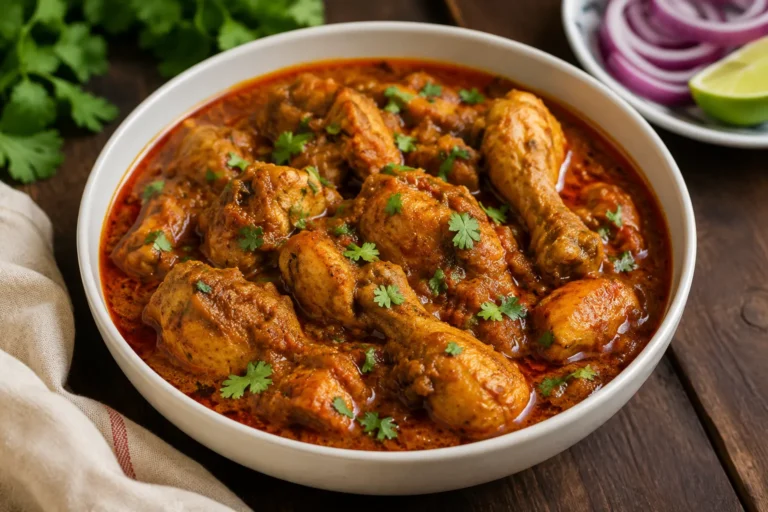
Chicken Madras is a bold, fiery curry known for its deep red color, sharp tang, and assertive heat. Originating from the restaurant culture of the UK but inspired by the vibrant flavors of Southern India, this dish balances dry-roasted spices with a rich tomato base. It is a reliable choice for anyone who wants a curry with a noticeable kick that does not compromise on complex, savory depth.
This recipe relies on a combination of toasted spices, garlic, ginger, and a splash of lemon juice to achieve its signature tangy-spicy profile. By using boneless chicken thighs, the meat remains tender and juicy as it simmers, absorbing the robust flavors of the gravy without drying out.
Why This Recipe Works
- Blooming the dry spices in warm oil before adding the liquid wakes up their fat-soluble flavor compounds, creating a deeper gravy base.
- Using boneless chicken thighs prevents the meat from drying during the simmering stage, ensuring every bite is succulent.
- A touch of lemon juice added at the end cuts through the heat and mimics the bright, sour notes traditionally provided by tamarind.
Ingredient Notes
- Chicken: Boneless, skinless chicken thighs are preferred for their moisture retention, but boneless chicken breasts also work if cut into uniform pieces and simmered carefully to avoid drying out.
- Madras Curry Powder: A pre-blended Madras curry powder saves time and provides the characteristic heat and earthy undertone. Look for hot or medium varieties depending on your spice tolerance.
- Tomato Purée: Using a mix of canned tomato purée (passata) and tomato paste provides both a smooth texture and a concentrated, slightly sweet tomato foundation.
If You’re Cooking Outside India
- Madras Curry Powder: Widely available in the international or spice aisle of major supermarkets outside India. If unavailable, you can blend equal parts standard curry powder, chili powder, and ground coriander with a pinch of cayenne pepper.
- Kashmiri Chili Powder: Gives the curry its iconic deep red color without adding excessive, burning heat. Find it at South Asian grocery stores or online. If substituting, use a mix of paprika and a smaller pinch of cayenne pepper.
How to Make Chicken Madras
Sautéing Aromatics
Start by cooking finely chopped onions until soft and golden brown. This builds a sweet, caramelized foundation for the curry sauce.
Blooming the Spices
Stir in the ginger-garlic paste and dry spices, cooking them briefly in the oil until fragrant to release their flavors without letting them burn.
Simmering the Chicken
Add the chicken pieces to coat them in the spice paste, then pour in the tomatoes and water. Let the curry simmer gently until the chicken is tender and cooked through.
Finishing Touches
Stir in lemon juice at the very end to lift the heavy spices and add a vibrant, tangy finish.
Cooking Tips
- Control the heat by adjusting the Kashmiri chili powder and Madras curry powder. You can easily scale down the quantities if cooking for those sensitive to spice.
- For a smoother, restaurant-style gravy, you can blend the sautéed onions, ginger, garlic, and canned tomatoes into a smooth paste before adding the chicken, though a finely chopped onion base works wonderfully for a textured home-style curry.
Common Mistakes to Avoid
- Burning the dry spices: Ensure the heat is low when adding the dry spices to the pan. If the pan feels too hot, splash a tablespoon of water to instantly cool it down and prevent the spices from turning bitter.
- Overcooking chicken breast: If using chicken breast instead of thighs, cut them into slightly larger pieces and simmer gently, checking the internal temperature early to ensure they do not become woody and tough.
Variations
- Coconut Madras: Add 60 ml (1/4 cup) of canned coconut milk during the last 5 minutes of simmering to soften the sharp heat and add a subtle creaminess common in some Southern Indian variations.
- Beef or Lamb Madras: Substitute the chicken with boneless beef or lamb shoulder cut into cubes. Increase the simmering time to 45-60 minutes, adding extra water as needed until the meat is fork-tender.
Serving Suggestions
- Serve hot alongside steamed basmati rice to soak up the spicy tomato gravy.
- Pair with warm garlic naan or tandoori roti to scoop up the chicken and sauce.
- Accompany with a cool cucumber raita (yogurt dip) to balance the fiery heat of the curry.
Storage & Make-Ahead
Make ahead: The curry tastes even better the next day as the spices continue to mingle and mature in the refrigerator.
Refrigerate: Store leftovers in an airtight container for up to 3 days.
Freeze: Freeze the completely cooled curry in freezer-safe containers for up to 2 months. Thaw overnight in the refrigerator before reheating.
Reheat: Reheat on the stovetop over medium-low heat, adding a splash of water if the sauce has thickened too much, until steaming hot throughout.
Frequently Asked Questions
What is the difference between standard curry powder and Madras curry powder?
Madras curry powder is typically hotter and has a slightly different blend of spices, often featuring more chili pepper, cumin, and fenugreek compared to standard curry powder, giving the dish its signature spicy and aromatic profile.
Can I make this curry less spicy?
Yes, you can easily control the heat by using a mild or medium Madras curry powder and reducing or omitting the Kashmiri chili powder.
Can I use chicken breast instead of thighs?
Yes, you can use chicken breast. Cut it into uniform pieces and be careful not to over-simmer, checking that the internal temperature reaches 74°C / 165°F to ensure it stays tender and juicy.
More Indian Recipes to Try
Browse the IndiPlated recipe index
Chicken Madras
Ingredients
Equipment
Method
- Heat the vegetable oil in a large deep pan or kadai over medium heat. Add the finely chopped onion and cook for 8 to 10 minutes, stirring occasionally, until they turn soft and light golden brown at the edges.
- Add the ginger-garlic paste and sauté for 1 minute until the raw smell disappears. Reduce the heat to low. Add the Madras curry powder, Kashmiri chili powder, ground turmeric, ground cumin, and salt. Stir constantly for 30 to 45 seconds to bloom the spices in the warm oil, ensuring they do not burn.
- Add the chicken pieces to the pan. Turn the heat up to medium and stir well to coat the chicken entirely with the spice mixture. Cook for 3 to 4 minutes, stirring often, until the chicken pieces are lightly seared and no longer pink on the outside.
- Pour in the canned tomato purée, tomato paste, and water. Stir well to combine, scraping up any browned bits stuck to the bottom of the pan. Bring the mixture to a gentle boil, then cover the pan with a lid and reduce the heat to low. Simmer for 12 to 15 minutes, stirring occasionally, until the chicken is tender and cooked through. Ensure the thickest piece of chicken registers an internal temperature of 74°C / 165°F.
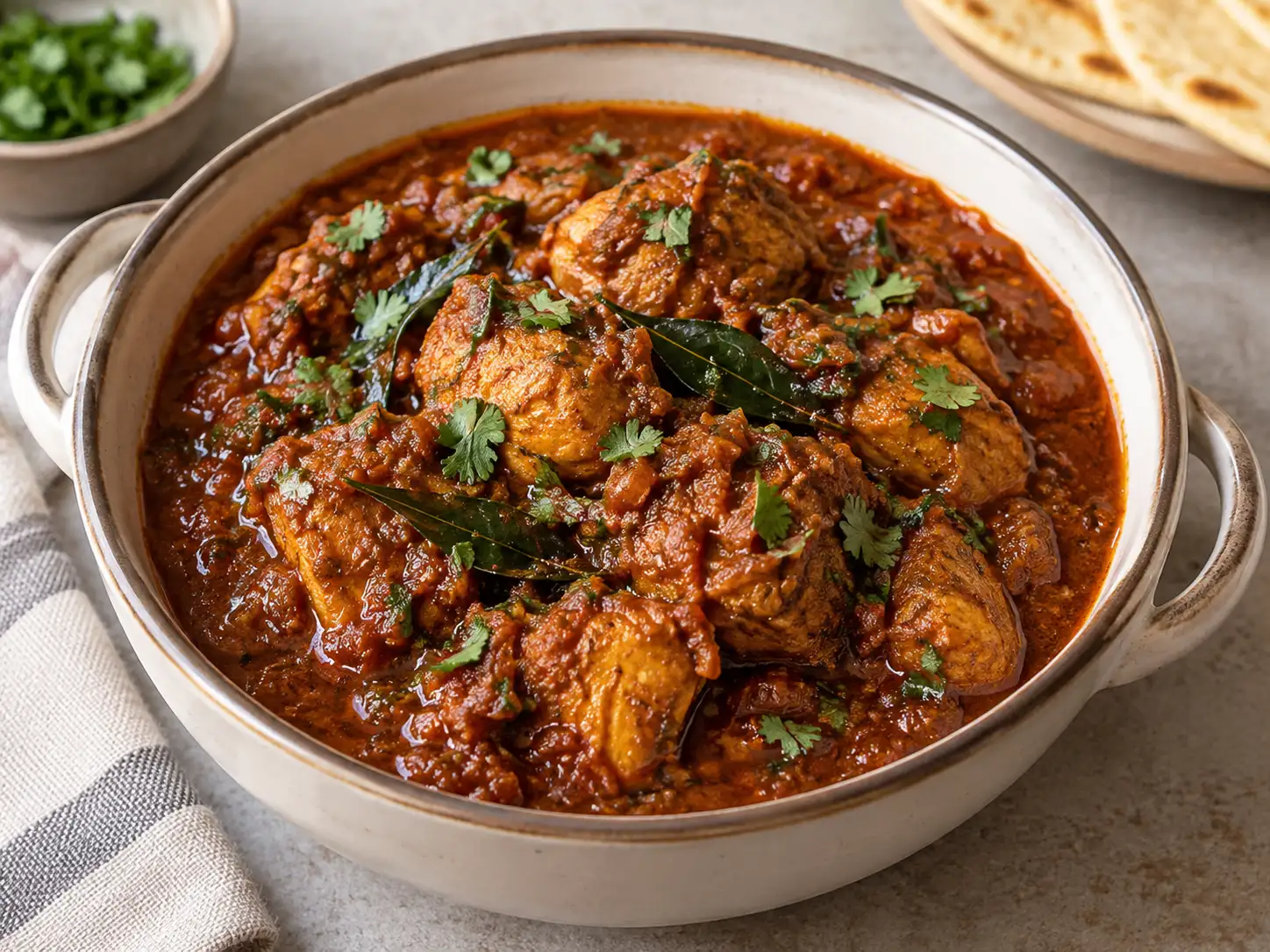
- Remove the lid and stir in the fresh lemon juice. Let the curry simmer uncovered for another 1 to 2 minutes so the flavors meld and the gravy reaches your preferred thickness. Turn off the heat, garnish with chopped coriander leaves, and serve hot.
Notes
Make sure to use boneless thighs for the juiciest texture, but if you must use chicken breast, reduce the simmering time in step 4 slightly and monitor the temperature closely so it doesn't overcook.