
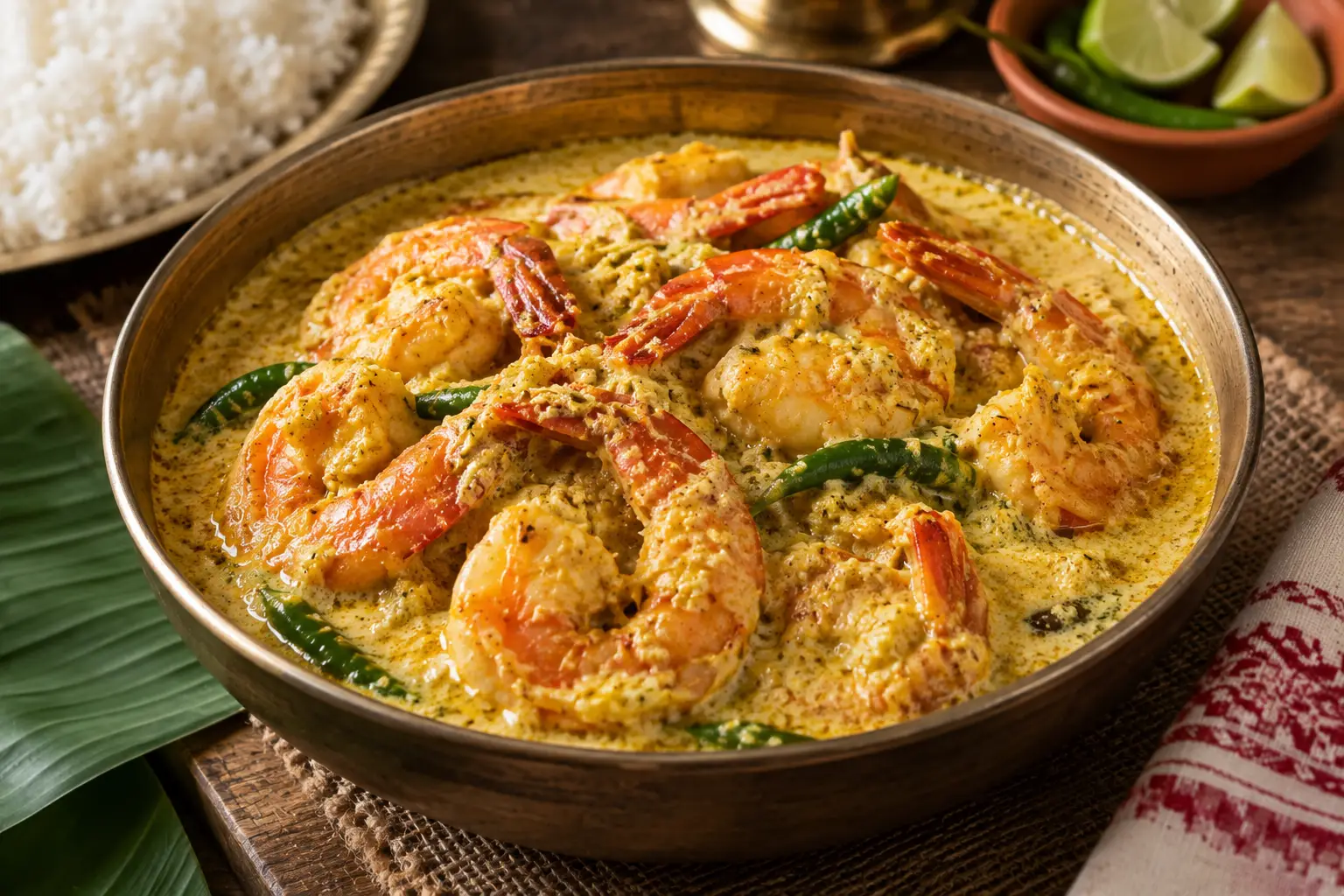
Bengali Chingri Malai Curry Recipe (Prawns in Coconut Milk)
Bengali Chingri Malai Curry is a classic dish from Bengal featuring large prawns cooked in a rich, lightly sweet, and fragrant coconut milk gravy. The name malai refers to the creamy texture of the coconut milk, which forms the luxurious base of this curry.
To succeed with this recipe, the key is balancing the sharp aroma of mustard oil with the sweetness of coconut milk and avoiding overcooking the prawns. We will guide you through the precise visual signs to keep the prawns tender and ensure the gravy achieves a smooth, velvety consistency.
Why This Recipe Works
- Searing the prawns briefly in hot oil for under a minute keeps them tender and prevents them from turning rubbery during the final simmer.
- Tempering whole spices in mustard oil blooms their aromatics directly into the fat, creating a fragrant base layer of flavor that cuts through the rich coconut milk.
- A small pinch of sugar is added to the gravy to balance the natural pungency of the mustard oil and mirror the traditional taste of the Bengali preparation.
Ingredient Notes
- Prawns (Chingri): Giant freshwater prawns (Golda Chingri) or tiger prawns (Bagda Chingri) are traditional. Keeping the heads and tails on adds depth to the gravy, but you can use peeled and deveined prawns if preferred.
- Mustard Oil: Provides the characteristic sharp, pungent base flavor. It must be heated to its smoking point and cooled slightly before adding spices to mellow its raw bite.
- Coconut Milk: Use thick, full-fat canned coconut milk or fresh first-press coconut milk. Avoid light coconut milk, which makes the gravy watery and thin.
- Kashmiri Red Chili Powder: Used primarily for its vibrant red color and mild heat, keeping the gravy visually appealing without overpowering the delicate sweetness of the coconut milk.
If You're Cooking Outside India
- Mustard Oil: Look for bottles in South Asian grocery stores. In some western countries, it may be labeled for external use only due to regulatory classifications, but it is widely used for traditional Indian cooking.
- Freshwater Prawns: Check the seafood or freezer section of Asian supermarkets. If giant freshwater prawns are unavailable, large king prawns or tiger prawns work as excellent substitutes.
How to Make Bengali Chingri Malai Curry
Searing the Prawns
Coat the prawns with turmeric and salt, then flash-fry them in hot mustard oil for about 30 seconds per side. They should just turn pink on the outside while remaining uncooked in the middle.
Tempering Spices
Heat the remaining oil, let it cool slightly, then add whole cardamoms, cinnamon, cloves, and bay leaf until they puff and release their aroma.
Building the Gravy Base
Sauté the onion paste until the moisture evaporates and the paste turns light golden, then cook the ginger paste and spice powders on low heat to prevent burning.
Simmering and Finishing
Pour in the coconut milk, bring it to a gentle simmer, then return the prawns to the pan. Finish with slit green chilies, ghee, and Bengali garam masala.
Cooking Tips
- Do not overcook the prawns during the initial fry. Overcooked prawns will turn tough and rubbery when simmered in the gravy.
- If the coconut milk shows signs of splitting, lower the heat to a gentle simmer and stir continuously until the gravy stabilizes.
- To make smooth onion paste, blend chopped onions with a tablespoon of water, then sauté thoroughly until the raw smell is entirely gone.
Common Mistakes to Avoid
- Overcooking the prawns during the initial sear: Limit the frying time to 30 to 45 seconds total. Remove them from the pan immediately once they turn light pink.
- The gravy turns thin or watery: Ensure you use full-fat canned coconut milk and simmer the gravy uncovered for a few minutes to let it thicken naturally before serving.
Variations
- Garlic-Free Version: A traditional variation that omits garlic entirely, focusing purely on ginger, green chilies, and whole spices to let the sweet coconut flavor dominate.
Serving Suggestions
- Serve hot with steamed Gobindobhog rice or long-grain Basmati rice, which absorbs the rich coconut gravy beautifully.
- Pair with a side of simple Bengali vegetable stir-fry, like Bhaja (fried potatoes or pointed gourd), to add a contrasting texture to the meal.
Storage & Make-Ahead
Make ahead: The gravy base can be prepared a day in advance, but add the prawns and do the final simmer just before serving to keep the seafood tender.
Refrigerate: Store leftovers in an airtight container in the refrigerator for up to 2 days.
Freeze: Freezing is not recommended as the coconut milk gravy can split and the prawns will lose their firm texture upon thawing.
Reheat: Reheat gently on the stovetop over low heat, adding a splash of warm water if the gravy has thickened too much.
Frequently Asked Questions
Can I use coconut cream instead of coconut milk?
Yes, but thin it with a little water first. Using straight coconut cream will make the gravy excessively thick and heavy, altering the traditional light yet creamy consistency of the dish.
What is the best substitute for mustard oil?
If you cannot find mustard oil or prefer a milder flavor, you can use a neutral cooking oil like canola or sunflower oil, though the dish will lose its characteristic sharp, warm undertone.
Should I peel the prawns completely?
While leaving the heads and tails on is traditional and adds immense flavor to the gravy, you can peel them completely if you prefer easier eating. Keep the tail segment on if possible for a better presentation.
More Indian Recipes to Try
Browse the IndiPlated recipe index
Bengali Chingri Malai Curry
Ingredients
Equipment
Method
- Rub the cleaned prawns with 1/4 teaspoon turmeric powder and 1/4 teaspoon salt. Let them rest for 10 minutes at room temperature.
- Heat 3 tablespoons of mustard oil in a heavy-bottomed kadai or deep pan over medium-high heat until it reaches its smoking point and begins to smoke gently. Reduce the heat to medium. Add the prawns and fry them for 30 seconds on each side until they just turn pink. Remove the prawns immediately with a slotted spoon and set aside. Do not overcook them.
- In the same oil, add the bay leaf, cracked green cardamoms, cinnamon stick, and cloves. Fry for 15 to 20 seconds on medium-low heat until fragrant and the cardamoms puff up.
- Add the onion paste to the pan. Cook on medium heat for 5 to 6 minutes, stirring frequently, until the water evaporates and the paste turns light golden. Add the ginger paste and sauté for another 2 minutes until the raw smell disappears.
- Reduce heat to low. Add the remaining 1/4 teaspoon turmeric powder, Kashmiri red chili powder, and 1/4 teaspoon salt. Stir for 30 seconds. Splash 1 to 2 tablespoons of water if the spices begin to stick to the pan.
- Pour in the thick coconut milk and sugar. Stir well to combine. Bring the mixture to a gentle simmer on medium-low heat. Let it simmer uncovered for 3 to 4 minutes until the gravy thickens slightly and oil begins to separate at the edges.
- Gently slide the fried prawns and any collected juices back into the gravy. Add the slit green chilies. Simmer on low heat for 3 minutes until the prawns are cooked through (they should feel firm but tender, forming a loose 'C' shape). Stir in the ghee and Bengali garam masala powder. Turn off the heat, cover the pan, and let it rest for 2 minutes before serving.
Notes
Mustard oil must be heated to its smoking point to remove its raw, sharp bite before adding spices.
Bengali garam masala is simpler than north Indian garam masala, containing only green cardamom, cinnamon, and cloves.
Thank you for sharing this delicious recipe! Groceries and cooking essentials are available online at https://annakirana.store/