Khaman Dhokla
Introduction
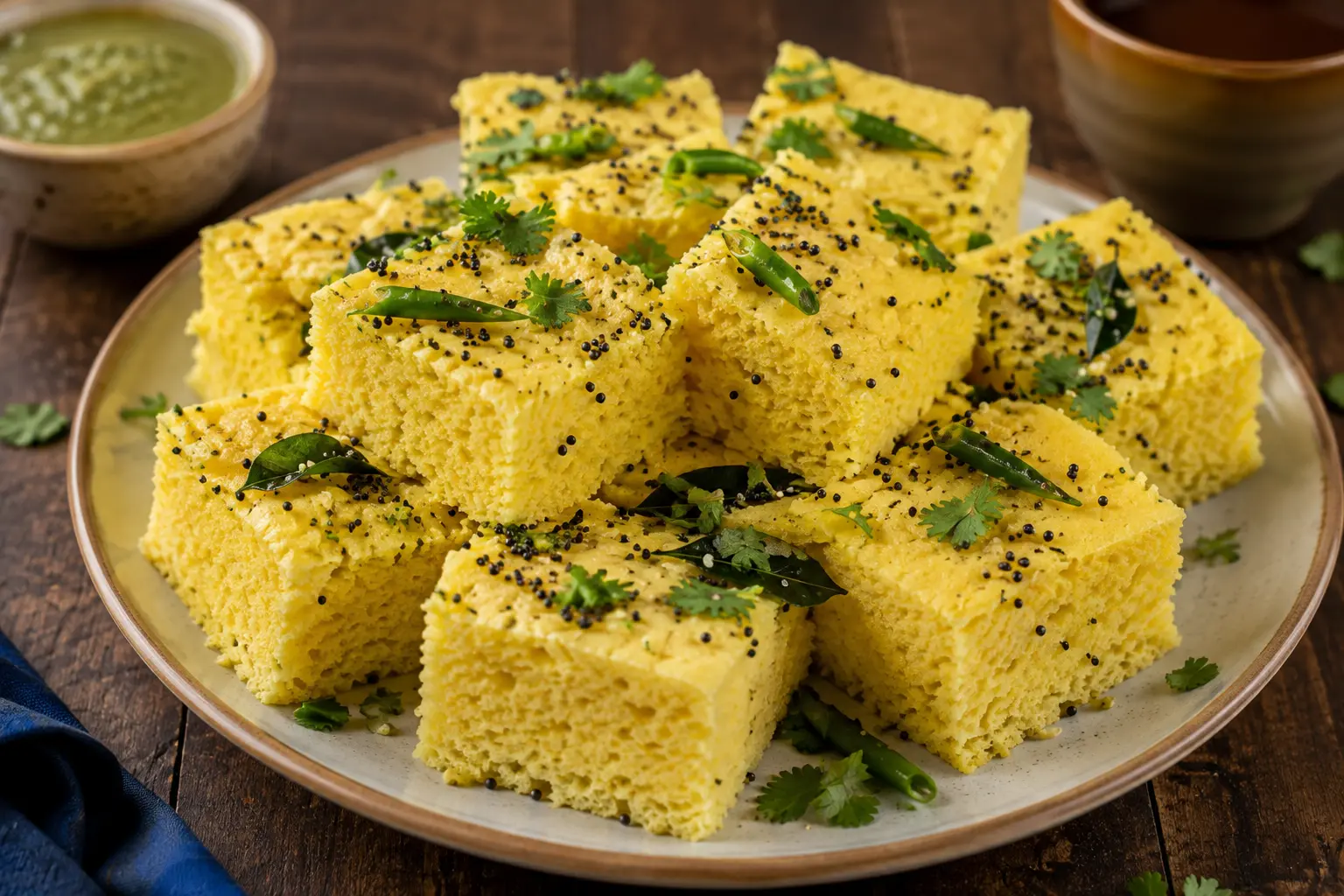
Imagine lifting the lid of your steamer to find a vibrant, sun-yellow cake that has puffed up beautifully, releasing a gentle cloud of warm, earthy chickpea aroma. Khaman Dhokla is the ultimate celebration of contrasts—it is wonderfully light yet satisfying, pillow-soft yet sturdy enough to hold a glossy, sweet-and-tangy spiced tempering. When done right, it melts in your mouth like a savory cloud.
I still remember the first time I tried to make dhokla in my own kitchen. It came out looking like a flat, heavy brick of yellow soap. But here is the secret: once you understand the simple chemistry of aerating the batter, you will get that legendary, juicy sponge every single time. You do not need to be an expert to master this; you just need to know what visual cues to look out for.
This is the ultimate weekend breakfast or high-tea snack. It is the kind of dish that brings everyone around the kitchen counter, fingers sticky with sweet mustard tempering, eagerly waiting for the next warm piece. Just like perfecting a crispy Masala Dosa Recipe or folding a golden Samosa Recipe, steaming your first successful dhokla is a true culinary milestone. While a hearty Chicken Biryani Recipe is the undisputed king of dinner parties, a plate of fresh dhokla is the ultimate afternoon crowd-pleaser.
Why You’ll Love This Recipe
- Zero Fermentation Required: Steams to perfection in just 20 minutes with zero overnight planning.
- Unbelievably Soft & Spongy: A foolproof aeration technique guarantees a melt-in-your-mouth texture.
- Perfect Balance of Flavors: Delivers that authentic Gujarati balance of sweet, tangy, and mildly spicy notes.
- Naturally Gluten-Free & Vegetarian: A crowd-pleasing snack that accommodates almost every dietary preference.
- Clever Visual Cues: No guesswork involved; we teach you exactly what the batter should look and feel like at every stage.
Ingredients
- 200 g Gram Flour (Besan) (Fine variety, sifted)
- 1 tbsp Semolina (Suji) (Optional, for texture)
- 1.5 tbsp Sugar (For the batter)
- 1 tsp Salt (To taste)
- 1/8 tsp Turmeric Powder (Just a tiny pinch)
- 1 tsp Ginger-Green Chili Paste (Freshly ground)
- 1 tbsp Lemon Juice (Freshly squeezed)
- 200 ml Water (Adjust as needed for batter)
- 1 tsp Eno Fruit Salt (Regular, unflavored)
- 1 tbsp Oil (Neutral cooking oil)
- 1 tsp Mustard Seeds (For tempering)
- 1 tbsp Sesame Seeds (For tempering)
- 3 pcs Green Chilies (Slit lengthwise)
- 10-12 pcs Curry Leaves (Fresh)
- 120 ml Water (For tempering liquid)
- 1.5 tbsp Sugar (For tempering liquid)
- 1 tsp Lemon Juice (For tempering liquid)
- 2 tbsp Coriander Leaves (Finely chopped, for garnish)
- 2 tbsp Fresh Grated Coconut (For garnish)
How to Make
Step 1: Prep Steamer
Grease an 8-inch cake pan with oil. Bring 2 inches of water to a boil in your steamer over medium-high heat. Ensure the lid is tight to capture the steam.
Step 2: Mix Dry Ingredients
Sift the besan and semolina into a large mixing bowl to remove all lumps and incorporate air.
Step 3: Whisk Batter Base
In another bowl, dissolve sugar, salt, lemon juice, oil, ginger-chili paste, and turmeric in 200ml of water. Pour into the flour and whisk in one direction until smooth. Rest for 10 minutes.
Step 4: Add Eno and Aerate
Add Eno fruit salt to the batter with a teaspoon of water on top. Whisk gently in one direction for 10-15 seconds until the batter doubles in volume and becomes pale and frothy.
Step 5: Steam
Pour the batter immediately into the greased pan and steam on high heat for 15 minutes without opening the lid.
Step 6: Check and Cool
Test with a toothpick in the center; it should come out clean. Let the dhokla cool for 10 minutes, demold, and cut into squares.
Step 7: Prepare Tempering
Heat 1 tbsp of oil. Sizzle mustard seeds, sesame seeds, green chilies, and curry leaves. Add 120ml water, sugar, and lemon juice. Boil for 1 minute.
Step 8: Soak and Serve
Spoon the warm tempering liquid evenly over the warm sliced dhokla. Garnish with chopped coriander and fresh grated coconut.
Chef’s Tips
- 💡 Chef’s Tip: Always whisk your batter in one single direction. This helps build a stable gluten structure that traps and holds onto the rising air bubbles.
- 💡 Chef’s Tip: Sift your gram flour twice if it has been sitting in your pantry for a while; this incorporates maximum air and prevents any dense pockets in the finished sponge.
- 💡 Chef’s Tip: Pour warm tempering water over warm dhokla. If one is cold and the other is hot, the liquid will not absorb evenly, resulting in a soggy bottom and dry center.
Common Mistakes to Avoid
- ❌ Adding too much turmeric: This is the most common mistake. A heavy hand with turmeric causes a chemical reaction with the alkaline Eno, leaving ugly red or orange spots on your yellow cake.
- ❌ Letting the batter sit after adding Eno: Steaming must happen immediately. If the batter sits for even two minutes on the counter, the carbon dioxide bubbles will escape, resulting in a rubbery texture.
- ❌ Steaming on low heat: Dhokla needs active, rapid steam to lift the batter. Keep the heat on medium-high throughout the steaming process.
- ❌ Skipping the water in the tempering: Pouring just oil and mustard seeds over the dhokla will make it dry and hard to swallow. The water in the tempering is absolutely essential for that juicy, soft crumb.
- ❌ Opening the steamer lid too early: Curiosity will ruin your rise. Keep the lid sealed tight for at least the first 12 minutes to maintain a constant steaming temperature.
💡 Before You Start
Before you start, make sure you have your steamer completely set up and your baking pan greased. In Indian baking and steaming, timing is everything. Once you add the Eno fruit salt, a chemical reaction begins immediately. If your steamer isn’t ready or your pan isn’t greased, the batter will sit on the counter, lose its trapped air, and yield a dense, flat cake. Have all your ingredients measured and ready to go.
Variations
- Rava Dhokla (Semolina Dhokla): Skip the gram flour entirely and use fine semolina (suji) mixed with sour yogurt for a clean, white, and slightly granular texture.
- Masala Layered Dhokla: Slice your steamed dhokla cake horizontally, spread a vibrant layer of spicy green mint-coriander chutney in the middle, and sandwich it back together before slicing.
- Cheese and Chili Dhokla: Sprinkle a generous layer of grated processed cheese and finely chopped green chilies over the batter just before steaming for a modern, gooey twist.
Serving Suggestions
For a lazy Sunday brunch, serve these warm, juicy squares alongside sweet, crispy jalebis for the ultimate sweet-and-savory contrast.
If you are hosting an afternoon tea party, arrange the dhokla on a platter next to a bowl of spicy green chutney and sweet tamarind chutney, paired with hot ginger chai.
This makes a fantastic, light appetizer for busy weeknights because it requires very little active cooking time and stores beautifully.
For a festive appetizer spread, serve it alongside other Indian classics to give your guests a delicious variety of textures and flavors.
Storage
Store any leftovers in an airtight container in the refrigerator for up to 3 days. It is best to store them after they have absorbed the tempering liquid, as this keeps the sponge moist inside the cold fridge.
Reheating
To reheat, steam the dhokla pieces for 3 to 4 minutes until they are heated through and soft again. Alternatively, place them on a microwave-safe plate, cover them with a damp paper towel to lock in moisture, and microwave on high for 30 to 45 seconds.
Frequently Asked Questions
Why did my dhokla turn red or develop pink spots?
This happens when turmeric reacts chemically with the alkaline Eno fruit salt or baking soda. To prevent this, add only a tiny pinch of turmeric, or omit it altogether if you are worried.
Can I use baking soda instead of Eno fruit salt?
Yes, you can use 1/2 teaspoon of baking soda. However, make sure to add an extra teaspoon of lemon juice to the batter to ensure there is enough acid to activate the soda.
Why is my dhokla dense and flat instead of spongy?
There are three main culprits: your steamer wasn’t hot enough when the batter went in, you let the batter sit too long after adding the Eno, or you opened the steamer lid too early.
How do I make sure the tempering water doesn’t make the dhokla soggy?
The secret is temperature. Ensure both the dhokla and the tempering liquid are warm (not piping hot, and not cold) when you combine them. This allows the liquid to distribute evenly.
Can I make this recipe without semolina (suji)?
Absolutely. Semolina is optional, but it adds a lovely crumbly texture and prevents the dhokla from sticking to the roof of your mouth as you eat it.
Can I freeze cooked dhokla?
Yes! Freeze the unsliced, untempered steamed dhokla block wrapped tightly in plastic wrap. When ready to eat, steam it for 5 minutes to thaw and soften, then slice and add fresh warm tempering.
Conclusion
Mastering Khaman Dhokla is a beautiful reminder of how simple ingredients can transform into something truly extraordinary with just a little culinary technique. Once you see that batter double in size and taste that first juicy, sweet-tangy bite, you’ll want to make it every single weekend. Happy cooking!
Recipe Index
More Recipes You’ll Love
Khaman Dhokla
Ingredients
Method
- Grease an 8-inch cake pan with oil. Bring 2 inches of water to a boil in your steamer over medium-high heat. Ensure the lid is tight to capture the steam.
- Sift the besan and semolina into a large mixing bowl to remove all lumps and incorporate air.
- In another bowl, dissolve sugar, salt, lemon juice, oil, ginger-chili paste, and turmeric in 200ml of water. Pour into the flour and whisk in one direction until smooth. Rest for 10 minutes.
- Add Eno fruit salt to the batter with a teaspoon of water on top. Whisk gently in one direction for 10-15 seconds until the batter doubles in volume and becomes pale and frothy.
- Pour the batter immediately into the greased pan and steam on high heat for 15 minutes without opening the lid.
- Test with a toothpick in the center; it should come out clean. Let the dhokla cool for 10 minutes, demold, and cut into squares.
- Heat 1 tbsp of oil. Sizzle mustard seeds, sesame seeds, green chilies, and curry leaves. Add 120ml water, sugar, and lemon juice. Boil for 1 minute.
- Spoon the warm tempering liquid evenly over the warm sliced dhokla. Garnish with chopped coriander and fresh grated coconut.