Dahi Vada Recipe (Soft Lentil Dumplings in Yogurt)
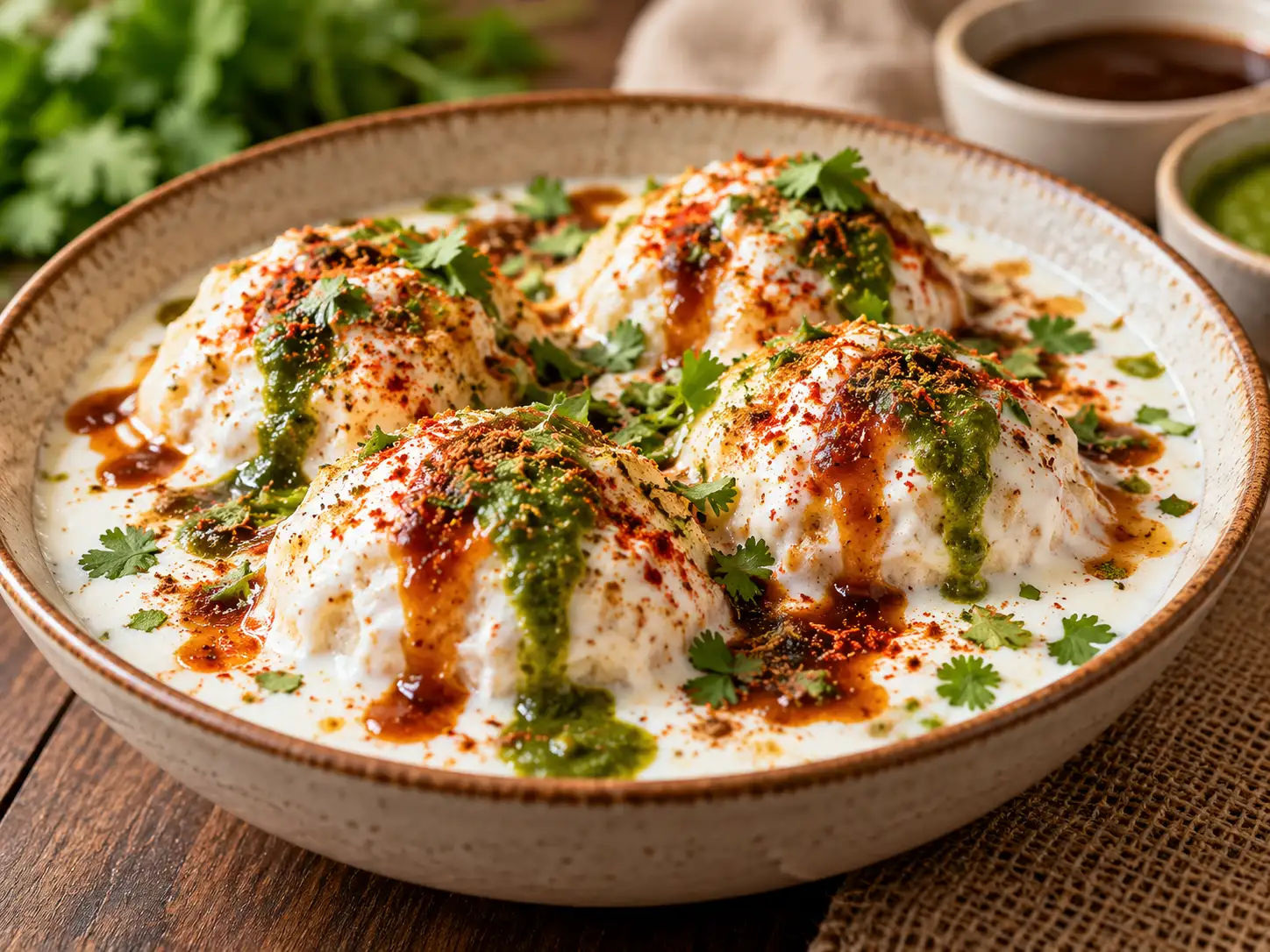
Dahi Vada features deep-fried lentil dumplings that are soaked in water until spongy, then smothered in seasoned, sweetened yogurt and topped with sweet and spicy chutneys. It is a staple at festive gatherings and street food stalls across India, offering a cooling contrast of creamy, sweet, tangy, and savory flavors in a single spoonful.
The key to a spectacular dahi vada is achieving a light, airy texture inside the dumpling so it easily absorbs the spiced yogurt. This recipe uses a blend of split skinless black gram (urad dal) and yellow mung beans (moong dal) whipped to incorporate maximum air, ensuring the vadas turn out soft without relying on chemical leaveners.
Why This Recipe Works
- Blending a small amount of yellow moong dal with the urad dal prevents the vadas from turning dense or rubbery.
- Whipping the batter aggressively incorporates air pockets, which are verified using a simple water-float test before frying.
- Soaking the fried dumplings in warm salted water seasoned with asafoetida softens the core and washes away excess surface oil.
Ingredient Notes
- Urad Dal (Split Skinless Black Gram): This lentil provides the necessary sticky structure and body for the batter. Ensure you buy skinless white urad dal, not the whole black version.
- Yellow Moong Dal (Split Yellow Mung Beans): Adding a small quantity of moong dal lightens the texture of the finished vada, making it yield easily to a spoon.
- Asafoetida (Hing): This aromatic powder adds a savory, onion-garlic-like depth to both the batter and the soaking water.
- Whole Milk Yogurt (Dahi): Use full-fat, fresh plain yogurt that is not overly sour. Whipping it with sugar and salt creates a smooth, velvety base.
If You’re Cooking Outside India
- Urad Dal and Moong Dal: These are commonly found in South Asian grocery stores or international aisles. Look for packages labeled ‘Urad Dal Split Skinless’ or ‘Urad Dhuli’ and ‘Moong Dal Chilka-less’ or ‘Moong Dhuli’.
- Kala Namak (Black Salt): This Indian mineral salt has a distinctive sulfurous aroma that defines the savory topping. It can be found in Indian grocery stores or online. If unavailable, use regular fine sea salt, though the flavor profile will lose its characteristic sulfurous kick.
- Yogurt Substitutes: If you cannot find traditional Indian dahi, use standard plain whole-milk yogurt. Avoid thick Greek-style yogurts unless you whisk them with a few tablespoons of cold water or milk to reach a pourable, heavy-cream consistency.
How to Make Dahi Vada
Soaking the Lentils
Rinse and soak the urad and moong dals for at least four hours to soften the grains completely, preparing them for smooth grinding.
Grinding with Minimal Water
Grind the soaked lentils into a thick, smooth paste. Use only cold water, adding it one tablespoon at a time to prevent the batter from becoming runny.
Aerating and Testing
Whip the batter in a circular motion until it turns pale and fluffy. Perform the water-float test by dropping a small dollop into a cup of water; it must float instantly.
Frying to Pale Golden
Drop spoonfuls of batter into medium-hot oil. Fry slowly so the heat penetrates to the center without burning the exterior.
Soaking and Squeezing
Transfer the fried vadas directly into warm, salted, hing-infused water. Once they absorb water and turn pale, gently press them between your palms to extract the excess liquid before assembly.
Cooking Tips
- Use cold or ice water when grinding the batter. The friction of the blender blades can warm the batter, which thins it out and makes the vadas heavy.
- Do not skip the float test. If your batter sinks in a glass of water, keep whipping it with your clean hand or a whisk to incorporate more air.
- Keep the oil temperature steady at medium. If the oil is too hot, the vadas will brown quickly but remain raw and pasty in the center.
Common Mistakes to Avoid
- Adding too much water while grinding the lentils: Runny batter will absorb massive amounts of oil and lose its shape. If this happens, stir in a tablespoon of fine rice flour or chickpea flour (besan) to bind it, though whipping it thoroughly is still necessary.
- Squeezing the soaked vadas too aggressively: Pressing too hard can tear or flatten the delicate, spongy vadas. Place the vada flat between your palms and apply light, even pressure to squeeze out water without breaking the skin.
Variations
- Dahi Bhalla (North Indian Style): Often garnished additionally with boiled potato cubes, boiled chickpeas, and a sprinkle of sweet pomegranate seeds alongside the chutneys.
- South Indian Dahi Vada (Tayir Vadai): The yogurt is left unsweetened and tempered with mustard seeds, curry leaves, ginger, and green chilies, then poured over the soaked vadas.
Serving Suggestions
- Serve chilled as a refreshing appetizer or snack alongside crispy Samosas.
- Arrange on a wide platter for festive gatherings, preparing the soaked vadas and sweetened yogurt ahead of time and assembling just before serving.
Storage & Make-Ahead
Make ahead: You can fry the vadas a day in advance. Store them dry in an airtight container at room temperature, then soak them in warm water for 20 minutes before assembling.
Refrigerate: Once fully assembled with yogurt, keep the dahi vadas refrigerated for up to 2 days. The vadas will continue to absorb the yogurt and soften further.
Freeze: Fried (unsoaked) vadas can be frozen in a secure zip-top bag for up to 1 month. Thaw at room temperature, then soak in warm water for 25 minutes before dressing.
Reheat: Do not heat assembled dahi vadas. They are intended to be served cold or at cool room temperature. If reheating dry frozen vadas, do so by submerging them directly in hot water before squeezing.
Frequently Asked Questions
Why are my dahi vadas hard in the center?
Hard centers happen when the batter is not whipped enough to incorporate air, or if the frying oil is too hot, which cooks the exterior rapidly while leaving the center heavy and raw.
Can I make this recipe ahead of time?
Yes, you can fry the vadas and store them dry in an airtight container for up to 24 hours. Soak them in warm water for 20 minutes before squeezing and assembling on the day of serving.
What can I do if my batter becomes too runny to shape?
Mix in 1 tablespoon of fine rice flour or chickpea flour (besan). This helps absorb excess moisture and makes the batter more manageable, though you should still whip it to keep it light.
More Indian Recipes to Try
Browse the IndiPlated recipe index
Dahi Vada
Ingredients
Equipment
Method
- Rinse the split skinless urad dal and split skinless yellow moong dal together in a bowl until the water runs clear. Soak them in plenty of water for at least 4 hours, or overnight, at room temperature.
- Drain the soaked dals completely. Transfer them to a high-speed blender jar. Add 2 tablespoons of ice-cold water. Grind to a thick, smooth paste. Add more cold water only if the blender stalls, up to 4 tablespoons total. The batter must remain thick and drop slowly from a spoon.
- Transfer the ground batter to a wide mixing bowl. Use a whisk or your clean hand to beat the batter vigorously in one direction for 5 to 7 minutes. This incorporates air, turning the batter light, fluffy, and slightly paler.
- Perform the float test: drop a small half-teaspoon of the whipped batter into a cup of room-temperature water. If it floats instantly on the surface, the batter is ready. If it sinks, whip for another 2 minutes and test again.
- Fold in the cumin seeds, chopped ginger, chopped green chili, 1/2 teaspoon of salt, and 1 pinch of asafoetida into the aerated batter. Mix gently with a spatula so you do not deflate the incorporated air.
- Heat 2 inches of neutral cooking oil in a kadai or deep pan over medium heat. Wet your fingers with water to prevent sticking, scoop a lime-sized portion of batter, and gently slide it into the hot oil. Repeat with 4 to 5 more vadas, without crowding the pan. Fry on medium heat, turning occasionally, for 5 to 6 minutes until they are a uniform pale golden-brown color and cooked through.
- While the first batch is frying, combine 4 cups of warm water, 1/2 teaspoon of salt, and 1/4 teaspoon of asafoetida in a large bowl. Stir until dissolved.
- Remove the fried vadas from the hot oil using a slotted spoon, letting excess oil drain back into the pan. Transfer them immediately into the warm seasoned water bath. Let them soak for 15 to 20 minutes. They will expand slightly, absorb water, and turn pale.
- Take each soaked vada out of the water. Place it flat between your palms and press gently to squeeze out the excess water without tearing the vada. Set the squeezed vadas aside on a serving plate.
- In a medium bowl, whisk the plain whole-milk yogurt with 2 tablespoons of sugar and 1/2 teaspoon of salt until completely smooth, silky, and free of lumps.
- Arrange the squeezed vadas on a serving platter. Pour the seasoned whipped yogurt generously over them, ensuring they are completely covered. Drizzle with sweet tamarind chutney and spicy green chutney to your liking. Dust with roasted cumin powder, Kashmiri red chili powder, and black salt. Garnish with chopped coriander leaves if using, and serve chilled.
Notes
The warm water bath should be warm, not boiling hot. Boiling water will break the delicate structure of the vadas.
If the whipped yogurt is too thick, whisk in 1 to 2 tablespoons of cold water to achieve a thick but pourable consistency.