Vegetable Korma Recipe (Creamy Mixed Vegetable Curry)
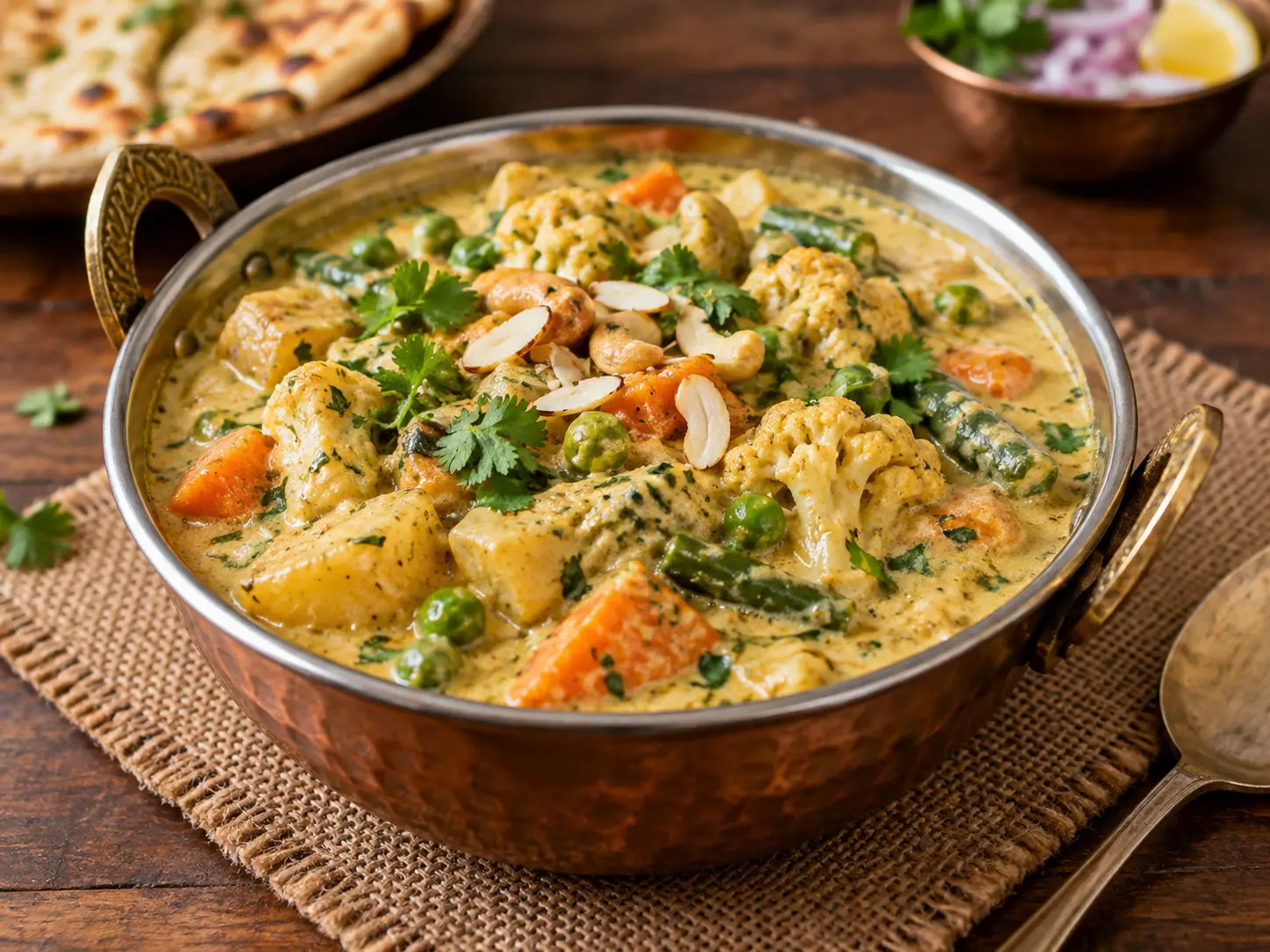
Vegetable Korma is a fragrant, mildly spiced curry where mixed vegetables are simmered in a rich, aromatic gravy. This South Indian hotel-style version uses a ground paste of cashews, fresh coconut, and fennel seeds to build its characteristic creamy base without relying on heavy dairy cream.
Success in making this curry relies on chopping your vegetables to a uniform size so they cook evenly, and gently cooking the onion-tomato base until the raw smell of the ginger and garlic completely disappears. This ensures the spiced paste clings beautifully to the vegetables.
Why This Recipe Works
- Fennel and coconut paste provides natural creaminess, adding body and a sweet, aromatic flavor profile without making the dish heavy.
- Sautéing the vegetables in the spiced onion base before adding liquid allows them to absorb flavor directly into their core.
- Cooking the cashew paste on low heat at the very end keeps the texture silky and prevents the delicate fats from separating.
Ingredient Notes
- Cashew nuts: Raw, unsalted cashews provide the creamy body for the gravy. Soaking them in warm water softens them so they blend into a completely smooth paste.
- Fresh or frozen grated coconut: Gives the korma its light, sweet coconut flavor. If using frozen coconut, let it thaw completely at room temperature before blending.
- Fennel seeds: A vital spice in South Indian-style kormas, providing a sweet, anise-like aroma that defines the gravy. Do not substitute with anise seeds.
- Mixed vegetables: A mixture of carrots, green beans, potatoes, cauliflower florets, and green peas works best. Ensure they are cut into uniform 1/2-inch pieces.
If You’re Cooking Outside India
- Grated coconut: Look for frozen grated coconut in the freezer section of South Asian or international grocery stores. Avoid sweetened shredded coconut used for baking, as it will make the curry too sweet.
- Ginger-garlic paste: If you cannot find pre-made paste, grind equal parts peeled fresh ginger and garlic with a tiny splash of water in a small food processor until smooth.
How to Make Vegetable Korma
Prepare the paste
Soak the raw cashews in warm water, then grind them with the grated coconut, fennel seeds, green chilies, and a splash of water into a completely smooth, thick paste.
Build the aromatic base
Sauté whole spices in hot oil or ghee, then cook the chopped onions and ginger-garlic paste until soft and fragrant.
Simmer the vegetables
Add tomatoes, turmeric, and coriander powder, then cook down. Toss in the hard vegetables with water and simmer covered until tender.
Incorporate the paste
Stir in the ground cashew-coconut paste, green peas, and garam masala on low heat, simmering gently until the gravy thickens.
Cooking Tips
- Grind the paste as finely as possible. Any grittiness in the cashew-coconut mixture will ruin the velvety texture of the korma.
- Keep the heat low once the cashew paste is added. Cashews scorch very easily when exposed to high heat.
- Adjust consistency with warm water. The korma will naturally thicken as it sits; stir in a few tablespoons of warm water to loosen it before serving if needed.
Common Mistakes to Avoid
- Adding the cashew paste too early or on high heat: The paste will stick to the bottom of the pan and burn. Always reduce the heat to low before stirring it in, and stir the pan frequently.
- Cutting the vegetables into uneven sizes: Harder vegetables like potatoes and carrots will remain raw while cauliflower turns to mush. Cut the hard vegetables slightly smaller than the quick-cooking ones.
Variations
- Paneer or Tofu Korma: Stir in cubed paneer or firm pan-seared tofu during the final 5 minutes of simmering alongside the green peas.
- Yogurt-Based Korma: Replace the coconut in the blended paste with 3 tablespoons of well-whisked plain yogurt, added on very low heat to prevent curdling.
Serving Suggestions
- Serve hot alongside layered parotta, chapati, or poori.
- Pair with fragrant basmati rice, jeera rice, or a mild vegetable pulao.
Storage & Make-Ahead
Make ahead: You can prep and chop all the vegetables and blend the cashew-coconut paste up to 24 hours in advance. Store them in separate containers in the refrigerator.
Refrigerate: Store leftover korma in an airtight container in the refrigerator for up to 3 days.
Freeze: Freezing is not recommended. The cooked vegetables will become mushy, and the coconut-cashew gravy is highly likely to separate upon thawing.
Reheat: Reheat gently in a saucepan over low heat, stirring frequently. Add a splash of warm water to restore the creamy consistency.
Frequently Asked Questions
Can I use coconut milk instead of grated coconut?
Yes. If you cannot find fresh or frozen grated coconut, skip it in the blended paste. Blend the cashews, green chilies, and fennel seeds with a splash of water, then stir in 1/2 cup of thick canned coconut milk during the final 5 minutes of simmering.
How do I prevent the korma from burning at the bottom?
Cashew paste thickens very quickly and naturally sinks to the bottom of the pan. Always reduce your heat to the lowest setting before stirring in the paste, and use a heavy-bottomed pan.
Which vegetables are best to use?
A classic mix of potato, carrot, green beans, cauliflower, and green peas works best. Avoid watery vegetables like zucchini or mushrooms, which release too much moisture and dilute the rich flavor of the korma.
More Indian Recipes to Try
Browse the IndiPlated recipe index
Vegetable Korma
Ingredients
Equipment
Method
- Drain the soaked cashews. Transfer them to a blender along with the grated coconut, fennel seeds, chopped green chilies, and 3 tablespoons of warm water. Blend on high speed until a completely smooth, thick paste forms. Set aside.
- Heat the oil or ghee in your heavy-bottomed deep pan over medium heat. Add the bay leaf, cinnamon stick, crushed cardamom pods, and cloves. Fry for 30 seconds until they release a warm, sweet aroma. Add the chopped onion and cook for 5 to 6 minutes, stirring occasionally, until they are soft and light golden at the edges.
- Stir in the ginger-garlic paste and cook for 1 minute until fragrant. Add the chopped tomato, turmeric powder, coriander powder, and salt. Cook for 3 to 4 minutes, stirring and mashing the tomatoes with your spatula, until the tomatoes soften completely and the oil begins to separate at the edges of the pan.
- Add the 3 cups of mixed vegetables (excluding the peas) to the pan. Toss them with the spice mixture for 2 minutes to coat them well. Pour in 1 1/4 cups of water, cover the pan with a lid, and bring to a simmer. Reduce the heat to medium-low and cook for 10 to 12 minutes, or until the vegetables are fork-tender but still hold their shape.
- Reduce the heat to low. Stir in the prepared cashew-coconut paste, green peas, and garam masala. Add the remaining 1/4 cup of water if the gravy is too thick. Simmer uncovered on low heat for 4 to 5 minutes, stirring frequently to prevent the cashew paste from sticking or scorching on the bottom of the pan.
- Turn off the heat. Remove the bay leaf and cinnamon stick if desired. Stir in the chopped fresh coriander leaves. Cover the pan and let the korma rest for 2 minutes before serving hot.
Notes
For a slightly thinner gravy, stir in an extra 2 to 3 tablespoons of warm water during the final step.