Sambar Recipe (South Indian Lentil & Vegetable Stew)
Sambar is a warm, tangy lentil and vegetable stew thickened with roasted spices and sharpened with tamarind. It forms the backbone of many South Indian meals, commonly served alongside rice, idli, or dosa.
Making sambar from scratch involves cooking split pigeon peas until soft, simmering diced vegetables in a tart tamarind broth, and finishing the dish with a hot oil tempering. This version yields a balanced pot with tender vegetables and a fragrant spice background.
Why This Recipe Works
- Cooking the lentils until completely soft ensures the stew achieves a naturally smooth body without needing artificial thickeners.
- Dry-roasting the spices before grinding releases their aromatic oils more effectively than using pre-ground powders alone.
- Adding the vegetables to the boiling tamarind water before mixing in the mashed lentils allows the vegetables to absorb the sour broth while remaining tender-crisp.
Ingredient Notes
- Toor dal: Also known as split yellow pigeon peas. They break down easily during boiling and provide the creamy base for the stew.
- Tamarind: Provides the characteristic sour note. Use tamarind paste mixed with warm water, or extract pulp from a block of compressed tamarind.
- Sambar powder: A roasted spice blend containing coriander seeds, fenugreek, dried red chilies, and other spices. Adjust the quantity based on your preferred spice level.
- Curry leaves: Fresh curry leaves add a distinctive citrusy aroma when bloomed in the final oil tempering. Dried leaves are a poor substitute and are best omitted if fresh ones are unavailable.
If You’re Cooking Outside India
- Toor dal: Found in South Asian grocery stores and well-stocked international supermarkets, often labeled as split pigeon peas.
- Tamarind paste: Available in jars or tubs in the Asian aisle or South Asian markets. Check the label to ensure it is pure tamarind without added sweeteners.
- Curry leaves: Usually sold fresh in plastic packets in the refrigerated section of Indian grocery stores. They freeze well if you want to store extras.
How to Make Sambar
Boil the Lentils
Rinse the split pigeon peas and boil them with turmeric and water until they turn completely soft and mash easily.
Prepare the Vegetables and Tamarind
Simmer chopped vegetables in tamarind extract and water until tender.
Combine and Simmer
Stir the cooked lentils and freshly prepared sambar spice mixture into the pot, simmering until the flavors blend.
Add the Tempering
Heat oil in a small pan, sputter mustard seeds and dried chilies, crisp the curry leaves, and stir the hot mixture directly into the simmering sambar.
Cooking Tips
- Mash the cooked lentils thoroughly with a whisk or wooden spoon before adding them to the pot so the stew has a uniform consistency.
- Add harder vegetables like carrots or drumsticks earlier in the cooking process, and softer vegetables like tomatoes later so everything finishes cooking evenly.
Common Mistakes to Avoid
- Adding the tamarind too late in the cooking process: Simmer the vegetables in the tamarind liquid before adding the cooked lentils, as acid slows down the softening of tough plant fibers.
- Burning the mustard seeds during the final tempering: Remove the pan from the heat as soon as the mustard seeds begin to pop so they do not turn bitter.
Variations
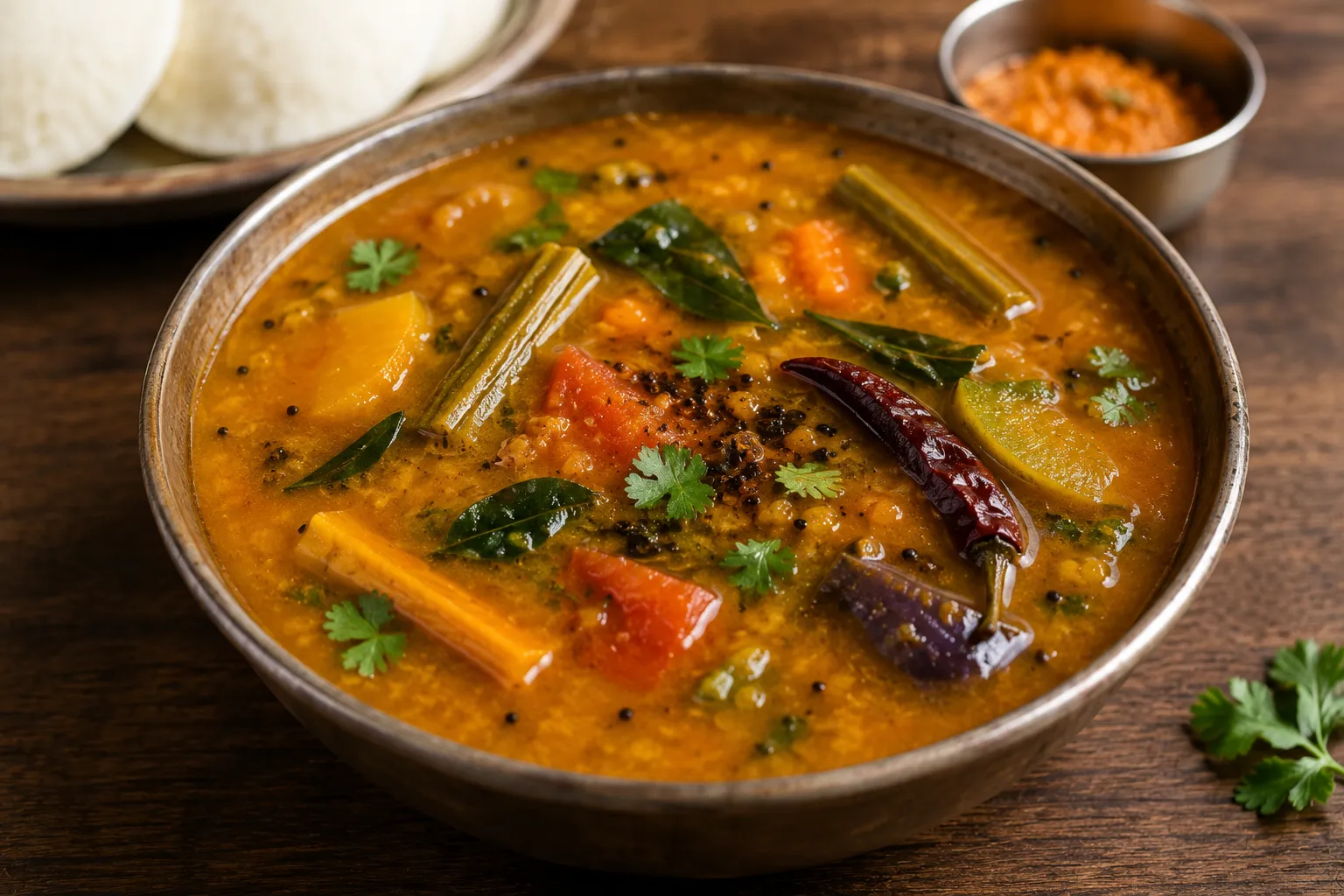
- Drumstick Sambar: Add 2-inch pieces of fresh drumstick pods (moringa) along with the vegetables for a distinct woody aroma.
Serving Suggestions
- Serve hot over steamed plain white rice with a spoonful of ghee.
- Pair with idli, vada, or dosa for a traditional South Indian breakfast or tiffin.
Storage & Make-Ahead
Make ahead: The sambar powder can be ground and stored in an airtight container up to a week in advance.
Refrigerate: Store leftover sambar in an airtight container in the refrigerator for up to 3 days.
Freeze: Freeze the lentil and vegetable base without the final tempering for up to 1 month for best texture retention.
Reheat: Reheat gently on the stovetop over medium-low heat, adding a splash of water if the stew has thickened too much in storage.
Frequently Asked Questions
Can I use moong dal instead of toor dal?
Toor dal is traditional for sambar and holds its body well, but split yellow moong dal can be used in a pinch, though the final stew will have a lighter consistency.
What should I do if the sambar is too thick?
Stir in a half cup of warm water and simmer for an additional 3 to 5 minutes until the consistency is uniform.
More Indian Recipes to Try
Browse the IndiPlated recipe index
Sambar
Ingredients
Equipment
Method
- Combine the rinsed toor dal, 3 cups of water, and turmeric powder in a saucepan. Bring to a boil, then reduce heat and simmer uncovered for about 25 to 30 minutes until the lentils are completely soft and easily mashed with a spoon.
- In a separate large pot, combine the mixed vegetables, tamarind water, and salt. Bring to a boil over medium-high heat, then cover and simmer for 15 minutes until the vegetables are tender.
- Mash the cooked toor dal until smooth. Stir the mashed dal into the pot with the cooked vegetables. Add the sambar powder and red chili powder, stirring well to combine.
- Bring the combined sambar mixture to a gentle boil over medium heat, then reduce heat and let it simmer uncovered for 10 minutes to meld the flavors.
- Heat the cooking oil in a small pan over medium heat. Add the mustard seeds and let them sputter. Add the broken dried red chilies, fresh curry leaves, and hing, stirring for 10 seconds until fragrant.
- Pour the hot tempering mixture directly into the simmering sambar, cover the pot immediately to trap the aromas for 1 minute, then stir well before serving.
Notes
Ensure the curry leaves are fresh for the best aroma during the final tempering step.