Aloo Gobi Recipe (Spiced Potatoes and Cauliflower)
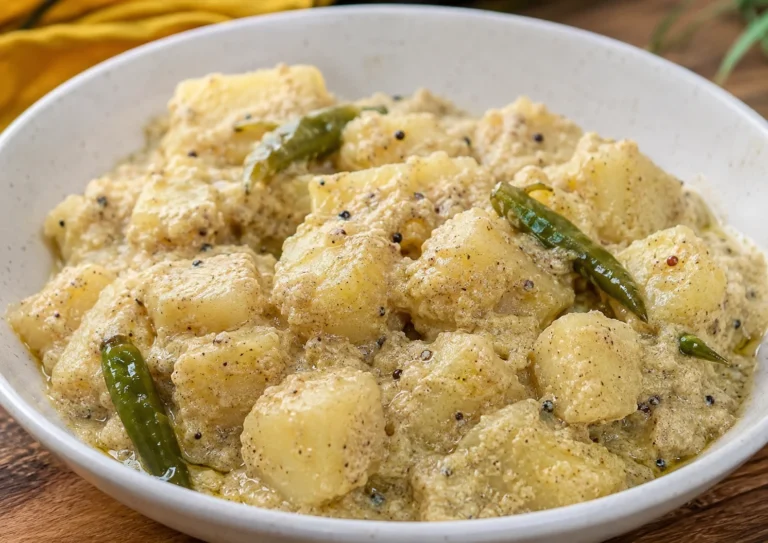
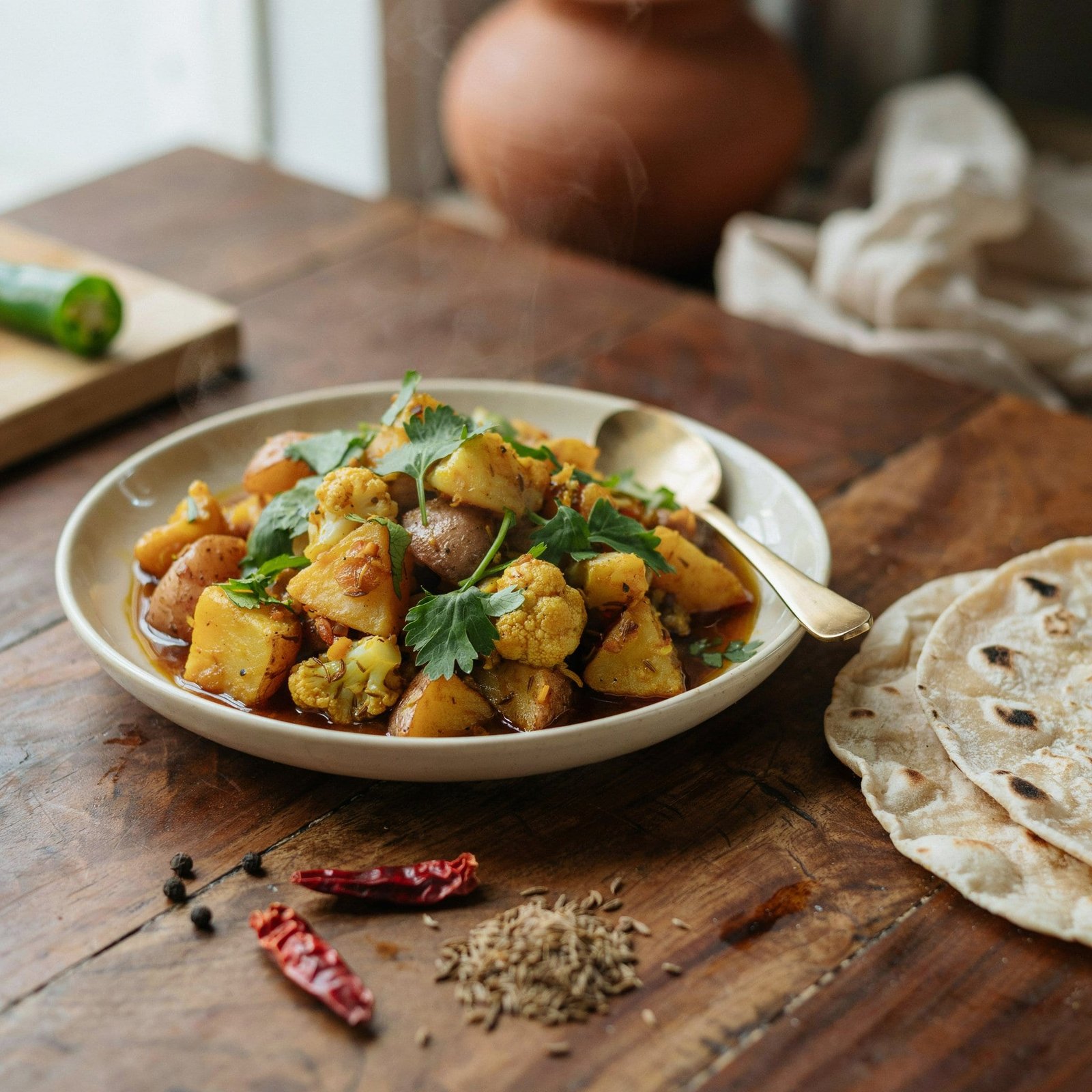
Aloo Gobi is a classic North Indian dry curry of tender potatoes and cauliflower florets tossed in a spiced onion-tomato masala base. It is a staple side dish served in homes and restaurants alike, prized for its simple warmth and earthy flavors.
The key challenge when cooking this dish is timing. Cauliflower softens much faster than potatoes, which often leads to either undercooked potatoes or mushy, disintegrating cauliflower. This recipe solves that problem by pan-searing both vegetables first, giving them a head start and a protective outer crust before they steam together.
Why This Recipe Works
- Searing the vegetables in oil first builds a light crust that helps the cauliflower florets retain their shape and prevents them from breaking apart during the final steaming phase.
- Steaming the vegetables in their own moisture under a tight lid ensures the dry spice masala clings tightly to the potatoes and cauliflower instead of getting washed away by added water.
Ingredient Notes
- Cauliflower: Cut into medium-sized, uniform florets. Florets that are too small will overcook and turn into a mushy paste before the potatoes are tender.
- Potatoes: Choose low-starch or medium-starch varieties like Yukon Gold or red potatoes. Cut them into wedges or cubes of similar thickness to the cauliflower florets so they cook at an identical rate.
- Amchur (Dry Mango Powder): Provides a sharp, tangy contrast to the earthy potatoes. If you cannot find amchur, a squeeze of fresh lemon juice added at the very end is a reliable alternative.
- Kasuri Methi (Dried Fenugreek Leaves): Adds a distinct savory, herbal aroma. Rub the leaves between your palms to crush them before sprinkling over the pan to release their fragrance.
If You're Cooking Outside India
- Amchur: Look for dry mango powder in the spice aisle of South Asian grocery stores or online. It is used to add clean acidity without introducing extra moisture to dry curries.
- Kasuri Methi: Commonly sold in boxes or bags at Indian grocers. Store in an airtight container in a dark cupboard to keep the dried leaves aromatic.
How to Make Aloo Gobi
Pan-Searing the Veggies
Lightly brown the potato wedges and cauliflower florets in oil. This partially cooks the vegetables and helps them retain structural integrity.
Building the Masala Base
Sauté cumin seeds, onions, ginger, garlic, and green chilies, followed by tomatoes and ground spices to form a thick, concentrated paste.
Slow Steaming
Gently fold the seared vegetables into the spice paste, cover, and let them steam on low heat until fork-tender.
Finishing
Sprinkle with warming garam masala, tangy mango powder, and crushed dried fenugreek leaves for a final layer of dry aroma.
Cooking Tips
- Cut all vegetables to a uniform size so they cook at the same rate.
- Do not crowd the pan when searing the vegetables; if your pan is narrow, fry the potatoes and cauliflower in separate batches.
- Resist the urge to add water during the steaming step. The moisture from the washed vegetables and tomatoes, combined with steam under a tight lid, is enough to tenderize them.
Common Mistakes to Avoid
- Adding too much water to speed up the cooking process, which boils the cauliflower and makes it soggy: Keep the lid tightly sealed and maintain a low heat. The trapped steam will cook the vegetables perfectly without diluting the spice coating.
- Stirring too vigorously during the final stage, breaking the delicate cauliflower florets: Use a flat spatula to gently fold the vegetables from the bottom of the pan instead of stirring in circular motions.
Variations
- Dhaba-Style Aloo Gobi: Deep-fry the potato wedges and cauliflower florets completely before tossing them in the masala base for a richer texture and accelerated cooking time.
- Aloo Gobi Matar: Add half a cup of fresh or frozen green peas along with the seared potatoes and cauliflower to add color and mild sweetness to the curry.
Serving Suggestions
- Serve hot with freshly made rotis, parathas, or naan.
- Pair with yellow dal tadka and steamed basmati rice for a comforting, complete everyday meal.
- Serve alongside cold cucumber raita to balance the warm spices.
Storage & Make-Ahead
Make ahead: You can chop the vegetables and prepare the onion-tomato masala base up to a day in advance. Store them separately in the refrigerator and complete the assembly and steaming steps shortly before serving.
Refrigerate: Store leftover Aloo Gobi in an airtight container in the refrigerator for up to 3 days.
Freeze: Freezing is not recommended, as the potatoes become grainy and the cauliflower loses its texture upon thawing.
Reheat: Reheat gently in a pan over low heat with a splash of water to prevent sticking, or microwave in 30-second intervals.
Frequently Asked Questions
Can I use frozen cauliflower for this recipe?
Fresh cauliflower is highly recommended. Frozen cauliflower has been blanched and contains extra moisture, which makes it very difficult to brown and causes it to turn mushy quickly during steaming.
What can I use if I do not have amchur?
You can substitute amchur with an equal amount of fresh lemon juice. Stir the lemon juice in at the very end of cooking after turning off the heat.
Why did my cauliflower turn mushy?
This usually happens if the florets were cut too small, if water was added to the pan, or if the vegetables were stirred too vigorously. Pan-searing first and steaming without added liquid helps prevent this.
More Indian Recipes to Try
Browse the IndiPlated recipe index
Aloo Gobi
Ingredients
Equipment
Method
- Heat 2 tablespoons of oil in a large, heavy-bottomed frying pan or kadai over medium heat. Add the potato wedges and cauliflower florets. Fry for 8 minutes, turning occasionally, until the edges are lightly browned but the vegetables are not fully cooked. Transfer to a bowl and set aside.
- In the same pan, heat the remaining 1 tablespoon of oil over medium heat. Add the cumin seeds and asafoetida (if using). Let the cumin seeds sizzle and turn fragrant, which takes about 30 seconds.
- Add the finely chopped onion. Cook for 3 minutes, stirring frequently, until they become translucent and turn light golden at the edges. Add the ginger, garlic, and slit green chilies, then cook for another 1 minute until fragrant.
- Stir in the chopped tomatoes, turmeric powder, Kashmiri red chili powder, coriander powder, cumin powder, and salt. Cook for 4 minutes, mashing the tomatoes with your spatula, until they soften completely and the oil starts to separate from the sides of the paste.
- Gently add the seared potatoes and cauliflower back into the pan. Fold them carefully into the tomato-spice mixture until evenly coated. Cover the pan with a tight-fitting lid, lower the heat to low, and cook for 12 minutes. Stir once halfway through, very gently, to prevent sticking.
- Remove the lid. Sprinkle the garam masala, amchur, crushed kasuri methi, and chopped fresh coriander over the top. Toss gently on low heat for 1 minute and 30 seconds to blend the finishing flavors without breaking the vegetables. Turn off the heat and serve.
Notes
If using mustard oil, heat it until it reaches smoking point, then let it cool slightly before starting Step 1 to remove its raw bitterness.