Chicken Tikka Recipe (Oven & Skillet Method)
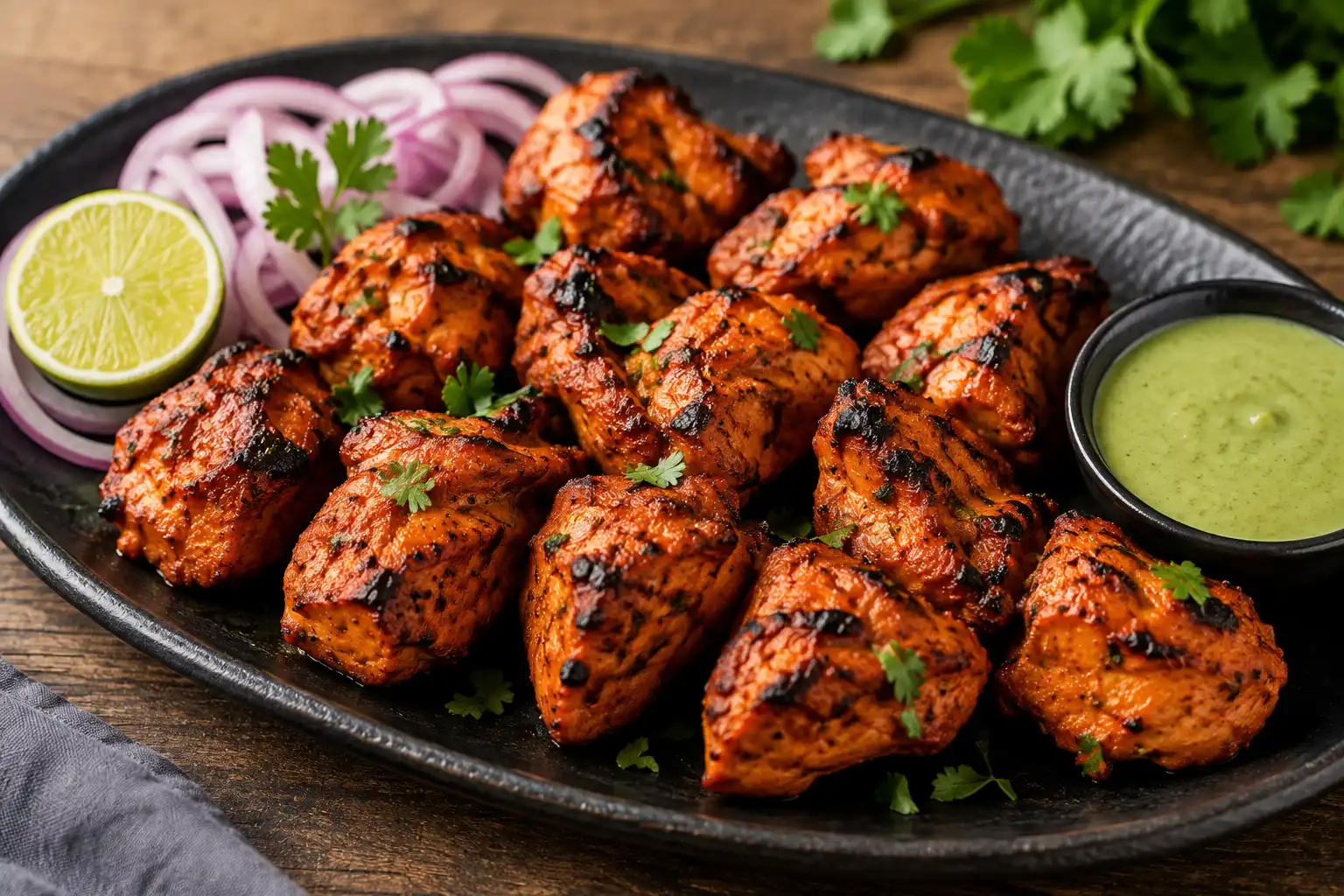
Chicken tikka is known for its charred, smoky edges and tender, spiced interior. While traditionally cooked in a clay tandoor oven at extremely high heat, you can achieve a similar texture at home using your oven’s broiler or a heavy cast-iron skillet.
The secret to preventing the chicken from drying out lies in a two-stage marination process. The first stage tenderizes the meat with acid, while the second stage builds a thick, spiced yogurt coating that chars beautifully under direct heat.
Why This Recipe Works
- The two-step marinade ensures the chicken remains juicy. An initial rest with lemon juice and salt tenderizes the muscle fibers before the heavy yogurt marinade is applied.
- Using thick Greek yogurt or hung curd prevents the marinade from dripping off the meat, which ensures a concentrated crust that mimics a tandoor finish.
- High-heat broiling quickly cooks the meat while charring the exterior, preventing the interior from drying out.
Ingredient Notes
- Chicken Thighs: Boneless, skinless thighs are highly recommended. They contain enough fat to stay juicy under high heat. If using chicken breast, cut the pieces slightly larger and reduce the cooking time slightly to avoid drying.
- Kashmiri Chili Powder: This provides a bright red hue and a mild, smoky heat. If you substitute standard cayenne pepper, reduce the quantity by half to avoid making the dish excessively spicy.
- Greek Yogurt: Use full-fat Greek yogurt or thick hung curd. Avoid regular plain yogurt, as its high water content will cause the chicken to steam in the oven rather than sear and char.
- Mustard Oil: This oil adds a traditional sharp flavor and helps bind the spices to the meat. If you do not have it, use a neutral cooking oil with a high smoke point.
- Kasuri Methi (Dried Fenugreek Leaves): Crucial for that distinct restaurant-style aroma. Gently rub the leaves between your palms to crush them before adding to the marinade.
If You’re Cooking Outside India
- Kashmiri Chili Powder: Commonly found in South Asian grocery stores or online. If unavailable, use a mixture of three parts sweet paprika and one part cayenne pepper to mimic the color and heat.
- Mustard Oil: Sold in Indian markets, often with an ‘external use only’ label in western countries due to regulatory rules. You can safely substitute neutral canola or vegetable oil if you prefer.
- Kasuri Methi: Look in the spice aisle of any Indian grocery store. There is no direct substitute; omit it if you cannot find it, as dried parsley or oregano will alter the flavor profile incorrectly.
How to Make Chicken Tikka
First Marination
Toss the chicken cubes with lemon juice, ginger-garlic paste, and salt. This step breaks down the fibers and ensures seasoning penetrates to the core.
Second Marination
Whisk the yogurt, spices, mustard oil, and crushed kasuri methi together, then coat the chicken. Let this rest in the refrigerator to build flavor.
Skewering
Thread the marinated chicken pieces onto skewers. Leave a very small gap between each piece so the hot air can circulate and brown the edges.
High-Heat Cooking
Broil on a wire rack set over a foil-lined baking sheet, or cook in a smoking-hot cast-iron skillet. Turn halfway through and baste with melted butter to enhance the char.
Cooking Tips
- If using wooden or bamboo skewers, soak them in water for at least 30 minutes before threading the chicken to keep them from catching fire under the broiler.
- Preheat your broiler thoroughly. The oven needs to be as hot as possible before the chicken goes in to ensure you get charred spots before the meat overcooks.
- Do not skip basting the chicken with melted butter or ghee during the final minutes of cooking. It creates a smoky flare-up flavor that mimics tandoori cooking.
Common Mistakes to Avoid
- Using wet, watery yogurt: The marinade will slide off the chicken and pool on the baking sheet, boiling the meat. Always strain plain yogurt through cheesecloth or use thick Greek yogurt.
- Crowding the skewers: Pressing the chicken pieces too tightly together prevents the sides from browning. Leave a tiny gap between each piece.
Variations
- Hariyali Chicken Tikka: Replace the red spices in the second marinade with a thick paste made of blended fresh mint, coriander leaves (cilantro), green chilies, and ginger.
Serving Suggestions
- Serve hot with sliced red onions, fresh lemon wedges, and a side of mint-coriander chutney.
- Wrap the cooked tikka pieces in warm naan bread along with a drizzle of chutney and shredded cabbage for a quick chicken tikka roll.
Storage & Make-Ahead
Make ahead: You can keep the chicken in its second marinade in the refrigerator for up to 24 hours before cooking.
Refrigerate: Store cooked leftovers in an airtight container for up to 3 days.
Freeze: Do not freeze the raw marinated chicken, as the yogurt will break and turn watery when thawed. Cooked chicken tikka can be frozen for up to 1 month, though it may lose some moisture.
Reheat: Reheat cooked pieces gently in a skillet over low heat with a tablespoon of water, covered, until hot throughout. Avoid microwave reheating as it dries the meat out.
Frequently Asked Questions
Can I make this recipe with chicken breast?
Yes. However, chicken breast dries out faster than thighs. Cut the breast pieces slightly larger (around 5 cm / 2 inches) and monitor the internal temperature closely, removing them as soon as they hit 74°C / 165°F.
What can I use if I do not have an oven broiler?
You can cook the chicken in a hot cast-iron skillet or grill pan on the stovetop. Sear the skewers over medium-high heat for about 12-15 minutes total, turning them frequently to get even charring on all sides.
Why is my chicken tikka watery and not charring?
This happens when the yogurt is too watery or the oven is not hot enough. Ensure you use thick Greek yogurt or strain regular yogurt first, and make sure your broiler is fully preheated before adding the chicken.
More Indian Recipes to Try
Browse the IndiPlated recipe index
Chicken Tikka
Ingredients
Equipment
Method
- In a mixing bowl, combine the chicken cubes, lemon juice, ginger-garlic paste, and salt. Mix thoroughly until the chicken is evenly coated. Cover and let it rest at room temperature for 15 minutes.
- In a separate bowl, whisk together the Greek yogurt, Kashmiri chili powder, garam masala, roasted cumin, turmeric, mustard oil, and crushed kasuri methi. Add the seasoned chicken along with any juices in the bowl. Mix well to coat each piece. Cover and refrigerate for at least 45 minutes, or up to overnight.
- Preheat your oven's broiler (grill setting) to high (around 260°C / 500°F). Line a large baking sheet with aluminum foil for easy cleanup, and place a wire roasting rack on top of the sheet.
- Thread the marinated chicken cubes onto the skewers. Leave a tiny gap between each piece of chicken so they char instead of steaming.
- Place the skewers on the prepared wire rack. Set the baking sheet on the top rack of the oven, about 10-12 cm (4-5 inches) away from the broiler heat source. Broil for 6 to 8 minutes, until the tops of the chicken pieces show dark charred spots.
- Carefully pull the baking sheet out, flip the skewers over, and brush the chicken with the melted butter or ghee. Return to the broiler and cook for another 5 to 7 minutes.
- Check that the chicken is cooked through. The thickest piece of chicken should register an internal temperature of 74°C / 165°F on an instant-read thermometer. Remove from the oven.
- Let the chicken rest on the skewers for 2 minutes. Carefully slide the pieces off the skewers onto a serving platter. Sprinkle with chaat masala and serve hot with lemon wedges.
Notes
Ensure the yogurt used in the second marinade is completely thick to avoid a watery coating.